
Syrian Wild Ass Facts for Kids
The Syrian Wild Ass was a recently extinct wild equid from West Asia. It was not a donkey breed or a small horse, but an extinct subspecies of onager. This fast desert animal was one of the smallest wild horse relatives and lived in dry grasslands, deserts, and steppes before disappearing in the 1920s.
Quick Syrian Wild Ass Facts
- Animal Type: Recently extinct mammal
- Group: Equid and onager subspecies
- Known For: Small size, fast running, desert habitat, sandy coat, foals, West Asian range, last wild record near Azraq, and extinction in the 1920s
- Lived During: Holocene, until 1927 or possibly 1928 in captivity
- Diet: Grasses, herbs, leaves, shrubs, and desert plants
What You’ll Learn
Explore 10 unusual syrian wild ass facts for kids about fast running, desert habitats, grazing, strong legs, and extinction, plus a quiz, glossary, and activity
Easy explanations make them great for children, families, teachers, and young nature fans.
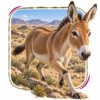
10 Fun Syrian Wild Ass Facts for Kids
1. Syrian Wild Asses Were Equids
The Syrian Wild Ass belonged to the equid family, the group that includes horses, donkeys, zebras, and wild asses.
Kid Decode: Horse-family paperwork, desert-speed edition.
2. They Were Onagers
The Syrian Wild Ass was an extinct subspecies of onager, also called the Asiatic wild ass.
Kid Decode: Not a farm donkey, not a pony. It was a wild desert runner.
3. They Were Very Small
The Syrian Wild Ass was one of the smallest modern wild equids, standing around one metre high at the shoulder.
Kid Decode: Small body, big speed, desert attitude.
4. They Lived in West Asia
Syrian Wild Asses lived across parts of Syria, Jordan, Iraq, Israel, Palestine, Saudi Arabia, Turkey, and nearby regions.
Kid Decode: Their map crossed deserts, steppes, and ancient caravan country.
5. They Ate Tough Plants
Syrian Wild Asses were herbivores that grazed and browsed on grasses, herbs, leaves, shrubs, and desert plants.
Kid Decode: Desert lunch was dry, scratchy, and hard-earned.
6. They Could Run Fast
Like other onagers, Syrian Wild Asses were built for speed in open dry habitats.
Kid Decode: Small hooves, big zoom.
7. Baby Syrian Wild Asses Were Foals
Baby Syrian Wild Asses can be called foals, like baby horses, donkeys, and zebras.
Kid Decode: A foal began life ready for a world where running mattered.
8. Their Coat Changed With the Seasons
Old descriptions say Syrian Wild Asses had a darker tawny coat in summer and a paler sandy coat in winter.
Kid Decode: Seasonal fashion, desert camouflage department.
9. Overhunting Hurt Them
Overhunting, war, habitat pressure, and competition with people and livestock helped drive the Syrian Wild Ass toward extinction.
Kid Decode: Too many human pressures chased the small desert equid out of the story.
10. The Last Records Were in the 1920s
The last known wild Syrian Wild Ass was shot near the Azraq region in 1927, and the last captive animal died in Vienna around 1927 or 1928.
Kid Decode: The final hoofbeats ended between desert dust and a zoo stall.
The Weirdest Syrian Wild Ass Fact
The Syrian Wild Ass may have been the smallest wild horse relative of modern times, but it was famous for speed and toughness in harsh desert country.
Try This Syrian Wild Ass Activity
Syrian Wild Ass Drawing Activity
Draw a Syrian Wild Ass running across a West Asian desert steppe. Add sandy coat, short mane, long ears, foal, dry grasses, shrubs, rocky hills, Azraq oasis clue, old caravan silhouette, and a “lost desert runner” label.
Quick Syrian Wild Ass Quiz
- Was the Syrian Wild Ass a dinosaur? Answer: No, it was a mammal and equid.
- What animal group did it belong to? Answer: The horse family, or equids.
- What was it a subspecies of? Answer: The onager, or Asiatic wild ass.
- What are baby wild asses called? Answer: Foals.
- When did the last known wild Syrian Wild Ass die? Answer: 1927.
Mini Glossary
- Equid: A member of the horse family, including horses, donkeys, zebras, and wild asses.
- Onager: A wild ass from Asia, also called the Asiatic wild ass.
- Foal: A baby horse, donkey, zebra, or wild ass.
- Steppe: A dry open grassland habitat.
- Overhunting: Taking too many animals until the population cannot recover.
 Ostrich Facts for Kids
 Rabbit Facts for Kids
 Giraffe Facts for Kids
 Dimetrodon Facts for Kids
More Animal Facts for Kids
Visit the full animal facts library or explore a focused animal group.
More Extinct Animal Facts for Kids
Discover dinosaurs, Ice Age giants, prehistoric sea creatures, recently extinct species, and other animals from the past.
Fact check note: Fact checked with Syrian Wild Ass extinction summaries, Equus hemionus hemippus records, West Asian onager references, and trusted equid education sources.

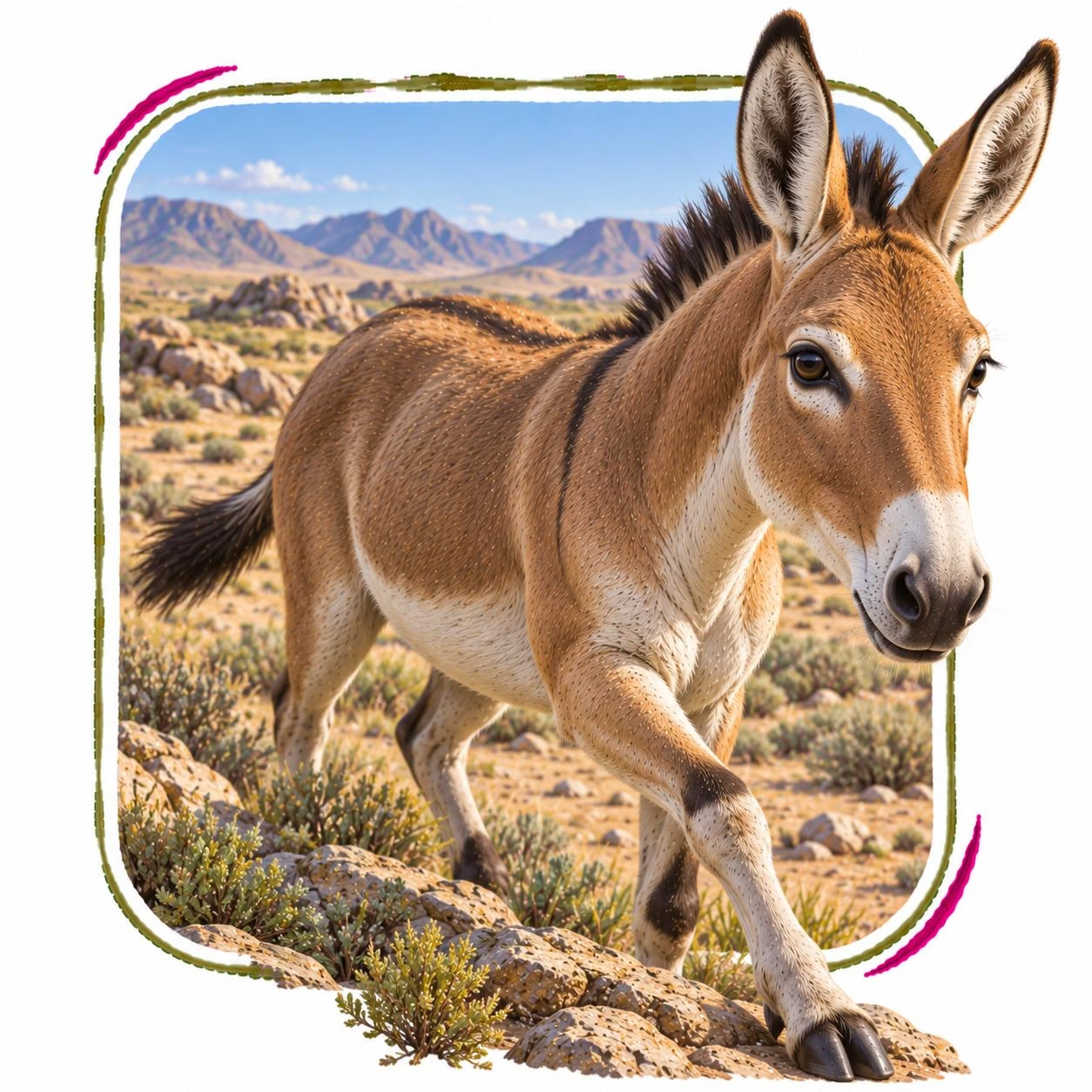
Syrian Wild Ass in its natural West Asian deserts, semi-deserts, arid grasslands, mountain steppes, rocky plains, dry valleys, oasis edges, and open shrublands habitat