
Thylacine Facts for Kids
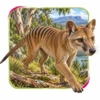
The thylacine, often called the Tasmanian tiger or Tasmanian wolf, was neither a tiger nor a wolf. It was the last surviving member of a unique family of carnivorous marsupials. Once found across mainland Australia, Tasmania, and New Guinea, it disappeared after a tragic mix of human persecution and other pressures.
Quick Thylacine Facts
- Scientific name: Thylacinus cynocephalus
- Animal group: Carnivorous marsupial
- Other names: Tasmanian tiger and Tasmanian wolf
- Size: Body about 1–1.3 m long, plus a stiff 50–65 cm tail
- Weight: Commonly about 15–30 kg
- Former range: Australia, Tasmania, and New Guinea
- Habitat: Forest, woodland, scrub, grassland, and wetlands
- Diet: Carnivore
- Young: Joeys, usually up to four at a time
- Status: Extinct; last confirmed animal died in 1936
What You’ll Learn
Explore 10 remarkable thylacine facts for kids about stripes, marsupial pouches, hunting, Tasmania, and the last confirmed animal in 1936, plus a quiz, glossary, and activity
Easy explanations make them fun for children, families, teachers, and young nature explorers.
10 Fun Thylacine Facts for Kids
1. 1. It Was a Marsupial
The thylacine carried developing young in a pouch, like kangaroos, koalas, and wombats. Its closest living relatives are other Australian marsupials, not dogs or cats.
Kid Decode: A dog-shaped body can hide a family tree that leads toward kangaroos rather than wolves.
2. 2. Stripes Inspired “Tasmanian Tiger”
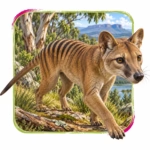
About 15–20 dark bands crossed its golden-brown back, rump, and tail base. The stripes helped create its tiger nickname even though it was not a cat.
Kid Decode: Its front half looked dog-like, while its striped rear half looked almost tiger-like.
3. 3. Its Dog Shape Evolved Separately
Thylacines and wolves developed long snouts, meat-cutting teeth, and running bodies because they performed similar hunting jobs. This is called convergent evolution.
Kid Decode: Nature can arrive at a similar body design on two distant branches of life.
4. 4. The Tail Was Stiff
The thick tail blended smoothly into the body and could not wag or curl like a dog’s tail. It probably helped with balance as the thylacine walked or ran.
Kid Decode: A stiff, tapering tail is one clue for identifying a thylacine in old films and photographs.
5. 5. Both Sexes Had Pouches
A female’s rear-opening pouch protected up to four tiny joeys and her four teats. Males also had a smaller protective pouch around the scrotum—an extremely unusual feature among mammals.
Kid Decode: The backward opening helped keep dirt away while the mother moved through scrub.
6. 6. It Was Mostly a Quiet Night Hunter
Evidence suggests thylacines were mainly active from dusk through night and often traveled alone or in small family groups. They likely used endurance and careful pursuit more than a short, high-speed chase.
Kid Decode: Old observers described coughing barks, growls, whines, and a repeated yapping call.
7. 7. Its Prey Was Native Wildlife
Thylacines ate meat and probably hunted wallabies, small mammals, and birds. Historical claims that they regularly destroyed many sheep were exaggerated and helped turn people against them.
Kid Decode: A famous government reward photograph was staged and did not prove that every thylacine hunted livestock.
8. 8. Dingoes Changed Its Mainland Story
Thylacines vanished from mainland Australia thousands of years ago, after dingoes arrived and human societies and climate were changing. Tasmania remained dingo-free, allowing thylacines to survive there much longer.
Kid Decode: Ancient rock art and fossils show that the animal once lived far beyond Tasmania.
9. 9. A Bounty Sped Up the Decline
European settlers blamed thylacines for livestock losses, and the Tasmanian government paid rewards for dead animals from 1888 to 1909. Hunting, habitat change, scarce prey, disease, and competition may all have contributed.
Kid Decode: Legal protection finally came in 1936, when it was already too late for the last known animal.
10. 10. The Last Confirmed Thylacine Died in 1936
The final confirmed individual died at Hobart’s Beaumaris Zoo on 7 September 1936. Since then, searches and reported sightings have produced no verified evidence that the species survived.
Kid Decode: Australia now marks 7 September as National Threatened Species Day.
The Weirdest Thylacine Fact
Its lower jaw could open impressively wide, as surviving film shows, but the often-repeated claim that it opened to exactly 120 degrees is not well supported. The dramatic yawn may have been a warning display rather than proof of a super-powered bite.
Try This Thylacine Activity
Make a Thylacine Evidence Timeline
Draw a timeline with mainland fossils and rock art, survival in Tasmania, the government bounty, the 1936 legal protection, and the death of the last confirmed animal. Add one action beside each event showing how people today can protect threatened species earlier.
Quick Thylacine Quiz
- Was the thylacine a cat, dog, or marsupial? A marsupial.
- Why was it called a Tasmanian tiger? Because of the dark stripes across its back.
- Where did females carry joeys? In a backward-opening pouch.
- What human policy encouraged hunting? A government bounty.
- When did the last confirmed thylacine die? On 7 September 1936.
Mini Glossary
- Marsupial
- A mammal whose tiny newborns usually continue developing while attached to teats, often inside a pouch.
- Extinct
- Having no living members left anywhere on Earth.
- Convergent evolution
- When unrelated animals independently develop similar features.
- Bounty
- Money offered as a reward for capturing or killing an animal.
- Verified
- Checked and supported by reliable evidence.
 Turkey Facts for Kids
 Mole Facts for Kids
 Pheasant Facts for Kids
 Laysan Rail Facts for Kids
More Animal Facts for Kids
Visit the full animal facts library or explore a focused animal group.
More Extinct Animal Facts for Kids
Discover dinosaurs, Ice Age giants, prehistoric sea creatures, recently extinct species, and other animals from the past.
Fact check note: Sources checked: Australian Museum thylacine account; National Museum of Australia thylacine collection and extinction history; Tasmanian Museum and Art Gallery thylacine materials; Australian Government threatened-species history; peer-reviewed research on thylacine ecology and convergent evolution. Post-1936 sighting claims remain unverified.

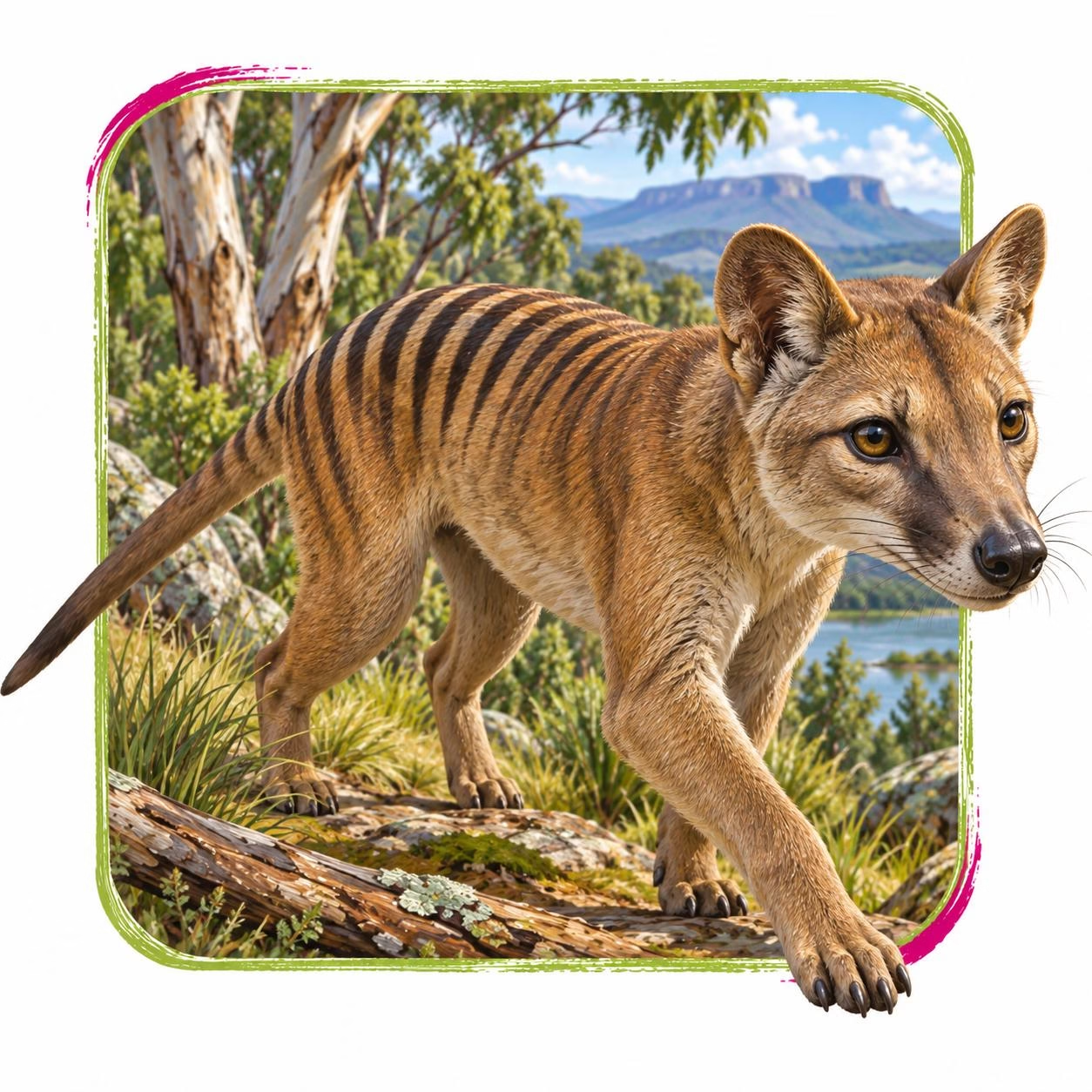
Thylacine in its natural Open forest, woodland, scrub, grassland, heath, and wetland edges habitat