
Vegavis Facts for Kids
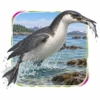
Vegavis was a foot-propelled diving bird that lived in Antarctica near the end of the Cretaceous Period. It was a true bird, not a non-bird dinosaur, and recent skull research supports a place among early waterfowl within the crown group containing all living birds. Unlike a duck, Vegavis had a long pointed beak suited to catching fish and small aquatic animals. As of 2026, scientists recognise three named species in the genus.
Quick Vegavis Facts
- Animal Type: Extinct diving bird
- Group: Early crown bird, probably waterfowl-related
- Known For: Foot-propelled diving, pointed beak, fossil syrinx, and Late Cretaceous Antarctic fossils
- Lived During: Late Cretaceous, roughly 69–66 million years ago
- Diet: Fish, small aquatic animals, and marine invertebrates
What You’ll Learn
Discover 10 amazing vegavis facts for kids about ancient Antarctic life, diving, waterbird features, fossils, and its connection to modern birds, with a quiz, glossary, and activity
These facts are explained simply for kids, parents, teachers, and curious little fact-finders.
10 Fun Vegavis Facts for Kids
1. Vegavis Lived With Dinosaurs
Vegavis lived during the Maastrichtian Age, only a few million years before the asteroid impact that ended the age of non-bird dinosaurs.
Kid Decode: A modern-looking bird paddled through Antarctic water while mosasaurs and plesiosaurs still ruled nearby seas.
2. It Was an Early Modern Bird
A nearly complete skull described in 2025 has a toothless beak and brain features that support placing Vegavis within crown-group birds, probably close to early waterfowl.
Kid Decode: Its skull looked more like a bird from today than most feathered creatures sharing the Cretaceous world.
3. It Was Not Shaped Like a Duck
Vegavis had a narrow pointed beak and strong jaw muscles rather than the broad filtering bill of many living ducks.
Kid Decode: Its face brought fishing tongs to the waterfowl family picnic.
4. It Dived With Its Feet
The hind limbs were positioned far back on the body, and leg and foot anatomy support underwater propulsion similar to that of loons and grebes.
Kid Decode: Its feet worked like two underwater paddles while the wings stayed out of the main engine room.
5. Its Jaws Snapped Shut Underwater
The skull had large attachment areas for jaw muscles, suggesting that Vegavis could close its beak strongly against water resistance while catching prey.
Kid Decode: Water tried to slow the beak, so the jaw muscles arrived with extra closing power.
6. Its Voice Box Fossilised
One Vegavis specimen preserves part of a syrinx, the specialised vocal organ of birds and the oldest well-known example from the Mesozoic.
Kid Decode: A tiny piece of ancient voice equipment survived after almost every Cretaceous sound had vanished.
7. Its Call Was Probably Simple
The preserved syrinx suggests a bird able to make honk-like or whistle-like sounds, but scientists cannot reconstruct one exact Vegavis call.
Kid Decode: The fossil provides the instrument, not a recording of the concert.
8. Antarctica Was Not Frozen Solid
Vegavis lived along cool temperate coasts with forests and seasonally ice-free marine waters, not on the permanent polar ice sheet seen today.
Kid Decode: Its Antarctica had trees, chilly waves, and no continent-wide freezer lid.
9. Scientists Now Name Three Species
A 2026 study recognised Vegavis iaai, Vegavis geitononesos, and Vegavis notopothousa, showing unexpected diversity among Antarctic diving birds.
Kid Decode: One mysterious bird name expanded into a trio of Cretaceous diving specialists.
10. Its Exact Family Position Is Still Discussed
Several analyses recover Vegavis among waterfowl, while other studies have placed it differently, so its precise branch within early modern birds remains debated.
Kid Decode: Vegavis has a strong waterfowl ticket, but palaeontologists are still checking the seat number.
The Weirdest Vegavis Fact
Vegavis preserves the oldest famous fossil syrinx, allowing scientists to study part of a bird’s sound-making system from the final age of the dinosaurs.
Try This Vegavis Activity
Vegavis Drawing Activity
Draw Vegavis diving through a Late Cretaceous Antarctic coastal sea. Add a mallard-sized body, narrow pointed beak, feet set far back for paddling, fish and small marine animals, a forested shoreline, and a syrinx inset with sound-wave symbols. Label the three named species beside a small fossil map.
Quick Vegavis Quiz
- Where did Vegavis live? Answer: Antarctica.
- How did it probably propel itself underwater? Answer: With its feet.
- Did it have a broad duck-like bill? Answer: No, it had a narrow pointed beak.
- What fossilised sound organ was found? Answer: Part of a syrinx.
- How many named Vegavis species were recognised by 2026? Answer: Three.
Mini Glossary
- Crown Bird: A bird belonging to the group containing all living birds and their closest extinct members.
- Anseriform: A bird from the waterfowl group containing ducks, geese, swans, and relatives.
- Syrinx: The sound-producing organ of birds.
- Foot-Propelled Diver: A bird that uses its feet as the main underwater paddles.
- Maastrichtian: The final age of the Cretaceous Period.
 Indian Rhino Facts for Kids
 Snowy Owl Facts for Kids
 Tasmanian Devil Facts for Kids
 Bothriolepis Facts for Kids
More Animal Facts for Kids
Visit the full animal facts library or explore a focused animal group.
More Extinct Animal Facts for Kids
Discover dinosaurs, Ice Age giants, prehistoric sea creatures, recently extinct species, and other animals from the past.
Fact check note: Fact checked with Torres and colleagues’ 2025 Nature description of the nearly complete Vegavis skull, Clarke and colleagues’ 2016 syrinx study, Acosta Hospitaleche and Worthy’s 2021 holotype revision, and Irazoqui and colleagues’ 2026 description of two additional Vegavis species.

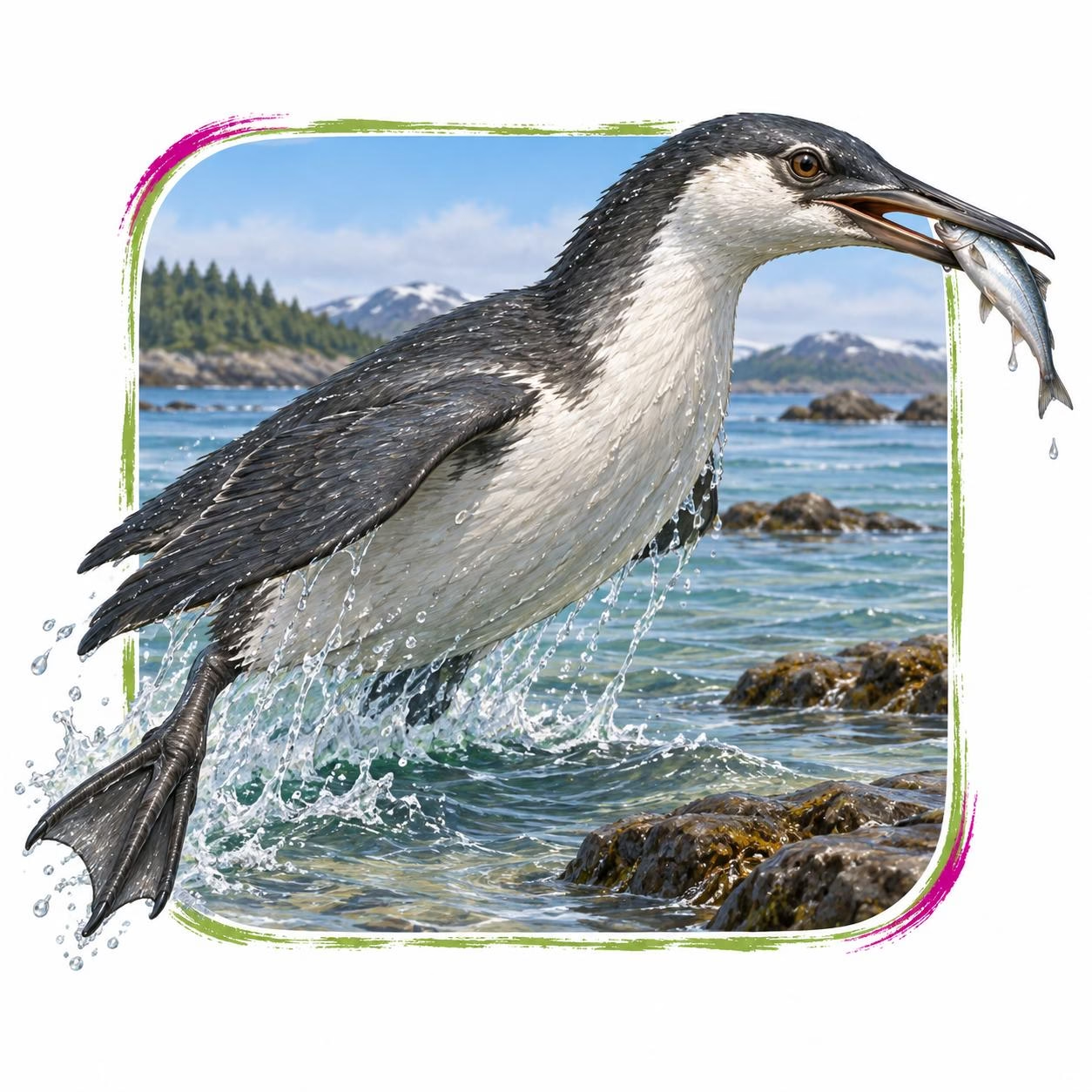
Vegavis in its natural Late Cretaceous shallow seas, coastal waters, marine shelves, islands, and cool temperate forested shorelines of the Antarctic Peninsula habitat