
Yutyrannus Facts for Kids
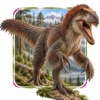
Yutyrannus was a giant feathered meat-eating dinosaur from Early Cretaceous China. It was an early tyrannosauroid relative of later giants such as Tyrannosaurus rex, but it had longer arms with three-fingered hands. Three nearly complete skeletons preserve long filament-like feathers, making Yutyrannus one of the clearest examples of a very large fluffy dinosaur.
Quick Yutyrannus Facts
- Animal Type: Theropod dinosaur
- Group: Early tyrannosauroid
- Known For: Giant size, direct feather impressions, three nearly complete skeletons, three-fingered hands, and a crest along the snout
- Lived During: Early Cretaceous, about 125 million years ago
- Diet: Meat, including other dinosaurs and animals in its ecosystem
What You’ll Learn
Learn 10 amazing yutyrannus facts for kids about giant size, feathers, sharp teeth, strong legs, and Cretaceous China, plus a quiz, glossary, and activity
These simple facts are written for kids, parents, teachers, and curious young minds.
10 Fun Yutyrannus Facts for Kids
1. Yutyrannus Was a Giant Feathered Dinosaur
The largest known specimen was estimated at about 9 metres long and around 1.4 tonnes in the original description.
Kid Decode: This was not a tiny fluffy raptor. It was a one-ton feather storm.
2. Its Name Means Beautiful Feathered Tyrant
The name Yutyrannus huali combines words meaning feathered tyrant and beautiful, referring to its impressive plumage.
Kid Decode: Even its scientific name arrives wearing a dramatic coat.
3. Real Feather Impressions Were Preserved
Fossils preserve long filament-like feathers on several parts of the body, providing direct evidence that this giant dinosaur was extensively feathered.
Kid Decode: Scientists did not simply guess the fluff. The rocks kept the fuzzy receipts.
4. Some Feathers Reached About 20 Centimetres
The preserved filaments could reach roughly 20 centimetres long in places such as the neck.
Kid Decode: Some of its fuzz was longer than a school ruler’s short side.
5. It Was an Early Tyrannosauroid
Yutyrannus belonged to Tyrannosauroidea, the wider group that later produced tyrannosaurids such as T. rex.
Kid Decode: It was a branch on the tyrant family tree, not a furry T. rex copy.
6. It Had Three-Fingered Hands
Unlike later tyrannosaurids with two main fingers, Yutyrannus retained longer arms with three fingers on each hand.
Kid Decode: Three fingers gave this tyrant one extra digit for dinosaur bookkeeping.
7. It Had a Crest on Its Snout
The top of the skull carried a raised midline crest with air-filled spaces, possibly making the head more noticeable for display.
Kid Decode: Its face came with built-in dinosaur decoration.
8. Its Feathers May Have Helped Keep It Warm
Scientists have suggested that the long simple feathers provided insulation in the relatively cool environment of the Yixian Formation, though display may also have mattered.
Kid Decode: The giant predator may have worn a natural Cretaceous winter coat.
9. Three Nearly Complete Skeletons Are Known
Yutyrannus was described from three nearly complete skeletons representing animals of different ages, giving scientists unusually rich information.
Kid Decode: Three skeletons turned one discovery into a feathered family-sized data set.
10. Finding Three Together Does Not Prove a Pack
The specimens came from the same fossil area, but that alone cannot prove Yutyrannus hunted or lived in organised groups.
Kid Decode: Three fossils make a mystery, not an automatic dinosaur team.
The Weirdest Yutyrannus Fact
Yutyrannus showed that even a predator weighing more than a tonne could carry a thick covering of long simple feathers, overturning the old idea that giant dinosaurs had to be completely scaly.
Try This Yutyrannus Activity
Yutyrannus Drawing Activity
Draw Yutyrannus walking through a cool Early Cretaceous forest in China. Add long shaggy filament-like feathers, a raised snout crest, three-fingered hands, powerful legs, a long tail, conifers, mist, volcanic rocks, a smaller juvenile, fossil feather impressions, and a “beautiful feathered tyrant” label.
Quick Yutyrannus Quiz
- What larger dinosaur group did Yutyrannus belong to? Answer: Tyrannosauroidea.
- Where were its fossils found? Answer: Liaoning Province in China.
- What covered much of its body? Answer: Long filament-like feathers.
- How many fingers did it have on each hand? Answer: Three.
- What may its feathers have helped it do? Answer: Stay warm and possibly display.
Mini Glossary
- Tyrannosauroid: A member of the wider dinosaur group containing early tyrant dinosaurs and later tyrannosaurids.
- Filament: A long thin strand; Yutyrannus had simple feather-like filaments.
- Insulation: A covering that helps slow the loss of body heat.
- Ontogeny: The way an animal changes as it grows from young to adult.
- Crest: A raised structure on an animal’s head or body.
 Common Warthog Facts for Kids
 Fishing Cat Facts for Kids
 Lizard Facts for Kids
 Arsinoitherium Facts for Kids
More Animal Facts for Kids
Visit the full animal facts library or explore a focused animal group.
More Extinct Animal Facts for Kids
Discover dinosaurs, Ice Age giants, prehistoric sea creatures, recently extinct species, and other animals from the past.
Fact check note: Fact checked with Xu and colleagues’ 2012 Nature description of Yutyrannus huali, Institute of Vertebrate Paleontology and Paleoanthropology material, Nature reporting on the discovery, and research on the Yixian Formation climate.

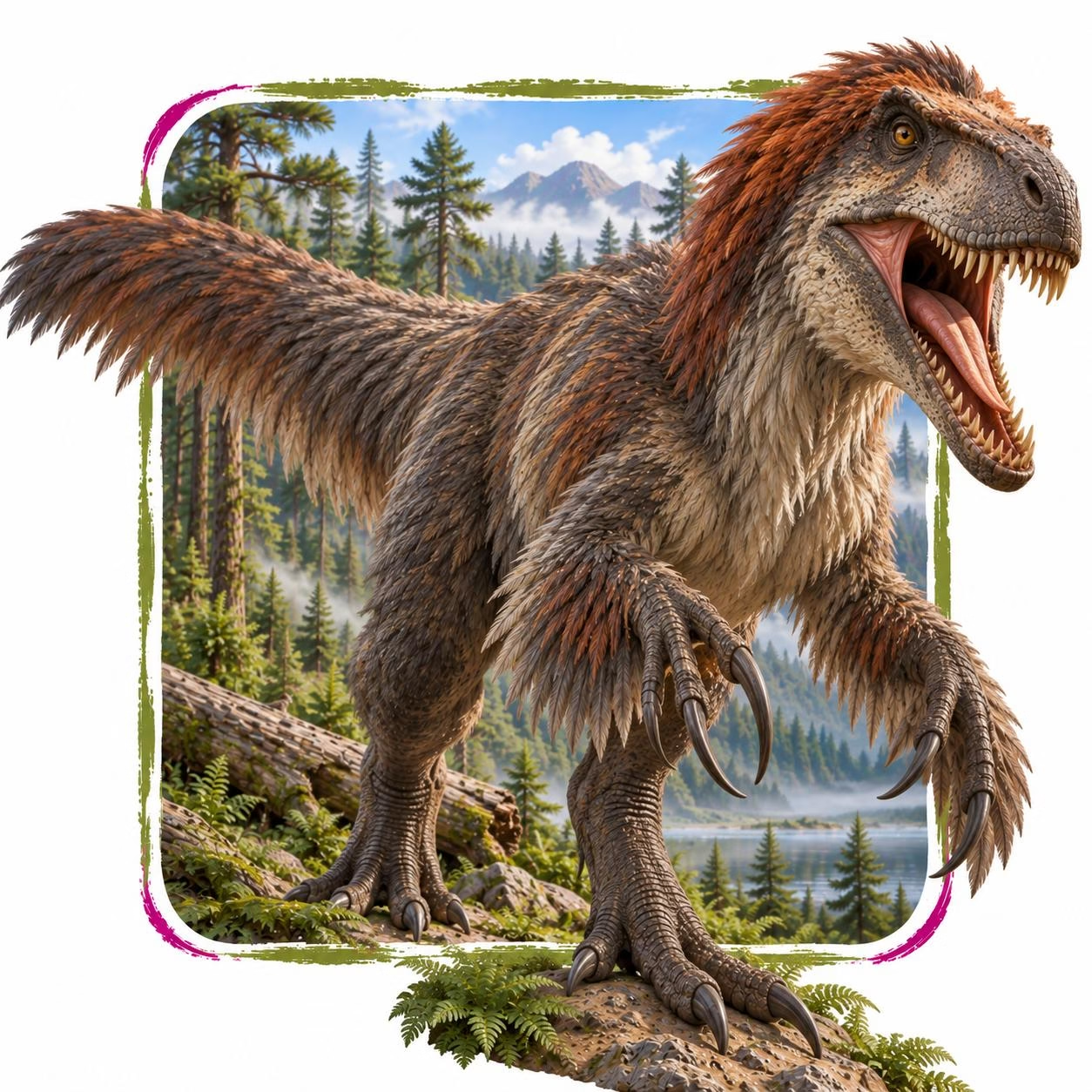
Yutyrannus in its natural Cool Early Cretaceous forests, lake margins, volcanic landscapes, wooded floodplains, misty valleys, and the Yixian Formation ecosystem of northeastern China habitat