
Feelings Story Generator
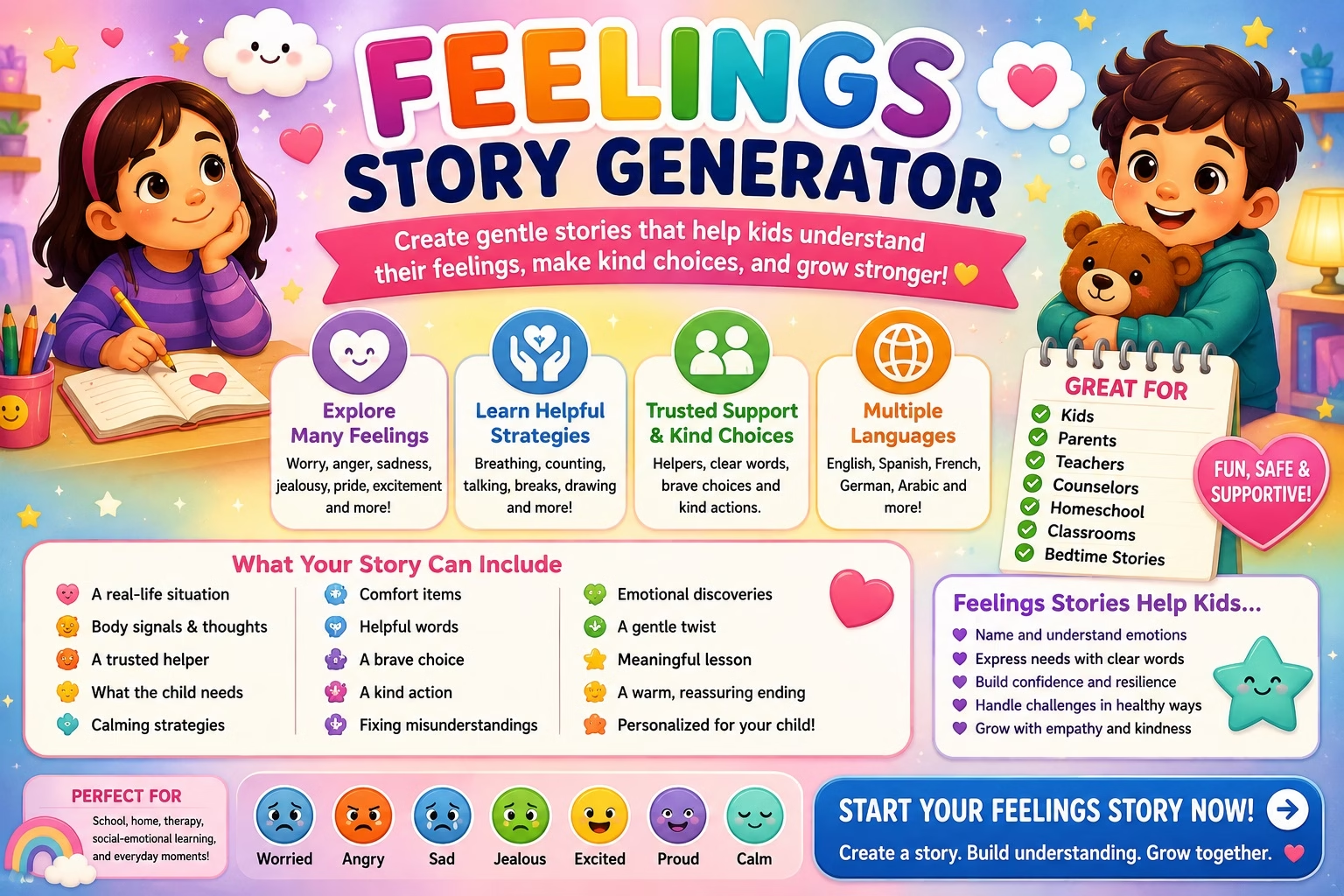
Create a gentle, personalized feelings story for kids about emotions, calming strategies, trusted helpers, kind choices, and emotional growth.
AI Feelings Story Generator for Kids
Our AI feelings story generator helps you create a gentle, personalized story that gives children space to explore emotions, understand what caused them, notice body signals, communicate their needs, and make safe, thoughtful choices.
Choose the main feeling, situation, setting, trusted helper, calming strategy, helpful words, emotional lesson, story length, tone, reading level, and language. The generator then creates an age-appropriate story about emotional understanding, support, kindness, and realistic growth.
The child might feel worried before a presentation, angry after a misunderstanding, jealous when a friend plays with someone else, disappointed after losing a game, embarrassed by a mistake, overwhelmed by too many tasks, or nervous about joining a new activity.
Create stories about worry, anger, sadness, jealousy, shyness, frustration, disappointment, pride, excitement, gratitude, and mixed emotions.
Add trusted helpers, clear communication, calming choices, small steps, emotional discoveries, and reassuring endings.
Create feelings stories in English, Spanish, French, German, Italian, Portuguese, Dutch, or Arabic.
Create a Personalized Feelings Story
A personalized feelings story places the child at the center of a familiar emotional situation. Instead of reading about an unnamed character, children can hear a story that reflects their age, setting, challenge, and preferred way of receiving support.
The child may need to explain what happened, ask for help, return after taking a break, repair a friendship, apologize for a mistake, handle a change in plans, accept disappointment, or try one small step toward a difficult goal.
The story does not treat emotions as bad behavior. It helps separate the feeling from the action. A child may feel angry, worried, jealous, or frustrated while still learning to express that feeling safely and respectfully.
How the Feelings Story Generator Works
Start by selecting the story details inside the generator. You can choose the main feeling, what caused it, the setting, the child’s goal, emotional intensity, body signal, thought pattern, trusted helper, support style, child need, calming strategies, comfort item, supportive friend, helpful words, brave choice, kind action, misunderstanding, emotional discovery, story twist, lesson, ending, language, tone, reading level, and story length.
A story about nervousness before a school presentation will feel different from one about jealousy between friends, disappointment after a game, anger during a sibling disagreement, or excitement that becomes difficult to manage.
The AI uses your selections to create a clear emotional journey. The story introduces the feeling, shows how it affects the child, adds support and communication, and finishes with realistic progress rather than instant perfection.
Useful details to choose before generating
- The child’s name and age group
- The main feeling and what caused it
- The strength of the feeling
- The setting and child’s goal
- The body signal and thought pattern
- The trusted helper and supportive friend
- The child’s need and helpful words
- One or two calming strategies
- The emotional lesson and ending
- The language, tone, reading level, and story length
Feelings Stories for Kids
Feelings stories for kids can make emotions easier to understand because they place them inside a familiar situation with characters, choices, and consequences.
A story can show that worry may create butterflies in the stomach, anger may bring tight shoulders or clenched hands, sadness may feel heavy, and excitement may make it difficult to sit still.
Children can also see that more than one feeling may exist at the same time. A child might feel excited and nervous about a new school, proud and embarrassed after a performance, or sad and grateful when a special visit ends.
Stories About Worry and Nervousness
A worry story can help children explore situations such as starting school, meeting a new group, speaking in class, visiting a doctor, performing on stage, trying a sport, sleeping away from home, or waiting for an important event.
The child may think, “What if I make a mistake?” or “What if everyone looks at me?” The story can then introduce a trusted helper who listens, explains what will happen, helps the child practice, or breaks the challenge into smaller steps.
The ending does not need to claim that all worry disappears. The child may still feel nervous while becoming ready to try one manageable step.
Anger Stories for Kids
An anger story can help children understand that anger itself is allowed, while hurtful or unsafe actions still need limits.
The child may feel angry because a sibling borrowed something, a plan changed, a game felt unfair, a friend misunderstood a message, or an important object went missing.
The story can show the child noticing body signals, taking a pause, using clear words, asking for an explanation, and finding a safe way to express what is needed.
Anger may also cover another feeling such as disappointment, worry, embarrassment, or feeling left out. Discovering the deeper feeling can help the child choose a more useful response.
Sadness Stories for Kids
A sadness story can explore disappointment, missing someone, losing a game, saying goodbye after a visit, moving to a new place, or discovering that a hoped-for plan cannot happen.
The child may need someone to listen, sit nearby, offer reassurance, or allow time for the feeling without immediately trying to fix everything.
The story can end with comfort, understanding, a small hopeful action, or the recognition that sadness may become easier to carry gradually.
Jealousy Stories for Kids
Jealousy can appear when a friend spends time with someone else, a sibling receives attention, another child wins, or someone seems especially good at an activity.
A personalized jealousy story can help children recognize that the feeling may point toward an unmet need. The child may want reassurance, inclusion, attention, appreciation, or a fair turn.
The story can show the child naming the feeling without blaming others, asking for what is needed, celebrating another person kindly, and finding a separate opportunity to grow.
Frustration Stories for Kids
Frustration often appears when a task feels difficult, instructions are confusing, progress is slow, or something does not work after several attempts.
The child might struggle with homework, art, sports, music practice, building a project, learning a new skill, or completing several tasks at once.
The story can introduce a short break, clearer instructions, a smaller first step, help from a trusted adult, or a different strategy. Progress may mean trying again, understanding one part, or deciding to return later.
Disappointment Stories for Kids
Children may feel disappointed when they are not chosen first, lose a game, miss an event, receive unexpected feedback, or discover that a plan must change.
A feelings story can acknowledge that disappointment is real without turning it into failure. The child may need time, reassurance, a chance to explain, or help focusing on what can still be controlled.
The ending may involve trying again, congratulating someone else, making a new plan, or feeling proud of effort even when the result was different from what the child hoped.
Stories About Feeling Left Out
Feeling left out can happen during games, group projects, parties, clubs, family activities, or friendships. Sometimes the exclusion is intentional, but often it begins with a misunderstanding, missing information, or another child not realizing support is needed.
The story can help the child use clear words such as, “I would like a turn too,” or “I want to join, but I feel nervous.” A trusted helper may explain the situation, help create a fair plan, or encourage the group to include everyone.
The child can also learn that joining may begin with one small step, such as asking one person, choosing a role, or watching briefly before participating.
Shyness and Confidence Stories
A shy child may want to join an activity while also feeling nervous about speaking, being watched, or making a mistake.
The story should not force instant confidence, eye contact, public speaking, or social interaction. Instead, the child may practice privately, speak to one trusted person, join with a friend, choose a smaller role, or return when ready.
Confidence can grow through preparation, support, repetition, and successful small steps rather than a sudden personality change.
Stories About Embarrassment
Embarrassment may appear after giving a wrong answer, spilling something, forgetting a line, tripping during an activity, or realizing that other people noticed a mistake.
The child may feel a warm face, shaky voice, watery eyes, or a desire to hide. A trusted helper can normalize mistakes, help repair the problem, and remind the child that one awkward moment does not define them.
The ending can show the child returning to the activity, laughing gently at the situation, accepting support, or realizing that others were not judging as harshly as expected.
Overwhelmed Feelings Stories
Children can feel overwhelmed when there are too many instructions, noises, people, tasks, choices, or changes happening at once.
The story may include difficulty concentrating, restless movement, tiredness, wanting to hide, or feeling unable to decide what to do first.
A trusted adult can reduce the pressure by offering a quieter place, two simple choices, one small task, clearer information, or a short supervised break.
The goal is not to force the child through the situation. It is to help the child regain enough calm and clarity to decide what comes next.
Excitement and Big Happy Feelings
Feelings stories do not need to focus only on difficult emotions. Excitement, pride, gratitude, surprise, and hope can also feel very big.
A child may become restless before a birthday, speak too quickly after winning, struggle to wait for a trip, or celebrate so loudly that someone else feels uncomfortable.
The story can help children enjoy positive emotions while practicing patience, kind celebration, listening, sharing attention, and noticing the feelings of others.
Stories About Mixed Feelings
Children often experience two or more emotions together. Moving house can bring excitement and sadness. A performance can create pride and embarrassment. A new friendship may feel hopeful and nervous.
A mixed-feelings story helps children understand that emotions do not always fit neatly into one box.
The child can learn that more than one feeling can be true and that naming each part may make the situation easier to understand.
Helping Children Name Their Feelings
Naming an emotion can give children a useful starting point. The story may help the child move from “I feel bad” toward more specific language such as worried, disappointed, lonely, frustrated, embarrassed, excited, or confused.
The child does not need to identify the feeling perfectly. They may begin with a feelings chart, body clue, thought, drawing, or conversation with a trusted person.
The story should leave room for uncertainty. Sometimes “I do not know yet” is an honest and useful answer.
Body Signals and Emotional Awareness
Feelings can be accompanied by body signals such as butterflies in the stomach, tight shoulders, restless feet, watery eyes, a warm face, fast breathing, or difficulty concentrating.
The generator uses these details gently. It does not present ordinary emotional sensations as a diagnosis or medical condition.
The purpose is to help the child notice when a feeling is growing so they can pause, communicate, or seek support sooner.
Helpful Words for Big Feelings
Children may know that something feels wrong without knowing how to explain it. The generator can include simple communication choices such as:
- “I feel upset and need a moment.”
- “Can you help me understand?”
- “I would like a turn too.”
- “I am worried about making a mistake.”
- “I need a quieter place.”
- “I am disappointed, but I can try again.”
- “I am angry, but I do not want to be unkind.”
- “Can we make a fair plan?”
The language stays respectful and direct without requiring the child to give a long explanation while upset.
Calming Strategies in Children’s Stories
The story can include one or two age-appropriate strategies such as slow breathing, counting, drawing the feeling, taking a supervised movement break, sitting in a quiet reading corner, sipping water, asking for more time, or breaking the task into smaller steps.
The generator avoids presenting one technique as a magical switch. Different strategies work for different children and situations.
If the first strategy does not help enough, the child may try another option, ask for support, or return to the activity later.
Trusted Adults in Feelings Stories
Trusted helpers can include parents, grandparents, teachers, school counselors, coaches, club leaders, family friends, school nurses, or other responsible adults.
The helper may listen without interrupting, help name the feeling, ask what the child needs, offer two simple choices, explain what happened, or help practice useful words.
The adult should not mock, dismiss, threaten, shame, or force the child to calm down immediately.
Feelings Stories About Friendship
Friendship situations are a common source of strong emotions. The child may feel ignored, jealous, embarrassed, misunderstood, or worried that a friendship has changed.
The story can reveal that a friend was busy rather than rejecting the child, needed space rather than ending the friendship, or remembered the situation differently.
The characters can listen, explain, apologize, create a fair plan, and decide how to move forward without forcing instant forgiveness.
Feelings Stories About Mistakes
Mistakes can create guilt, embarrassment, frustration, and fear of trying again. A child may damage something, speak unkindly, forget an instruction, or make a choice that affects another person.
The story can distinguish guilt from shame. The child may recognize that an action needs repair without deciding that they are a bad person.
An apology, honest explanation, kind action, replacement plan, or second attempt can help the child take responsibility without humiliation.
Kid-Safe Emotional Stories
The Feelings Story Generator is designed for gentle emotional-learning stories rather than diagnosis, counseling, or treatment.
Stories avoid shaming emotions, dismissing worries, forcing forgiveness, promising that one strategy always works, or telling children to keep serious harm secret.
Feelings Bedtime Stories
A feelings story can become a calm bedtime tale by choosing a familiar setting, gentle emotion, supportive helper, simple strategy, warm mood, and peaceful ending.
The child may talk about something that happened during the day, hold a comfort item, draw the feeling, listen to a trusted adult, or decide to try again tomorrow.
The ending can show the feeling becoming more manageable while the child feels safe, heard, and supported.
Feelings Story Ideas You Can Create
- A worry story about starting at a new school
- An anger story about a changed plan
- A jealousy story about friendship and inclusion
- A disappointment story after losing a game
- A confidence story about speaking in class
- A frustration story about learning a difficult skill
- An embarrassment story after making a mistake
- A mixed-feelings story about moving house
- A bedtime story about talking through a difficult day
- An excitement story about waiting for a celebration
- A friendship-repair story involving a misunderstanding
- A story about asking a trusted adult for help
Feelings Stories with Emotional Lessons
A feelings story can explore emotional lessons through the child’s choices and discoveries rather than stopping for a lecture.
Possible lessons include understanding that all feelings are allowed, actions still need to be safe, asking for help is strong, feelings can change, mistakes can be repaired, and two emotions can exist together.
The child may also learn that worry does not always predict what will happen, disappointment can be handled, anger can be expressed safely, and progress matters more than perfection.
Feelings Stories in Multiple Languages
This AI feelings story generator can create stories in English, Spanish, French, German, Italian, Portuguese, Dutch, and Arabic.
This makes it useful for bilingual families, multilingual classrooms, schools, caregivers, and children who find emotional language easier to understand in a familiar language.
You can also choose the reading level to adjust the vocabulary, sentence length, explanation, and emotional complexity for younger children or older independent readers.
Choose the Right Feelings Story Length
Some feelings stories only need one situation, a short conversation, a helpful strategy, and a reassuring ending. Others need more space to explore body signals, thoughts, misunderstandings, communication, repair, and emotional discoveries.
- Short feelings story: useful for bedtime, classroom transitions, or quick emotional check-ins.
- Medium feelings story: suitable for a complete emotional journey with support and problem solving.
- Long feelings story: useful for older readers, layered situations, and more detailed emotional reflection.
Why Use an AI Feelings Story Generator?
An AI feelings story generator gives parents and educators a flexible way to create age-appropriate stories around a particular emotion or situation.
Instead of relying on a generic emotional lesson, you can choose the feeling, cause, setting, helper, communication style, coping strategies, lesson, and ending.
The finished story can be used for family reading, classroom discussion, bedtime, social-emotional learning, school transitions, creative writing, or preparing gently for a new experience.
Best Uses for This Feelings Story Tool
- Personalized feelings stories for kids
- Stories about worry and nervousness
- Anger-management stories for children
- Friendship and jealousy stories
- Stories about disappointment and mistakes
- Confidence-building stories
- Social-emotional classroom stories
- Gentle bedtime feelings stories
- Stories about asking trusted adults for help
- Multilingual emotional-learning stories
More Feelings Story Ideas
Create a gentle story about worry, anger, sadness, jealousy, embarrassment, confidence, or several feelings appearing together.
For a school story, choose a presentation, new classroom, playground misunderstanding, difficult assignment, or group activity. For a family story, choose a sibling disagreement, changed plan, lost object, family celebration, bedtime worry, or move to a new home.
- Help a worried child prepare for a presentation.
- Show an angry child asking for a short break.
- Explore jealousy when a friend plays with someone new.
- Help a disappointed child try again after a loss.
- Repair a misunderstanding through listening and clear words.
- Show that a feeling may remain while becoming easier to manage.
Feelings Story Generator FAQ
What is a feelings story generator?
A feelings story generator creates a personalized children’s story using details such as the main emotion, situation, body signals, trusted helper, calming strategy, emotional lesson, language, and ending.
Can AI create a personalized feelings story?
Yes. You can add the child’s name and choose the feeling, cause, setting, helper, helpful words, coping strategies, reading level, language, and story length.
Which feelings can the generator include?
Stories can explore worry, anger, sadness, disappointment, jealousy, embarrassment, loneliness, frustration, nervousness, shyness, excitement, pride, gratitude, hope, and mixed emotions.
Does the generator say that feelings are bad?
No. The stories treat feelings as understandable experiences while helping children choose safe, respectful actions.
Can the story include calming strategies?
Yes. Options include slow breathing, counting, drawing, taking a supervised break, asking for help, using a feelings chart, breaking a task into steps, and trying again later.
Does every story end with the feeling disappearing?
No. The feeling may become smaller, clearer, supported, or easier to manage. The generator focuses on realistic progress rather than instant calm.
Can I create a feelings bedtime story?
Yes. Choose a gentle mood, familiar setting, supportive helper, simple strategy, short length, and peaceful ending.
Can the story include a trusted adult?
Yes. Trusted helpers can include parents, grandparents, teachers, school counselors, coaches, school nurses, club leaders, and other responsible adults.
Is the Feelings Story Generator therapy?
No. It creates fictional educational stories and does not diagnose, treat, or replace professional mental health, medical, or safeguarding support.
Can I make feelings stories in different languages?
Yes. The generator supports English, Spanish, French, German, Italian, Portuguese, Dutch, and Arabic.
What feelings-story details can I customize?
You can customize the main feeling, cause, setting, child goal, intensity, body signal, thought pattern, trusted helper, child need, coping strategies, comfort item, supportive friend, helpful words, brave choice, kind action, misunderstanding, emotional discovery, lesson, ending, language, reading level, and story length.