
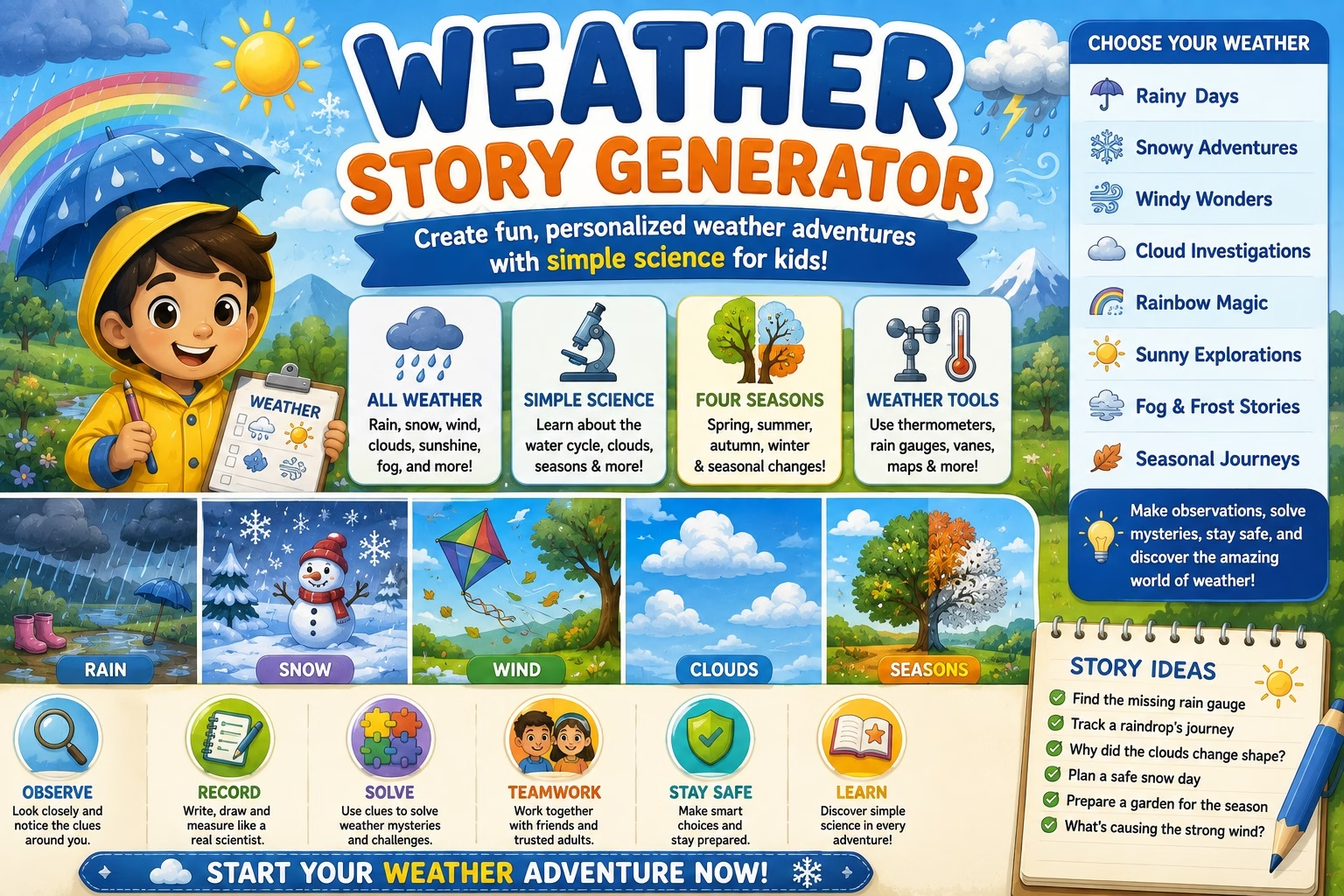
Weather Story Generator
Create a fun, personalized weather story for kids with rain, snow, wind, clouds, seasons, weather observations, safe adventures, and simple science.
AI Weather Story Generator for Kids
Our AI weather story generator helps you create a personalized children’s adventure about rain, snow, wind, clouds, sunshine, fog, frost, rainbows, changing seasons, weather tools, and simple science.
Choose the main weather, season, child role, setting, weather mission, science topic, observation task, safety choice, story length, language, reading level, and tone. The generator then creates a unique weather story based on your selections.
The child might become a junior weather observer, cloud detective, school weather reporter, rain-gauge helper, season tracker, garden assistant, rainbow investigator, weather-map reader, or young science explorer.
Create adventures about puddles, snowfall, fog, frost, sunshine, breezes, rainbows, clouds, and changing weather.
Add the water cycle, cloud formation, evaporation, temperature, seasons, weather tools, and nature observations.
Create weather stories in English, Spanish, French, German, Italian, Portuguese, Dutch, or Arabic.
Create a Personalized Weather Story
A personalized weather story puts the child inside a nature or science adventure shaped around familiar weather conditions. They might track a shrinking puddle, prepare a garden for rain, identify cloud types, complete a classroom forecast, measure snowfall, or discover why frost remains longer in the shade.
You can create a realistic weather adventure, school science mystery, seasonal nature story, weather-station mission, gentle rainy-day tale, cozy snow story, or imaginative journey through a magical cloud world.
The child remains active by observing, recording, comparing, asking questions, checking weather tools, following clues, helping others, and making responsible safety choices.
How the Weather Story Generator Works
Start by choosing the story type, main weather, season, child role, setting, mission, weather guide, adventure partner, science focus, cloud type, temperature, wind strength, weather tool, activity, observation task, clues, weather change, nature response, safety choice, lesson, and ending.
A story about a disappearing puddle will feel different from a snowy forest adventure, windy kite-festival challenge, cloud-classification mystery, or classroom water-cycle project.
The AI uses your selections to create a clear beginning, weather mission, science question, observation clues, teamwork scene, safe decision, weather change, gentle twist, and satisfying ending.
Useful details to choose before generating
- The child’s name and age group
- The main weather and season
- The child’s weather role
- The setting and mission
- The simple science topic
- The weather tool and observation task
- The cloud type, temperature, and wind
- The safety choice and investigation
- The lesson and ending style
- The language, tone, reading level, and story length
Weather Stories for Kids
Weather stories for kids can transform ordinary changes in the sky into adventures involving science, nature, observation, and problem solving.
The generator can create rainy-day stories, snow adventures, wind stories, cloud mysteries, rainbow tales, seasonal stories, water-cycle adventures, weather-station missions, and gentle weather bedtime stories.
The science appears naturally through what the characters notice, discuss, measure, and discover. It should feel like part of the adventure rather than a textbook wearing a raincoat.
Rain Stories for Kids
A rain story can begin with darkening clouds, drops tapping on a window, a garden waiting for water, a changed picnic plan, or a mysterious puddle that becomes smaller throughout the day.
The child may help prepare waterproof clothing, check a rain gauge, protect garden plants, observe how soil absorbs water, or help the family choose a safe indoor activity.
Rain does not need to ruin the story. The characters may discover reflections in puddles, watch plants lift after rainfall, create a weather journal, or enjoy a cozy evening indoors.
Snow Stories for Kids
A snow story can feature soft snowfall, fresh tracks, measuring snow depth, winter clothing, melting snow, animal signs, frosty mornings, and warm family routines.
The child might become a snow-day planner, junior observer, nature photographer, or helper responsible for checking the weather chart.
The story can explain that snow forms when water in clouds freezes into ice crystals that join together and fall when they become heavy enough.
Snow scenes remain safe and supervised. Children wear suitable clothing, avoid unsafe ice, stay with trusted adults, and return indoors when conditions become uncomfortable.
Wind Stories for Kids
A wind story can involve leaves moving, flags fluttering, wind ribbons changing direction, clouds traveling across the sky, or a planned kite activity that needs a safer time.
The child may use a weather vane or simple ribbons to observe wind direction. They may compare a light breeze with stronger wind and learn why outdoor plans sometimes need to change.
The story can introduce the idea that wind is moving air, often caused by uneven heating of Earth’s surface and differences in air pressure.
Cloud Stories for Kids
Cloud stories can include fluffy cumulus clouds, low gray stratus clouds, thin cirrus clouds, rain-bearing clouds, fog, and clouds that change shape throughout the day.
The child might use a cloud chart, photograph the sky safely, compare cloud shapes, or solve a mystery involving a cloud that appears different from the others.
The story can explain that clouds form when water vapor cools and condenses into tiny droplets or ice crystals floating in the air.
Rainbow Stories for Kids
A rainbow story can begin after rain when sunlight shines through water droplets in the air.
The child may notice where the sun is positioned, compare the colors, or discover why the rainbow appears in the part of the sky opposite the sun.
The story can explain that light bends, reflects, and separates into different colors inside water droplets.
A rainbow may become the final clue in a weather mystery, the reward after a garden mission, or the peaceful ending to a rainy-day adventure.
Fog, Frost and Dew Stories
Fog, frost, and dew can create gentle weather mysteries for children. A familiar path may look different in fog, tiny drops may appear on grass, or delicate frost patterns may cover shaded leaves.
Dew forms when water vapor condenses on a cool surface. Frost can form when water vapor changes into ice crystals on a surface cold enough for freezing.
Fog is a cloud close to the ground. The story can show characters waiting for visibility to improve rather than trying to travel through unsafe conditions.
Weather Science Stories for Kids
A weather science story can explore clouds, rain, snow, wind, temperature, air pressure, evaporation, condensation, forecasts, seasons, and the water cycle.
The child may collect observations, compare measurements, ask a meteorologist questions, or update a prediction when new information appears.
Weather forecasts are presented as informed predictions rather than guaranteed promises. Characters can revise their forecast when the wind, clouds, temperature, or weather map changes.
Water Cycle Stories for Kids
A water-cycle story can follow a raindrop through evaporation, condensation, clouds, precipitation, puddles, streams, plants, and the atmosphere.
The child might build a sealed water-cycle model with an adult, observe condensation on a cool container, or track how a puddle changes in sun and shade.
The story can explain that water does not simply vanish when a puddle dries. Some of it changes into water vapor and enters the air.
Stories About How Clouds Form
A cloud-formation story can begin with warm, moist air rising. As the air rises and cools, water vapor condenses around tiny particles in the atmosphere.
The resulting droplets or ice crystals gather into clouds. Depending on temperature, air movement, and moisture, clouds can have different shapes and heights.
The child may identify clouds using a chart, compare photographs, or discover that a low cloud touching the ground is fog.
Stories About Why Rain Falls
Rain forms when tiny water droplets inside clouds collide and join together. When they become too heavy to remain suspended, they fall toward the ground.
The child may observe dark clouds, a temperature change, increasing humidity, or the first drops appearing on a window.
The story can connect rain with gardens, rivers, drinking water, plants, wildlife, and the continuing water cycle.
Stories About How Snow Forms
Snow forms inside cold clouds when water vapor freezes into ice crystals. Those crystals can connect and grow into snowflakes.
The exact shape of a snowflake depends on conditions such as temperature and moisture inside the cloud.
The child might compare fresh snow in sunlight and shade, measure snow depth with supervision, or observe how snow gradually melts as temperatures rise.
Stories About Temperature
A temperature story can involve reading a thermometer, comparing morning and afternoon conditions, or measuring the difference between a sunny place and a shaded area.
The child may discover that different surfaces warm at different rates and that direct sunlight can make one location feel warmer than another nearby location.
The story can also help children choose suitable clothing, drink water during warm weather, or wear layers when temperatures drop.
Weather Forecast Stories
A weather-forecast story can include maps, weather symbols, temperature readings, wind direction, satellite images, cloud observations, and reports from a weather balloon.
The child might help prepare a classroom forecast, correct mixed-up weather symbols, or explain why the prediction needs to be updated.
The final forecast may not be perfect. The lesson can show that scientists use the best information available and revise predictions when conditions change.
Weather Station Adventures
A weather station story can feature thermometers, rain gauges, weather vanes, anemometers, barometers, outdoor sensors, cloud charts, and weather journals.
The child may discover that a rain gauge is in the wrong place, a weather vane is blocked by a leaf, or two temperature readings were taken under different conditions.
The mystery can be solved by checking where and how each measurement was collected.
Weather Tool Stories
Weather tools give children practical ways to investigate the atmosphere:
- Thermometer: measures temperature.
- Rain gauge: collects and measures rainfall.
- Weather vane: shows wind direction.
- Anemometer: measures wind speed.
- Barometer: measures air pressure.
- Weather map: shows patterns and forecast information across an area.
The generator can build these tools into the plot through clues, school projects, weather observations, and age-appropriate investigations.
Season Stories for Kids
Season stories can explore spring growth, summer warmth, autumn leaves, winter cold, rainy seasons, dry seasons, and the gradual change from one season to another.
The child may track daylight, plant growth, animal behavior, clothing choices, temperature, or changes in the sky.
The story can show that seasons differ between regions and that not every place experiences the same weather at the same time.
Spring Weather Stories
Spring stories can include gentle rain, sprouting seeds, changing temperatures, returning birds, longer daylight, flowers, puddles, and windy afternoons.
The child may help prepare a garden, track plant growth, observe changing clouds, or discover why some mornings remain cool even as the season becomes warmer.
Summer Weather Stories
Summer stories can feature sunshine, warm temperatures, shade, sea breezes, garden watering, clouds building during the afternoon, and responsible hot-weather choices.
The child may compare temperatures in the sun and shade, plan an activity for a cooler part of the day, or help younger children remember water and sun protection.
Autumn Weather Stories
Autumn stories can include falling leaves, cooler air, changing wind, shorter days, migrating birds, harvest activities, and weather that shifts between sunshine and rain.
The child may follow leaf clues, prepare a seasonal display, record daily temperature changes, or help plan an outdoor event around uncertain weather.
Winter Weather Stories
Winter stories can explore cold air, frost, snow, warm clothing, icy-looking surfaces observed safely, shorter daylight, and animals adapting to the season.
The child may measure snow, watch frost melt, help prepare garden plants, or enjoy a cozy indoor weather project.
Weather and Animal Stories
Animals often respond to weather and seasonal changes. Birds may shelter in thick branches, earthworms may appear on damp ground, some animals grow thicker coats, and migrating species may move as seasons change.
The child can observe these behaviors from a respectful distance and avoid treating one sign as a perfect forecast.
The story may involve helping prepare a wildlife garden, recording bird activity, or noticing how animals use shade, shelter, and water.
Weather and Plant Stories
Plants respond to rain, sunlight, temperature, wind, soil moisture, and seasonal changes.
The child may help protect seedlings from cold weather, observe flowers after rain, compare wet and dry soil, or notice plants turning toward light.
The story can show that both too little and too much water may create problems, making careful observation important.
School Weather Project Stories
A school weather adventure can include a classroom forecast, science-fair display, cloud chart, water-cycle model, weather journal, or outdoor observation station.
The students may discover mixed-up symbols, missing measurements, two readings that disagree, or a forecast that needs updating.
The final project can celebrate teamwork, careful observation, asking questions, and learning from mistakes.
Weather Mystery Stories
A weather mystery may begin with a shrinking puddle, unexpected frost, a missing rain gauge, strange cloud pattern, mixed-up forecast board, or weather vane pointing in the wrong direction.
The child can compare clues such as temperature, sunlight, shade, cloud type, wind direction, rainfall, and notes from an earlier weather journal.
The explanation remains age-appropriate and grounded in simple science. The mystery may be solved by evaporation, condensation, changing wind, a tool placed incorrectly, or an observation recorded at a different time.
Magical Weather Stories
A magical weather story can include talking clouds, cheerful raindrops, a rainbow bridge, snowflake messengers, a wind character, or a cloud kingdom built around the water cycle.
The fantasy elements may create a playful plot, but the science should remain recognizable. A raindrop can travel through evaporation and condensation even while speaking to the child.
Magical characters should not teach children that real weather has feelings, intentions, or the ability to target particular people.
Kid-Safe Weather Adventures
The Weather Story Generator keeps weather exploration age-appropriate and supervised. Children may observe, record, compare, photograph, draw, and complete simple activities with trusted adults.
Stories avoid placing children outdoors alone during dangerous conditions or making them responsible for emergency planning.
Weather Safety Stories for Kids
A weather safety story can teach responsible choices without turning into a frightening disaster tale.
The child may decide to move a picnic indoors, delay kite flying, wait for fog to lift, wear warmer layers, avoid a flooded path, or let adults handle weather preparations.
The safest decision may become the story’s biggest success, even when the original activity cannot continue.
Rain and Thunder Safety
If thunder is heard, characters move indoors or into a suitable enclosed shelter with trusted adults. They do not remain under isolated trees or continue outdoor games.
Stories avoid frightening lightning strikes and focus instead on calm, responsible decisions, indoor alternatives, and reassurance from adults.
Floodwater Safety
Children should never walk, cycle, play, or drive toy vehicles through floodwater. Water can be deeper or faster than it appears and may hide hazards.
In the story, trusted adults choose another route, postpone the journey, or follow local safety guidance.
Snow and Cold-Weather Safety
Cold-weather stories can include suitable layers, gloves, warm footwear, supervised outdoor time, rest breaks, and returning indoors when needed.
Characters avoid unsafe frozen water, steep snowy areas, and travel without adult planning.
Warm-Weather Safety
Warm-weather stories can include drinking water, resting in shade, choosing cooler activity times, wearing appropriate clothing, and using sun protection with adult guidance.
The story avoids extreme heat exposure and shows that changing the plan may be wiser than trying to continue.
Weather Bedtime Stories
A weather adventure can become a peaceful bedtime story by choosing gentle rain, soft snow, quiet wind, drifting clouds, a cozy indoor setting, and a reassuring ending.
The child might listen to rain on the window, complete one page of a weather journal, watch clouds clear, or see snow settle under the evening sky.
Choose a short length, calm tone, simple vocabulary, and an ending such as peaceful bedtime rain, a warm indoor evening, or a quiet weather station closing for the night.
Weather Story Ideas You Can Create
- A rainy-day story about preparing a garden
- A snow adventure involving fresh animal tracks
- A cloud mystery using a cloud chart
- A water-cycle story following a raindrop
- A rainbow investigation after gentle rain
- A windy-day story about postponing a kite festival
- A weather-station mystery involving two temperature readings
- A seasonal story covering spring, summer, autumn, and winter
- A school forecast story with mixed-up weather symbols
- A frost mystery in a family garden
- A gentle weather bedtime story
- A story about animals preparing for seasonal change
Weather Stories with Moral Lessons
A weather story can explore observation, patience, teamwork, safety, planning, curiosity, flexibility, and respect for nature.
The lesson may appear when the child updates a prediction, accepts that plans must change, listens to a trusted adult, notices a small clue, or chooses safety over finishing an activity.
The story can also show that mistakes help scientists learn and that an unexpected result may lead to a better question.
Weather Stories in Multiple Languages
This AI weather story generator can create stories in English, Spanish, French, German, Italian, Portuguese, Dutch, and Arabic.
This makes it useful for bilingual families, multilingual classrooms, science units, weather projects, seasonal lessons, and bedtime reading.
You can also choose the reading level to adjust vocabulary, sentence structure, scientific detail, and story complexity.
Choose the Right Weather Story Length
Some weather stories need one observation, a simple science discovery, and a warm ending. Others need more room for weather tools, clues, seasonal changes, nature responses, safety decisions, and teamwork.
- Short weather story: useful for bedtime, younger children, or a quick classroom activity.
- Medium weather story: suitable for a complete science mission or weather mystery.
- Long weather story: useful for older readers, detailed investigations, and richer seasonal adventures.
Why Use an AI Weather Story Generator?
An AI weather story generator gives you control over the weather, season, child role, setting, science topic, mission, observation, safety lesson, language, and ending.
Instead of receiving a generic rainy-day tale, you can create a story about cloud science, snowfall, wind direction, changing seasons, animal behavior, a classroom forecast, or a weather-tool mystery.
The finished story can be used for bedtime, classroom reading, weather lessons, science projects, seasonal activities, creative writing, or preparing children for changing plans.
Best Uses for This Weather Story Tool
- Personalized weather stories for kids
- Rain and snow stories
- Cloud and rainbow adventures
- Simple weather science stories
- Water-cycle stories
- Four-seasons stories
- Weather-station mysteries
- School science writing prompts
- Weather safety stories
- Gentle weather bedtime stories
More Weather Story Ideas
Create a personalized rainy-day adventure, snow mystery, cloud investigation, classroom forecast, water-cycle journey, or peaceful weather bedtime story.
For a science mystery, add thermometers, rain gauges, weather vanes, weather maps, cloud photographs, puddles, frost, wind ribbons, or yesterday’s weather journal.
- Discover why a puddle becomes smaller.
- Help a class correct its weather forecast.
- Follow a raindrop through the water cycle.
- Compare temperatures in sunshine and shade.
- Prepare a safer plan for a windy festival.
- Watch a rainbow appear after the rain.
Weather Story Generator FAQ
What is a weather story generator?
A weather story generator creates a personalized children’s adventure using details such as rain, snow, wind, clouds, seasons, weather tools, science topics, safety lessons, language, and story length.
Can AI create a personalized weather story?
Yes. You can add the child’s name and choose the weather, season, role, setting, mission, science focus, reading level, language, tone, and ending.
Which types of weather can I include?
You can create stories about rain, snow, wind, sunshine, clouds, fog, frost, dew, rainbows, warm weather, cold weather, and changing conditions.
Can the story include simple weather science?
Yes. Stories can explain cloud formation, rain, snow, wind, evaporation, condensation, the water cycle, temperature, weather tools, forecasts, and seasons.
Can I create a water-cycle story?
Yes. The child can follow water through evaporation, condensation, clouds, precipitation, puddles, plants, and the atmosphere.
Can I create a four-seasons story?
Yes. The story can explore spring, summer, autumn, winter, seasonal transitions, plant changes, animal behavior, and different weather conditions.
Are the weather stories safe for kids?
Yes. The generator avoids dangerous storm adventures, floodwater, unsafe ice, extreme exposure, and children making emergency decisions without trusted adults.
Does every weather story end with sunshine?
No. Rain, snow, clouds, fog, or wind may remain while the characters choose a safe and enjoyable plan.
Can I create a weather bedtime story?
Yes. Choose gentle rain, soft snow, drifting clouds, a cozy setting, short length, calm tone, and peaceful ending.
Can I make weather stories in different languages?
Yes. The generator supports English, Spanish, French, German, Italian, Portuguese, Dutch, and Arabic.
What weather-story details can I customize?
You can customize the story type, weather, season, child role, setting, mission, guide, partner, science focus, cloud type, temperature, wind, weather tool, observation, activity, problem, clues, weather change, nature response, safety choice, investigation, teamwork, twist, lesson, ending, language, reading level, and story length.