
Antelope Facts for Kids
Antelope is a broad everyday name for many hoofed mammals in the cattle family, Bovidae. It is not one formal scientific group, and antelopes include wonderfully different animals such as gazelles, impalas, wildebeests, duikers, oryxes, and elands. Most live in Africa, while several occur in Asia. They range from tiny forest dwellers to enormous open-country grazers.
Quick Antelope Facts
- Animal Type: Mammal
- Group: Mostly bovid hoofed mammals
- Known For: Permanent horns, cloven hooves, speed, jumping, and great diversity
- Habitat: Savannas, forests, deserts, wetlands, mountains, and grasslands
- Diet: Grasses, leaves, shoots, herbs, fruit, and other plant material
What You’ll Learn
Discover 10 graceful antelope facts for kids about horns, speed, herds, grazing, and life across Africa and Asia, plus a quiz, glossary, and activity
Clear explanations make them ideal for children, families, teachers, and little fact-hunters.
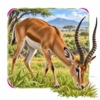
10 Fun Antelope Facts for Kids
1. Antelope Is Not One Scientific Branch
The word antelope describes many bovids that people do not usually call cattle, sheep, or goats. These animals belong to several different branches of the bovid family rather than one single antelope lineage.
Kid Decode: The antelope label is a wildlife umbrella covering many branches of the hoofed-mammal tree.
2. Most Antelopes Live in Africa
Africa holds the greatest variety of antelopes, from forest duikers to desert oryxes and grassland wildebeests. Several species, including saigas, blackbucks, nilgai, and chinkaras, live in Asia.
Kid Decode: Africa hosts the biggest antelope cast, while Asia adds several remarkable performers.
3. Their Horns Do Not Fall Off Each Year
Antelope horns have permanent bony cores covered by keratin. Unlike deer antlers, they are not normally shed and regrown each year.
Kid Decode: An antelope keeps its horn hardware instead of replacing it every season.
4. Horn Shapes Vary Wildly
Different species carry straight spikes, curved sabres, corkscrews, rings, or sweeping arcs. Males usually have horns, while females have them in some species but not in others.
Kid Decode: The antelope horn cabinet contains spears, spirals, hooks, and elegant curves.
5. They Walk on Cloven Hooves
Each foot places most of its weight on two main toes enclosed in hard hoof material. This cloven-hoof design can support running, jumping, climbing, or moving across soft ground depending on the species.
Kid Decode: Two main hoof toes carry an antelope across everything from marsh mud to mountain rock.
6. Antelopes Are Ruminants
They swallow plant food, later bring some of it back to the mouth as cud, and chew it again. Microbes in a multi-compartment stomach help break down tough grasses and leaves.
Kid Decode: Lunch can return for a second chewing session before digestion is finished.
7. Some Leap to Send a Message
Springboks and several gazelles perform high stiff-legged jumps often called pronking or stotting. The display may warn predators that the animal is alert and difficult to catch.
Kid Decode: One dramatic jump can tell a predator that the chase may be a terrible investment.
8. Social Lives Differ by Species
Some antelopes gather in enormous migrating herds, others live in small family groups, and secretive forest species may spend much of their time alone. Males may defend females, territories, or display areas.
Kid Decode: Antelope society ranges from giant travelling crowds to one shy duiker under the leaves.
9. Calves Use Different Safety Plans
Newborn calves of some species hide quietly in vegetation while their mothers feed nearby. Calves of herd-living species may stand and follow their mothers soon after birth.
Kid Decode: One baby becomes a hidden bundle while another quickly joins the moving herd.
10. Many Antelopes Need Protection
Habitat loss, hunting, livestock competition, fences, disease, and blocked migration routes threaten numerous species. Protected landscapes and community conservation can safeguard both antelopes and the habitats they shape.
Kid Decode: Saving an antelope often means keeping an entire migration road or forest neighborhood alive.
The Weirdest Antelope Fact
The pronghorn is often called the American antelope but is not a true antelope, while the bulky wildebeest really is one of the animals commonly included under the antelope name.
Try This Antelope Activity
Antelope Diversity Drawing Activity
Draw an antelope parade showing a tiny forest duiker, a leaping springbok, a spiral-horned kudu, a desert oryx, and a giant eland. Add permanent horns, cloven hooves, calves using different hiding or following strategies, and habitat labels for forest, savanna, desert, and wetland.
Quick Antelope Quiz
- Is antelope one formal scientific group? Answer: No, it is a broad name used for many bovids.
- Where do most antelope species live? Answer: Africa.
- How do horns differ from deer antlers? Answer: Horns are normally permanent and are not shed each year.
- What is cud? Answer: Partly digested plant food brought back up and chewed again.
- Is the North American pronghorn a true antelope? Answer: No.
Mini Glossary
- Bovid: A hoofed mammal from the cattle family, Bovidae.
- Cloven Hoof: A hoof divided into two main weight-bearing toes.
- Ruminant: A mammal that regurgitates and rechews partly digested plant food.
- Keratin: The tough material covering horns, claws, hair, and nails.
- Pronking: A stiff-legged leap performed by some antelopes.

 Buzzard Facts for Kids
 Anaconda Facts for Kids
 Cassowary Facts for Kids
 Tasmanian Tiger Facts for Kids
More Animal Facts for Kids
Visit the full animal facts library or explore a focused animal group.
More Extinct Animal Facts for Kids
Discover dinosaurs, Ice Age giants, prehistoric sea creatures, recently extinct species, and other animals from the past.
Fact check note: Fact checked with Animal Diversity Web’s Bovidae account, the IUCN SSC Antelope Specialist Group’s global resources, Kingdon and Hoffmann’s Mammals of Africa, and comparative research on bovid horns, locomotion, and social ecology.

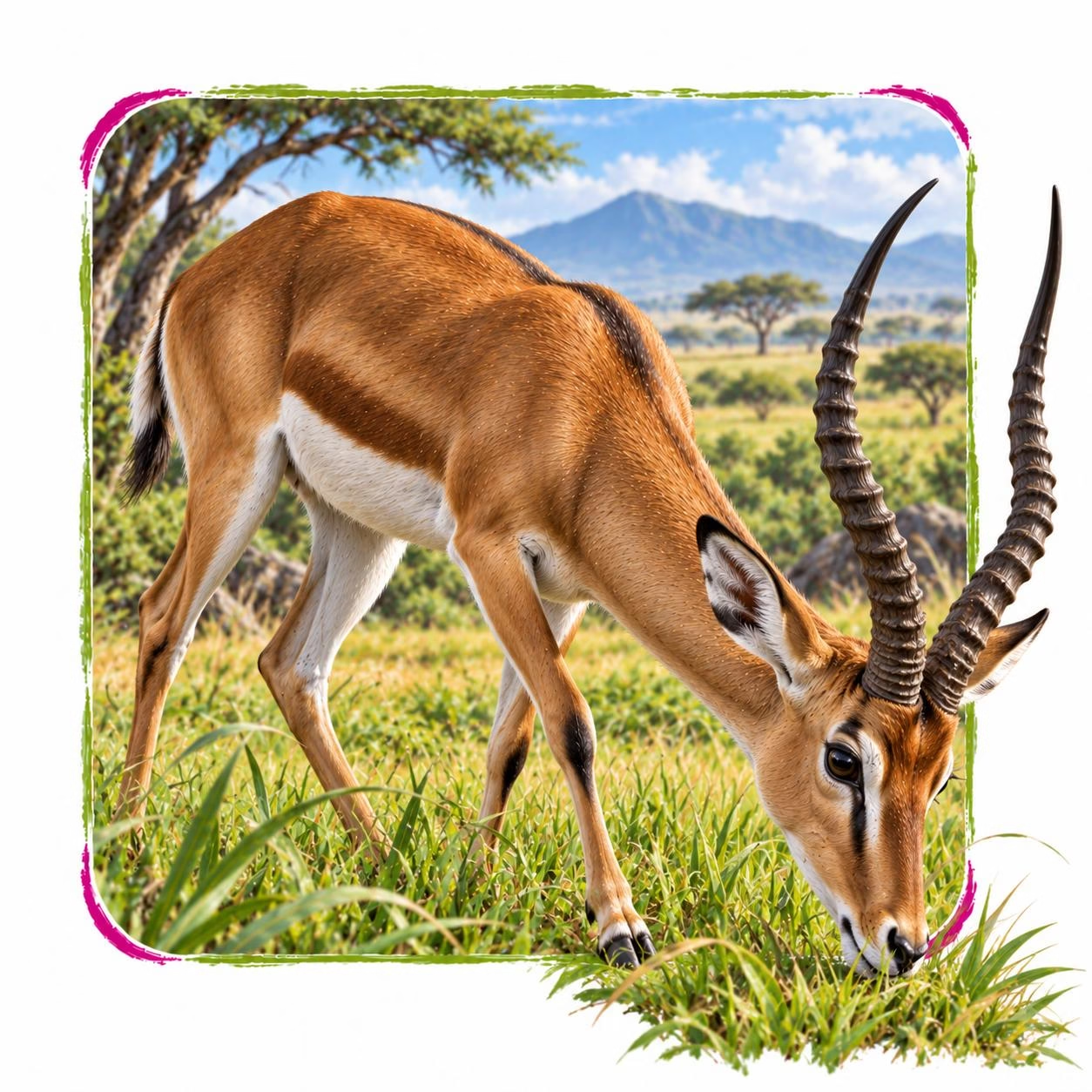
Antelope in its natural Savannas, grasslands, deserts, scrublands, forests, wetlands, floodplains, mountains, and open woodlands across Africa and parts of Asia habitat