
Bee Facts for Kids
Bees are a diverse group of winged insects called Anthophila within the wasp superfamily Apoidea. More than 20,000 species have been described, ranging from tiny solitary desert bees to large social bumblebees. Most bees gather pollen and nectar for their young and move pollen between flowers, making them among the world’s most important pollinators. Honey bees are famous, but they represent only a small corner of bee diversity.
Quick Bee Facts
- Animal Type: Insect
- Group: Anthophila bees within Apoidea
- Known For: Pollination, pollen-carrying hairs, flower visiting, diverse nests, and complete metamorphosis
- Habitat: Forests, grasslands, deserts, farms, gardens, wetlands, mountains, and towns
- Diet: Mostly nectar and pollen, with floral oils or rare unusual foods used by some species
What You’ll Learn
Explore 10 buzzing bee facts for kids about pollen, nectar, pollination, nests, communication, and flight, plus a quiz, glossary, and activity
Easy explanations make them fun for children, families, teachers, and young nature explorers.
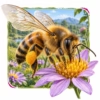
10 Fun Bee Facts for Kids
1. There Are More Than 20,000 Species
Scientists have described more than 20,000 bee species in seven living families. Bees occur on every continent except Antarctica and differ enormously in size, colour, nesting, and social behaviour.
Kid Decode: The word bee covers a flying cast larger than the entire bird-and-mammal line-up combined.
2. Most Bee Species Are Solitary
Most species do not live in honey-bee-style colonies. A solitary female usually builds and provisions her own nest, although many solitary bees may nest close together.
Kid Decode: The typical bee home has one hardworking mother rather than a queen and thousands of workers.
3. Many Nest Underground
A large share of solitary bees excavate tunnels in bare or lightly vegetated soil. Others use hollow stems, beetle holes, wood, snail shells, plant fibres, mud, leaves, or resin.
Kid Decode: A patch of ordinary ground can hide an entire neighbourhood of tiny nurseries.
4. Special Hairs Carry Pollen
Many bees have branched body hairs that catch pollen. Females may carry it on the legs or underside of the abdomen in a brush called a scopa, while honey bees and bumblebees form compact loads in pollen baskets.
Kid Decode: A bee can leave a flower wearing a dusty golden coat and carrying packed shopping bags.
5. Pollination Helps Plants Reproduce
Pollen moved from one flower to another can fertilise ovules, allowing many plants to produce seeds and fruit. Wild bees and managed bees pollinate crops as well as countless wild plants.
Kid Decode: Every fuzzy flower visit can help write the next generation of a plant.
6. Not Every Bee Makes Honey
True honey bees store large honey supplies, and some stingless bees also produce honey. Most bee species make only enough nectar-and-pollen food to provision individual offspring.
Kid Decode: The honey jar belongs to a few bee branches, not the whole buzzing family tree.
7. Only Females Can Sting
A bee stinger evolved from an egg-laying structure, so males cannot sting. Many female bees rarely sting, have weak stings, or belong to stingless groups.
Kid Decode: A male bee can buzz dramatically but arrives without the stinger equipment.
8. Bees Undergo Complete Metamorphosis
Every bee develops through egg, larva, pupa, and adult stages. The soft legless larva looks nothing like the winged adult that emerges after pupation.
Kid Decode: A quiet grub inside a nest eventually unfolds into a flying flower visitor.
9. Some Perform Buzz Pollination
Bumblebees and certain solitary bees can grip a flower and vibrate their flight muscles, shaking loose pollen from plants such as tomatoes, blueberries, and peppers.
Kid Decode: The bee turns into a tiny electric toothbrush and the flower releases a pollen cloud.
10. Bees Face Many Threats
Habitat loss, fewer flowers and nesting places, pesticides, climate change, disease, invasive species, and poorly managed competition can harm different bee populations. Planting varied native flowers and protecting nesting habitat can help.
Kid Decode: A bee garden needs both a flower restaurant and a safe place for the next generation.
The Weirdest Bee Fact
Male orchid bees collect perfumes from flowers, fungi, and other sources, storing the scents on their hind legs and blending them into elaborate fragrances used during courtship.
Try This Bee Activity
Bee Diversity Drawing Activity
Draw a pollinator garden with a bumblebee buzz-pollinating a tomato flower, a mason bee entering a hollow stem, a mining bee beside a soil tunnel, a leafcutter bee carrying a leaf circle, and a honey bee with pollen baskets. Add egg, larva, pupa, and adult life-cycle circles.
Quick Bee Quiz
- About how many bee species have scientists described? Answer: More than 20,000.
- Do most bees live in large colonies? Answer: No, most species are solitary.
- What do specialised hairs help female bees carry? Answer: Pollen.
- Can male bees sting? Answer: No.
- What are the four life stages? Answer: Egg, larva, pupa, and adult.
Mini Glossary
- Pollination: Moving pollen so a plant can produce seeds.
- Solitary Bee: A bee whose female builds and provisions her own nest.
- Scopa: A brush of specialised hairs used to carry pollen.
- Metamorphosis: A major change in body form during development.
- Buzz Pollination: Releasing pollen by vibrating a flower.
 Mantis Shrimp Facts for Kids
 Snake Facts for Kids
 Mallard Facts for Kids
 Prionosuchus Facts for Kids
More Animal Facts for Kids
Visit the full animal facts library or explore a focused animal group.
More Extinct Animal Facts for Kids
Discover dinosaurs, Ice Age giants, prehistoric sea creatures, recently extinct species, and other animals from the past.
Fact check note: Fact checked with USDA Agricultural Research Service bee-diversity projects, USDA Natural Resources Conservation Service pollinator handbooks, Cane’s review of wild bee ecology, Michener’s The Bees of the World, and comparative research on pollen hairs, nesting, buzz pollination, and bee conservation.

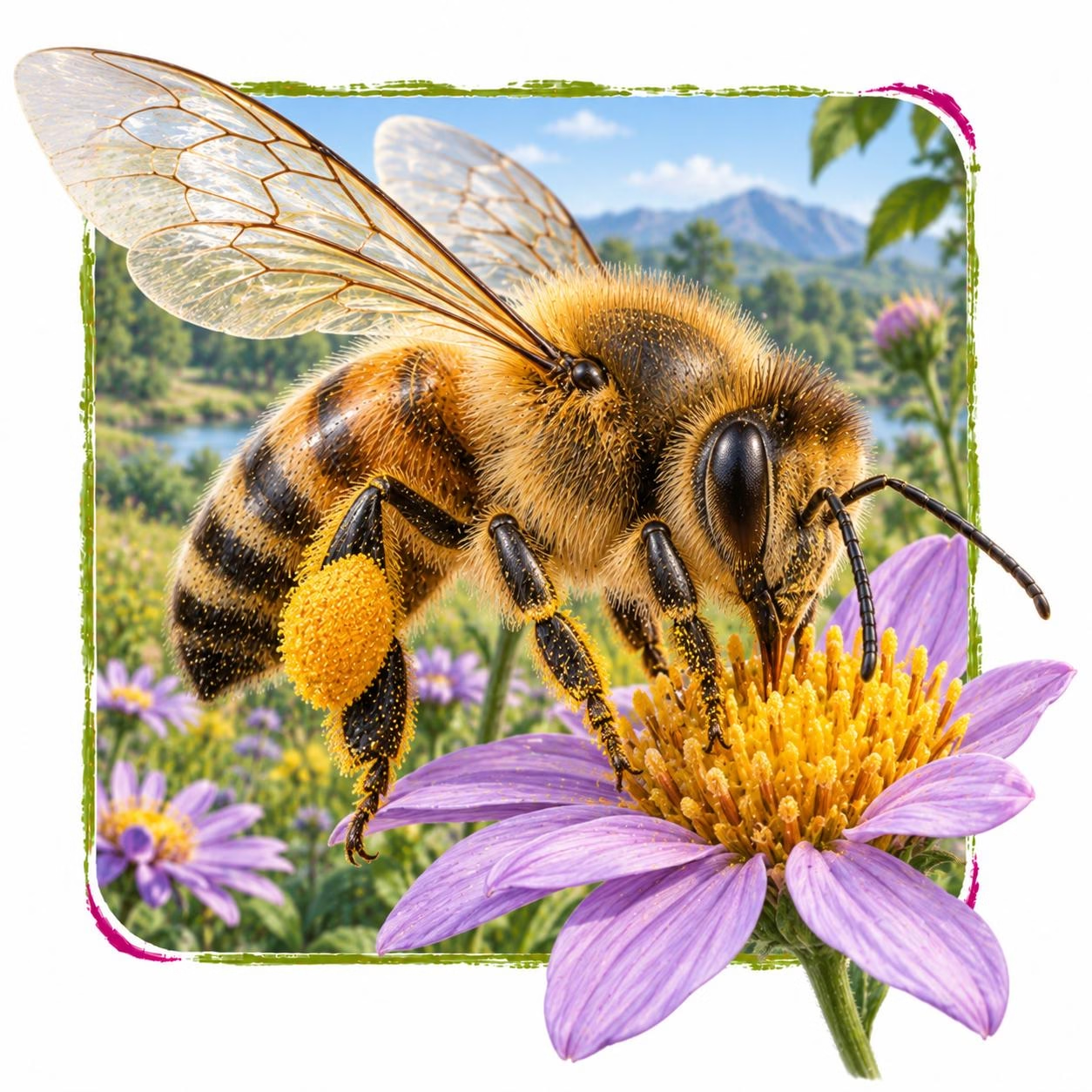
Bee in its natural Forests, grasslands, deserts, farms, gardens, wetlands, mountains, coastal habitats, towns, soil banks, hollow stems, and tree cavities worldwide except Antarctica habitat