
Cobra Facts for Kids
Cobra is a broad common name for several venomous snakes in the family Elapidae. Most true cobras belong to the genus Naja and live across Africa and Asia, while other hood-spreading snakes such as the king cobra and rinkhals belong to different genera. Cobras are famous for raising the front of the body and spreading a hood, but species differ greatly in size, colour, habitat, venom, diet, reproduction, and whether they can spray venom toward a threat.
Quick Cobra Facts
- Animal Type: Reptile
- Group: Elapid snakes, especially true cobras in the genus Naja
- Known For: Expandable neck hoods, fixed front fangs, potent venom, warning displays, and defensive spitting in some species
- Habitat: Forests, savannas, grasslands, deserts, wetlands, farms, and villages across Africa and Asia
- Diet: Rodents, frogs, lizards, birds, eggs, fish, and other snakes depending on species
What You’ll Learn
Discover 10 fascinating cobra facts for kids about hoods, venom, hunting, senses, and African and Asian habitats, plus a quiz, glossary, and activity
Easy explanations make these facts great for children, families, teachers, and little fact-finders.
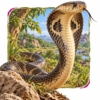
10 Fun Cobra Facts for Kids
1. Cobra Is a Common Name, Not One Genus
Most snakes called true cobras belong to Naja, but the king cobra belongs to Ophiophagus and the rinkhals to Hemachatus. Several other elapids also carry cobra in their common names.
Kid Decode: The cobra label covers several branches of the venomous-snake family tree.
2. The Hood Is Made With Long Neck Ribs
A threatened cobra raises the front of its body and swings elongated ribs outward, stretching loose neck skin into a broad hood. The hood is a warning display rather than a separate flap attached to the head.
Kid Decode: The famous cape is built from movable ribs hiding beneath ordinary-looking skin.
3. Their Fangs Stay at the Front
Cobras are elapids with short fixed fangs near the front of the upper jaw. Muscles squeeze venom glands and send venom through openings in the fangs during a bite.
Kid Decode: Two permanently parked front fangs turn the mouth into a carefully aimed delivery system.
4. Cobra Venom Is Not All the Same
Different cobra venoms contain changing mixtures of neurotoxins, cytotoxins, cardiotoxins, enzymes, and other molecules. Effects therefore vary among species and regions, and every suspected bite requires urgent medical care.
Kid Decode: The word venom hides a complicated recipe that changes from cobra to cobra.
5. Only Some Cobras Spit Venom
Several African and Asian Naja species can defensively spray venom through forward-facing fang openings. They track a moving threat and aim toward the face and eyes, but most cobra species cannot truly spit.
Kid Decode: Spitting is a specialist defence trick, not standard equipment on every hooded snake.
6. A King Cobra Is Not a True Naja Cobra
The king cobra, Ophiophagus species complex, is the longest venomous snake and mainly eats other snakes. It spreads a hood but sits outside the true-cobra genus Naja.
Kid Decode: The cobra wearing the crown turns out to belong to a neighbouring scientific kingdom.
7. Forked Tongues Collect Scent Clues
A cobra flicks its forked tongue to pick up chemical particles and transfers them to the vomeronasal organ in the roof of the mouth. The two tongue tips help compare scent strength from different directions.
Kid Decode: The tongue samples two sides of the air and helps the snake read an invisible map.
8. The Menu Changes With Species and Size
Many cobras hunt rodents, frogs, lizards, birds, eggs, and snakes. Water cobras take aquatic prey, king cobras specialise on snakes, and young animals may choose smaller prey than adults.
Kid Decode: A cobra menu can run from tadpoles and mice to another snake for dinner.
9. Reproduction Is Surprisingly Varied
Most true cobras lay eggs, and females of some species guard the clutch. King cobras build leaf nests, while the rinkhals gives birth to live young, so one cobra story cannot describe every species.
Kid Decode: The cobra nursery may be an egg chamber, a guarded leaf pile, or no egg nest at all.
10. The Hood Usually Says Stay Away
Cobras generally use hiding, escape, hissing, hood spreading, mock strikes, spitting, or biting in a defensive sequence shaped by species and situation. A raised hood means the animal feels threatened and needs distance.
Kid Decode: The dramatic pose is less an invitation to battle than a large scaly stop sign.
The Weirdest Cobra Fact
A cobra hood is not a loose fan growing from the head; it appears when the snake rotates elongated neck ribs outward and stretches the skin between them.
Try This Cobra Activity
Cobra Hood-and-Fang Drawing Activity
Draw several accurate cobra relatives. Add an Indian cobra with a spread hood, a spitting cobra aiming defensively away from a child, a king cobra comparison, elongated neck ribs beneath the hood, fixed front fangs, a forked tongue scent trail, eggs guarded in a sheltered nest, and labels showing that not every cobra spits or carries the same hood marking.
Quick Cobra Quiz
- Which snake genus contains most true cobras? Answer: Naja.
- What spreads a cobra’s hood? Answer: Elongated movable neck ribs.
- Can every cobra spit venom? Answer: No.
- What does a forked tongue collect? Answer: Chemical scent particles.
- Is the king cobra a member of Naja? Answer: No, it belongs to Ophiophagus.
Mini Glossary
- Elapid: A member of the venomous snake family containing cobras, mambas, kraits, coral snakes, and relatives.
- Neurotoxin: A toxin that interferes with nerves or muscles.
- Cytotoxin: A toxin that damages cells and tissues.
- Vomeronasal Organ: A scent-detecting organ in the roof of a snake’s mouth.
- Oviparous: Reproducing by laying eggs.
 Terrapin Facts for Kids
 Carolina Chickadee Facts for Kids
 Antarctic Fur Seal Facts for Kids
 Tyrannosaurus Rex (T-Rex) Facts for Kids
More Animal Facts for Kids
Visit the full animal facts library or explore a focused animal group.
More Extinct Animal Facts for Kids
Discover dinosaurs, Ice Age giants, prehistoric sea creatures, recently extinct species, and other animals from the past.
Fact check note: Fact checked with the Reptile Database’s current cobra taxonomy, Animal Diversity Web species accounts, peer-reviewed studies of cobra venom evolution and target tracking during defensive spitting, and IUCN Red List assessments for individual cobra species.

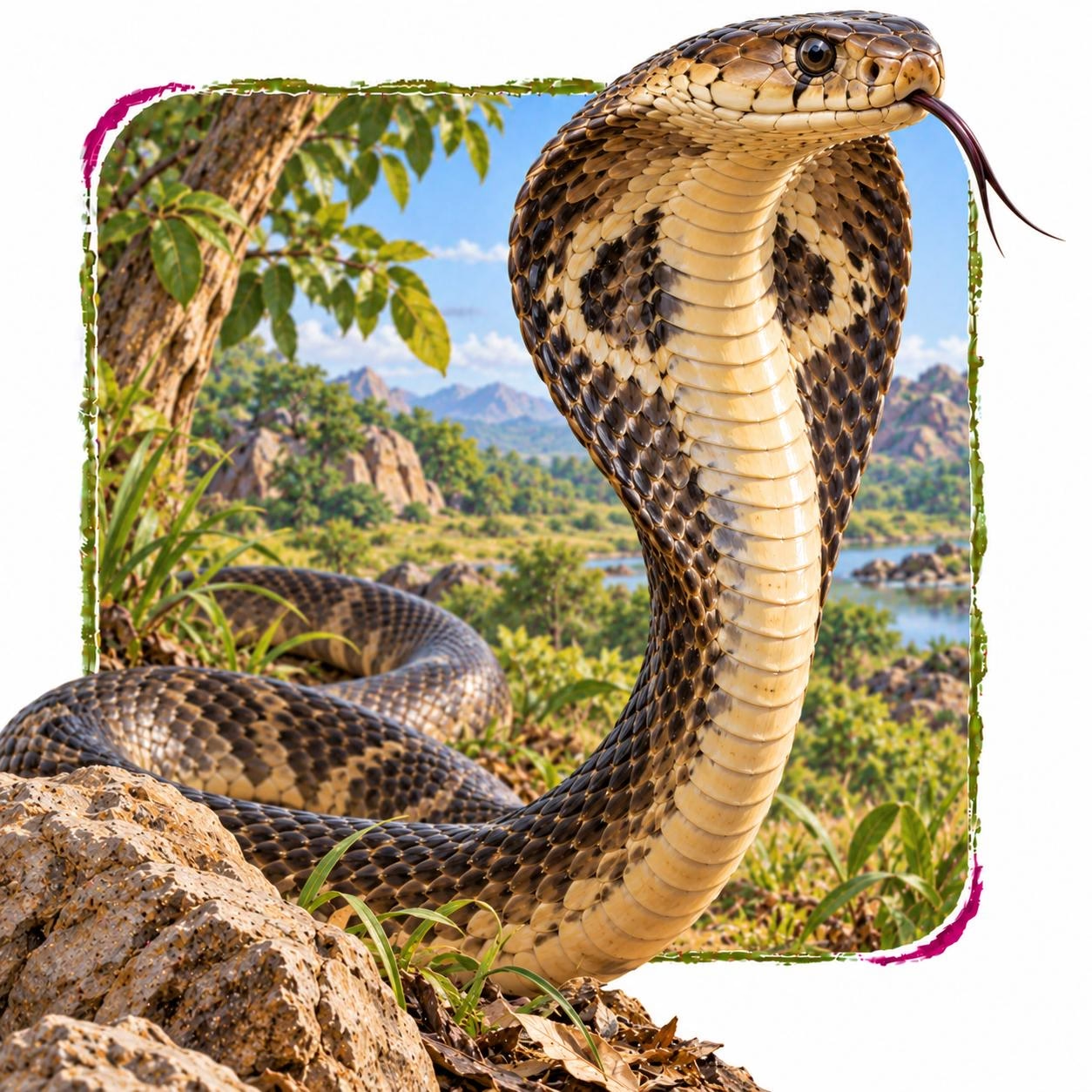
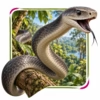
Cobra in its natural Forests, savannas, grasslands, deserts, wetlands, farms, plantations, rocky areas, and settlements across Africa and Asia habitat