
Coelacanth Facts for Kids
Coelacanths are rare deep-water fish with fleshy lobe-like fins and an ancient family history. Scientists knew them from fossils and were amazed when a living coelacanth was found off South Africa in 1938.
Quick Coelacanth Facts
- Animal Type: Fish
- Group: Lobe-finned fish
- Known For: Ancient lineage, fleshy fins, and 1938 rediscovery
- Habitat: Deep ocean slopes, caves, rocky reefs, and waters near islands and coasts in the Indian Ocean region
- Diet: Fish, squid, cuttlefish, eels, and other deep-water animals
What You’ll Learn
Learn 10 fun coelacanth facts for kids with simple explanations, kid facts, quiz, glossary, and a coelacanth activity.
These coelacanth facts for kids are written in a simple way for kids, parents, teachers, and curious little fact-hunters.
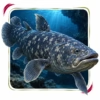
10 Fun Coelacanth Facts for Kids
1. Coelacanths Are Fish
Coelacanths are bony fish with fins, scales, gills, and deep-water lives.
Kid Decode: A coelacanth is a fish with ancient ocean notebook vibes.
2. Coelacanths Are Lobe-Finned Fish
Coelacanths have fleshy lobe-like fins that move in an unusual alternating pattern.
Kid Decode: The fins look like little underwater paddles from the past.
3. They Were Rediscovered in 1938
Coelacanths were known from fossils and thought gone until a living one was found near South Africa in 1938.
Kid Decode: It was a real-life science plot twist with scales.
4. Coelacanths Live in Deep Water
Coelacanths usually live in deep rocky waters and may rest in caves during the day.
Kid Decode: Their home is a dim ocean cave neighborhood.
5. Coelacanths Hunt at Night
Coelacanths are often active at night, when they drift and hunt for fish and other prey.
Kid Decode: They run the moonlight shift of the deep reef.
6. Coelacanths Have Thick Scales
Coelacanths have tough heavy scales that help protect their bodies.
Kid Decode: The scales are ancient-looking ocean armor.
7. Coelacanths Give Birth to Live Young
Coelacanths do not lay eggs in nests. Females carry developing young inside and give birth to live babies.
Kid Decode: Baby coelacanths skip the nest and arrive ready for deep-sea mystery.
8. Coelacanths Grow Slowly
Coelacanths are slow-growing fish and can live for many decades, making them vulnerable to population loss.
Kid Decode: Their life calendar moves like a slow deep-sea clock.
9. Coelacanths Are Very Rare
Only two living coelacanth species are known today, and sightings are unusual.
Kid Decode: Seeing one is like spotting a swimming fossil postcard.
10. Coelacanths Need Protection
Coelacanths can be harmed by deep-water fishing and small population sizes, so careful conservation matters.
Kid Decode: Protecting deep reefs keeps the ancient fish drifting.
New Coelacanth Fact for Kids
Coelacanth Fossils Found Hiding in Museum Collections
Scientists found more than fifty coelacanth fossils in museum collections that had been misidentified for 150 years. The fossils are from about 200 million years ago, when the UK was near the tropics. Some were even on public display, but nobody realized they were coelacanths until now.
The Weirdest Coelacanth Fact
A fish once thought extinct for millions of years surprised science when a living coelacanth was discovered in 1938.
Try This Coelacanth Activity
Coelacanth Drawing Activity
Draw a coelacanth drifting near a deep ocean cave. Add fleshy fins, thick scales, dark blue water, rocky walls, squid, small fish, bubbles, and a 1938 discovery badge.
Quick Coelacanth Quiz
- What kind of fish is a coelacanth? Answer: A lobe-finned fish.
- When was a living coelacanth famously found? Answer: 1938.
- Where do coelacanths often rest? Answer: Deep rocky caves.
- Do coelacanths lay eggs in nests? Answer: No, they give birth to live young.
- Why do coelacanths need protection? Answer: They are rare and vulnerable to fishing pressure.
Mini Glossary
- Lobe-Finned: Having fleshy fins supported by bones.
- Fossil: Preserved remains or traces of ancient life.
- Deep Water: Ocean areas far below the surface.
- Nocturnal: Active mostly at night.
- Conservation: Protecting animals, plants, and habitats.

More Animal Facts for Kids
Visit the full animal facts library or explore a focused animal group.
More Extinct Animal Facts for Kids
Discover dinosaurs, Ice Age giants, prehistoric sea creatures, recently extinct species, and other animals from the past.
Fact check note: Fact checked with NOAA coelacanth resources, trusted deep-sea fish references, and marine conservation education resources.
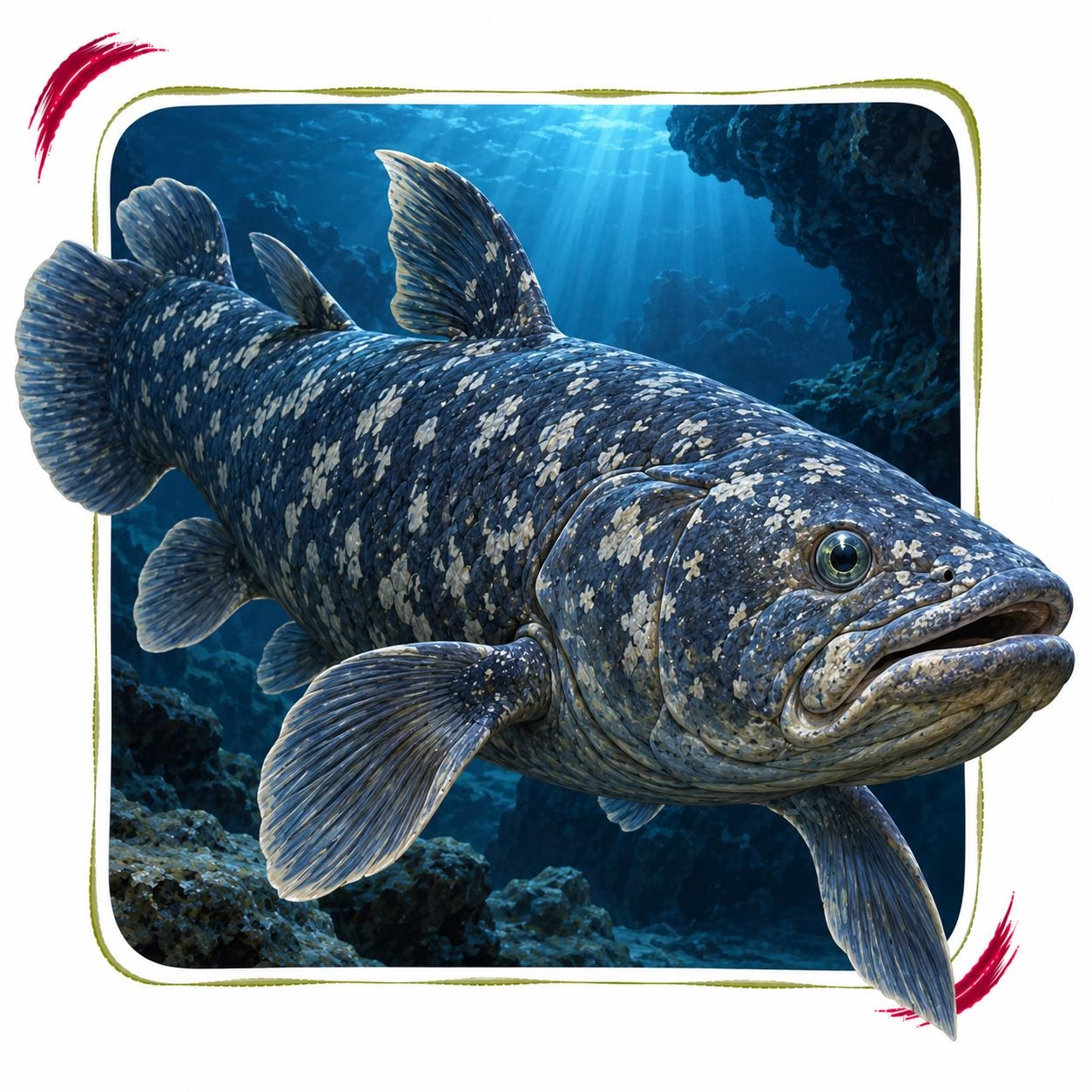
Coelacanth in its natural Deep Ocean habitat