
Aardvark vs Anteater: Distant-Lineage Convergent-Evolution Comparison
Aardvarks and giant anteaters look like relatives because both have long snouts, powerful claws, sticky tongues, and diets dominated by ants and termites. They are actually distant branches of the mammal family tree that evolved similar solutions independently. The aardvark is a heavier African burrower with large ears and unusual tubular teeth. The giant anteater is a toothless American mammal with dramatic shoulder markings, a much bushier tail, and a tongue that can extend farther beyond the mouth.
About Aardvark
- Type Mammal
- Diet Mainly ants and termites, located by smell and collected with a long sticky tongue; it also eats the underground fruit of the aardvark cucumber and may swallow small amounts of soil while feeding
- Group Aardvark (Orycteropus afer), the only living species in the order Tubulidentata and not a member of the anteater group
- Known for A sturdy, arch-backed mammal with grayish-brown skin, a long pig-like snout, large upright ears, a thick tapering tail, powerful foreclaws, shorter hind feet, sparse body hair, and an adult weight commonly around 40–65 kilograms
- Special skill Powerful digging claws, closable nostrils, protective hairs around the nose, enormous ears, a sticky tongue, thick skin, rapid burrowing, and unusual column-like teeth made from many tiny dentine tubes
About Anteater
- Type Mammal
- Diet Ants and termites gathered with an extremely long, sticky tongue; it opens nests with its claws, feeds briefly, and moves on rather than remaining at one colony for long
- Group Anteater, represented here by the giant anteater (Myrmecophaga tridactyla); four living anteater species differ greatly in size, habitat, climbing ability, and behavior
- Known for A long-bodied mammal with a narrow tubular snout, tiny mouth, no teeth, small ears, black-and-white shoulder markings, long curved foreclaws, knuckle-walking front feet, and an enormous shaggy tail; adults commonly weigh about 18–40 kilograms
- Special skill An elongated skull, toothless mouth, tongue that may extend roughly 60 centimeters, powerful foreclaws, knuckle-walking gait, strong smell, protective eyelids, low metabolic rate, insulating tail, and the ability to swim
Aardvark vs Anteater: Quick Answer
An aardvark is an African nocturnal burrower with huge ears, a thick tail, and unusual tubular teeth. A giant anteater lives in Central and South America, has no teeth, carries an enormous shaggy tail, and uses an exceptionally long tongue. They are not close relatives—their similar snouts, claws, and sticky tongues evolved independently for eating ants and termites.
Where Do They Fit?
Follow the branches to see how Aardvark and Anteater are classified and related.
Aardvark vs Anteater: Quick Comparison
| Feature | Aardvark | Anteater (Giant Anteater Representative) |
|---|---|---|
| Scientific name | Orycteropus afer | Myrmecophaga tridactyla |
| Natural group | Only living member of order Tubulidentata | One of four living species in suborder Vermilingua |
| Native range | Sub-Saharan Africa | Central and South America |
| Typical adult weight | Commonly about 40–65 kg | Commonly about 18–40 kg |
| Most obvious features | Huge ears, pig-like snout, arched back, and thick tapering tail | Tiny ears, very long head, bold shoulder stripe, and shaggy tail |
| Teeth | Adults retain unusual column-like cheek teeth without enamel | Completely toothless |
| Tongue | Long, narrow, sticky, and rapidly moved | Extremely long and able to extend roughly 60 cm |
| Digging style | Digs extensive shelter burrows and opens insect nests | Rips into insect nests but normally rests above ground |
| Daily activity | Strongly nocturnal in most regions | May be active by day or night depending on heat and disturbance |
| Youngster clue | A cub remains in or near its mother’s burrow | A pup commonly rides camouflaged on its mother’s back |
How Are Aardvarks and Anteaters Alike?
- Both are mammals specialized for eating large numbers of ants and termites.
- Both locate insect colonies mainly through a strong sense of smell and collect prey with a long, sticky tongue.
- Both have powerful curved foreclaws for breaking soil, termite mounds, or ant nests.
- Both usually forage alone and mothers provide the main care for their young.
- Both feed briefly at many insect colonies instead of destroying and emptying one nest, allowing the insects time to recover.
How Are Aardvarks and Anteaters Different?
- Aardvarks are native to Africa, while giant anteaters are native to Central and South America.
- The aardvark belongs to order Tubulidentata; the giant anteater belongs to order Pilosa and is more closely related to sloths.
- An aardvark has enormous upright ears and a thick tapering tail, while a giant anteater has small ears, bold shoulder markings, and a huge shaggy tail.
- Adult aardvarks have unusual tubular cheek teeth, but giant anteaters have no teeth at all.
- Aardvarks excavate deep sleeping and nursery burrows; giant anteaters usually rest on the ground beneath their tail.
- An aardvark cub shelters in a burrow, while a giant-anteater pup commonly travels on its mother’s back.
Aardvark vs Anteater Adaptation Showdown
Ant-eater adaptation showdown: Aardvark wins typical weight and underground stealth because it is generally heavier and can disappear rapidly into a deep burrow. Speed is a tie because dependable like-for-like running maxima are limited. Strength is also a tie: the aardvark is an extraordinary excavator, while the giant anteater has formidable nest-opening and defensive forelimbs. Teamwork is a tie because both are mainly solitary. Giant anteater wins swimming because it is a documented capable swimmer, though neither animal is aquatic. Aardvark wins weirdest adaptation for its column-like cheek teeth, which are built from bundles of tiny dentine tubes. These categories compare specializations, not a fight.
Fun Aardvark vs Anteater Facts
They Are Look-Alikes, Not Close Relatives
Aardvarks and anteaters belong to distant mammal lineages. The aardvark is the only surviving tubulidentate, while true anteaters belong to the same broader order as sloths. Similar diets independently shaped both animals into long-snouted, sticky-tongued diggers—an evolutionary pattern called convergent evolution.
One Has Tubular Teeth and the Other Has None
An adult aardvark has cheek teeth made from many narrow columns of dentine packed together like tiny tubes, giving the order Tubulidentata its name. A giant anteater is completely toothless and crushes swallowed insects with its muscular stomach, helped by grit taken in while feeding.
Burrow Builder vs Portable Tail Blanket
An aardvark can excavate a shelter burrow several meters long and may dig a temporary hiding place remarkably quickly. A giant anteater normally rests in a shallow hollow, curls its body, and spreads its enormous tail over itself for camouflage and insulation. Abandoned aardvark burrows later shelter many other African animals.
An Anteater Pup Rides on a Moving Camouflage Pattern
A giant-anteater pup climbs onto its mother’s back and positions its shoulder stripe so that it lines up with her markings. This makes the pair’s outline less obvious while the mother walks and forages. An aardvark cub instead spends its earliest months protected in the nursery burrow.
Both Carry Armor Against Angry Insects
Aardvarks can close their nostrils, and stiff hairs help protect the sensitive nose while they feed. Giant anteaters have small openings to the eyes and ears, protective folds and hairs, thick skin, and an exceptionally fast tongue. Both usually visit a nest only briefly, reducing the time biting or stinging insects have to respond.
Aardvark vs Anteater Quiz
- Do aardvarks and true anteaters live naturally on the same continent? Answer: No. Aardvarks live in Africa, while true anteaters live in the Americas.
- Which animal has no teeth? Answer: The giant anteater.
- What is unusual about an aardvark’s teeth? Answer: They are formed from many tiny columns or tubes of dentine.
- Which youngster commonly rides on its mother’s back? Answer: The giant-anteater pup.
- Why do the animals look similar if they are not close relatives? Answer: They independently evolved similar adaptations for eating ants and termites.
Aardvark vs Anteater FAQ
Is an aardvark a type of anteater?
No. “Anteater” properly refers to four American species in suborder Vermilingua. The African aardvark belongs to a separate order called Tubulidentata, although people sometimes informally describe it as an ant-eater because of its diet.
Which is bigger, an aardvark or a giant anteater?
Aardvarks are generally heavier, commonly weighing about 40–65 kilograms. Giant anteaters often weigh about 18–40 kilograms, although size varies with sex, age, region, and individual.
Do aardvarks and anteaters eat only ants?
Both specialize in ants and termites, but their exact diets vary. Aardvarks also eat the underground fruit known as the aardvark cucumber, while giant anteaters may occasionally consume other tiny invertebrates encountered at insect nests.
Can giant anteaters swim?
Yes. Giant anteaters can swim and may cross rivers or enter water to cool down. Aardvarks can also cope with water when necessary, but neither species is an aquatic mammal.
Are aardvarks and giant anteaters dangerous?
They normally avoid people, but both possess extremely strong claws and may defend themselves when trapped. Wild animals should be watched only from a respectful distance and never approached, cornered, or handled.
Animal Words to Know
- Myrmecophagy: Specialization in eating ants and termites.
- Convergent evolution: The independent development of similar traits in unrelated groups facing similar challenges.
- Tubulidentata: The mammal order containing the living aardvark and its extinct relatives.
- Vermilingua: The scientific suborder containing the four living true anteater species.
- Dentine: Hard tooth material that forms the unusual bundled columns inside an aardvark’s teeth.
Aardvark and Anteater Adaptation Activity
Aardvark and Anteater Adaptation Activity
Draw an aardvark in an African grassland and a giant anteater in a South American grassland. Give the aardvark huge ears, a thick tail, strong digging claws, and a burrow. Give the anteater a long narrow head, a bold shoulder stripe, a shaggy tail, and a pup riding on its back. Show that both use long sticky tongues to eat ants and termites, even though they are unrelated mammals. Label continent, burrow, claws, tongue, teeth, and toothless mouth.
Meet Each Animal
Want the full fact file? Here are quick highlights from each animal’s own facts page.
Aardvark Fact Highlight
From the full animal facts page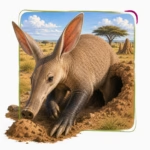
Anteater Fact Highlight
From the full animal facts page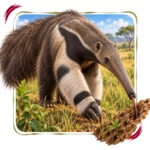
More Animal Comparisons
Pick another animal matchup and keep exploring. Compare appearances, habitats, diets, abilities, and surprising differences.






Make an Animal Story
Turn this aardvark vs anteater comparison into a two-continent insect-hunting adventure with our free Animal Story Generator.
Source notes: References used for this comparison. See more See less
Try Another Matchup
Explore this comparison →