
Blackbuck vs Chinkara: Asian Antelope Comparison
Blackbuck and chinkara are graceful Asian antelopes, but they solve dry-country life in different ways. Blackbuck usually favour open grassy plains and gather in flexible herds. Chinkara are gazelles of deserts, scrub and rocky ground, where their sandy coats and small groups help them stay hard to notice. Compare their horns, colours, social lives and water-saving tricks.
About Blackbuck
- Type Living
- Diet Herbivore
- Group Antelope species (Antilope cervicapra)
- Known for Long corkscrew horns and dark adult male coats
- Special skill Fast running and springing alarm leaps across open ground
About Chinkara
- Type Living
- Diet Herbivore
- Group Gazelle species (Gazella bennettii)
- Known for Sandy camouflage, straight ringed horns and dry-country survival
- Special skill Gets much of its water from plants and can go long periods between drinks
Blackbuck vs Chinkara: Quick Answer
Blackbuck are generally larger, more social antelopes. Adult males can turn dark brown to almost black and usually grow long corkscrew horns. Chinkara are smaller sandy-coloured gazelles with straighter ringed horns, and females often have shorter horns too. Blackbuck win size, strength and social life; chinkara win stealth and the weirdest water-saving adaptation. Speed and swimming stay ties because fair direct tests are missing.
Where Do They Fit?
Follow the branches to see how Blackbuck and Chinkara are classified and related.
Blackbuck vs Chinkara: Quick Comparison
| Feature | Blackbuck | Chinkara |
|---|---|---|
| Scientific name | Antilope cervicapra | Gazella bennettii |
| Animal group | Antelope and the only living species in genus Antilope | Gazelle in genus Gazella |
| Main native range | India and Nepal | India, Pakistan, Iran and southern Afghanistan |
| Adult size | Males are commonly larger, around 74-84 cm at the shoulder | Usually about 60-80 cm at the shoulder and roughly 20-25 kg |
| Coat clue | Adult males darken strongly; females and young stay fawn | Sandy to reddish tan with a white belly and dark facial stripes |
| Horns | Males usually have long ringed corkscrew horns; females are usually hornless | Straight to slightly curved ringed horns; females may have shorter, thinner horns |
| Habitat | Open grassland, scrub edges and lightly wooded plains | Desert, dry scrub, rocky hills and arid open woodland |
| Social life | Flexible herds, sometimes numbering dozens | Often alone, in pairs or in small family groups |
| Daily activity | Often active by day, resting in shade during heat | Often most active around dusk, night and dawn |
| Water strategy | Usually stays within reach of regular water | Can conserve water and gain much of its moisture from plants |
How Are Blackbuck and Chinkara Alike?
- Both are living Asian hoofed mammals in the bovid family.
- Both are herbivores that eat grasses, leaves and other plant foods.
- Both use sharp eyesight, quick movement and alarm behaviour to escape danger.
- Both have pale underparts that contrast with a darker back and sides.
- Both males can use ringed horns to display and compete for breeding space.
How Are Blackbuck and Chinkara Different?
- Blackbuck are generally larger and heavier than chinkara.
- A blackbuck male’s horns usually twist like corkscrews; chinkara horns are much straighter.
- Adult male blackbuck become very dark, while chinkara keep sandy desert colours.
- Blackbuck commonly form herds; chinkara are often alone or in very small groups.
- Chinkara are better suited to long gaps between drinks and can obtain much of their moisture from food.
Blackbuck vs Chinkara Adaptation Showdown
- Size – Blackbuck: Adult blackbuck males are usually taller and heavier than chinkara, although age and sex create overlap.
- Speed – Tie: Both are swift escape runners, but there is no reliable same-course test that controls for terrain, distance, age and sex.
- Strength – Blackbuck: Its generally greater body mass gives blackbuck the whole-body power edge, not a prediction of a fight.
- Stealth – Chinkara: A sandy coat, small group size and twilight or night activity help chinkara disappear into dry scrub and rocky desert.
- Social – Blackbuck: Blackbuck regularly gather in larger, changing herds, while chinkara are more often alone or in tiny family groups.
- Swimming – Tie: Neither species has enough directly comparable swimming evidence for a fair winner.
- Weirdest – Chinkara: It can wait a long time between drinks by conserving water and taking moisture from leaves, grasses, fruits and other foods.
Fun Blackbuck vs Chinkara Facts
Blackbuck Males Change Colour
Young males begin fawn-coloured like females. As many males mature, their upper coat darkens to rich brown or nearly black while the belly and eye rings stay white.
Their Horns Follow Different Paths
Blackbuck horns usually twist upward in long corkscrews. Chinkara horns are ringed but much straighter, and females may carry shorter, thinner versions.
Chinkara Carry Water in Their Menu
Chinkara are facultative drinkers, meaning they can drink when water is available but can also survive long gaps by using moisture in plants and conserving body water.
A Chinkara Can Sound Like a Sneeze
When alarmed, a chinkara may stamp a forefoot and make a sneeze-like hiss through its nose. The sound can warn others that danger is near.
Blackbuck Herds Can Grow and Shrink
A herd may split, join or change with food, season and breeding activity. One field study recorded groups from three to 72 animals.
Blackbuck vs Chinkara Quiz
Which animal usually has corkscrew horns? A) Blackbuck B) Chinkara C) Neither Answer: A) Blackbuck
Which animal is usually smaller? A) Blackbuck B) Chinkara C) They are always identical Answer: B) Chinkara
Which animal often lives alone or in a tiny group? A) Blackbuck B) Chinkara C) Both always form giant herds Answer: B) Chinkara
How can chinkara get much of their water? A) From plants B) From seawater C) From snow only Answer: A) From plants
Why is speed a tie? A) Neither can run B) No fair same-course test proves one winner C) They swim instead Answer: B) No fair same-course test proves one winner
Blackbuck vs Chinkara FAQ
Are blackbuck and chinkara the same animal?
No. Blackbuck are Antilope cervicapra, while chinkara are Gazella bennettii.
Which is bigger, a blackbuck or a chinkara?
Blackbuck are generally larger, especially adult males, although small blackbuck and large chinkara can overlap.
Do female blackbuck have horns?
Most female blackbuck are hornless, but horned females occur in some populations, so the clue is not absolute.
Can chinkara live without drinking?
They can go long periods between drinks and obtain much moisture from plants, but that does not mean they never use water.
Which animal has the darker coat?
Mature male blackbuck can become very dark. Female blackbuck, young blackbuck and chinkara are much more tan or sandy.
Animal Words to Know
- Antelope: An everyday name for many hoofed bovids, including blackbuck and gazelles.
- Camouflage: Colours or patterns that help an animal blend into its surroundings.
- Facultative drinker: An animal that can drink water but can also meet much of its water need from food.
- Herd: A social group of hoofed mammals.
- Territory: An area an animal marks or defends for space, food or mates.
Blackbuck and Chinkara Horn-and-Habitat Activity
Blackbuck and Chinkara Horn-and-Habitat Activity
Fold a page in half. Draw a blackbuck in open grassland with long spiral horns and a chinkara in rocky desert scrub with straighter horns. Add five labels: herd, small group, corkscrew horn, sandy camouflage and plant moisture. Circle the clues that help each animal in its own habitat.
Meet Each Animal
Want the full fact file? Here are quick highlights from each animal’s own facts page.
Blackbuck Fact Highlight
From the full animal facts page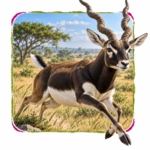
Chinkara Fact Highlight
From the full animal facts page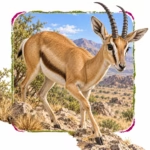
More Animal Comparisons
Pick another animal matchup and keep exploring. Compare appearances, habitats, diets, abilities, and surprising differences.


Make an Animal Story
Create a dry-grassland story with a spiral-horned blackbuck and a water-wise chinkara!
Source notes: References used for this comparison. See more See less
Try Another Matchup
Explore this comparison →