
Blue-tongued Skink vs Bearded Dragon for Kids
Common Blue-tongued Skinks and Central Bearded Dragons are sturdy Australian lizards that bask in the sun and eat both plant and animal foods. The Skink, Tiliqua scincoides, is low and smooth with tiny legs and a thick tail. Its bright blue tongue is a warning display. The Bearded Dragon, Pogona vitticeps, stands higher on longer legs and has spiny scales around its head and throat. It communicates by changing posture and beard color.
About Common Blue-tongued Skink
- Type Living
- Diet Omnivore; eats snails, slugs, insects, flowers, fruit and other plant matter
- Group Large Australian skink in family Scincidae (Tiliqua scincoides), also called the Common Bluetongue
- Known for A broad cobalt-blue tongue, heavy smooth body, broad head and very short legs
- Special skill Opens its pink mouth and flashes a broad blue tongue to startle a possible predator
About Central Bearded Dragon
- Type Living
- Diet Omnivore; eats insects, leaves, flowers, fruit and occasional small animals
- Group Australian agamid lizard in family Agamidae (Pogona vitticeps), also called the Inland Bearded Dragon
- Known for A triangular head, spiny body edges and an expandable throat beard that can turn dark
- Special skill Flattens its body and expands a spiny throat while darkening the beard to look larger
Quick Answer
Both lizards can approach 60 cm in total length, but they are built differently. The Common Blue-tongued Skink looks long, low and smooth, gives birth to live young and flashes a blue tongue. The Central Bearded Dragon has a flatter triangular head, longer legs, spiny sides and an expandable throat beard. It lays eggs and is more likely to climb a low branch or rock to bask.
Common Blue-tongued Skink vs Central Bearded Dragon: Quick Comparison
| Feature | Common Blue-tongued Skink | Central Bearded Dragon |
|---|---|---|
| Scientific name | Tiliqua scincoides | Pogona vitticeps |
| Adult length | Can reach nearly 60 cm, with a thick body and tail | Often 40–60 cm including a long tapering tail |
| Body shape | Long, heavy and low to the ground on very short legs | Flatter and lighter-looking, with longer legs and a triangular head |
| Scales | Mostly smooth, shiny, overlapping scales | Rough scales with spiny points along the throat and sides |
| Warning display | Opens the mouth and shows a broad bright-blue tongue | Flattens the body, opens the mouth and expands a beard that may turn black |
| Food | Snails, slugs, insects, flowers, fruit and other plant matter | Insects, leaves, flowers, fruit and occasional small vertebrates |
| Main movement | Walks and pushes through ground cover; can burrow beneath loose shelter | Runs on longer legs and often climbs low logs, rocks or branches to bask |
| Babies | Gives birth to live young, often around ten but sometimes more | Lays clutches of eggs in warm soil |
| Communication | Uses scent, posture and its dramatic tongue display | Uses head bobs, arm waves, body flattening and beard color |
| Habitat benchmark | Woodland, heath, grassland and gardens with cover | Drier inland woodland, scrub, grassland and rocky open country |
How Are Blue-tongued Skinks and Bearded Dragons Alike?
- Both are Australian lizards covered in scales.
- Both are active by day and use sunlight to warm their bodies.
- Both are omnivores that eat insects and plant foods.
- Both shelter when temperatures become too hot or cold.
- Both use bold body displays to warn danger away before biting.
How Are Blue-tongued Skinks and Bearded Dragons Different?
- The Skink has smooth scales and a low sausage-shaped body; the Dragon has rough spines and longer legs.
- The Skink flashes a blue tongue, while the Dragon expands and darkens a throat beard.
- The Common Blue-tongued Skink gives birth to live young; the Central Bearded Dragon lays eggs.
- The Skink stays mainly on the ground, while the Dragon often climbs low perches to bask.
- The Bearded Dragon uses visible head bobs and arm waves more often in social signals.
Blue-tongued Skink vs Bearded Dragon Showdown
- Size – Tie: Both can approach 60 cm long, although one is heavier-bodied and the other has a longer, slimmer tail.
- Speed – Central Bearded Dragon: Its longer legs lift the body and suit quick runs across open dry ground.
- Strength – Common Blue-tongued Skink: Its thick body, broad head and sturdy jaws make it the more powerfully built lizard.
- Stealth – Tie: Earthy colors help both blend into soil, bark, rocks and dry leaves.
- Social – Central Bearded Dragon: Head bobs, arm waves, beard color and body posture create a rich visual signal set.
- Swimming – Tie: Both may paddle if needed, but neither is a specialized water lizard.
- Weirdest – Common Blue-tongued Skink: A heavy earth-colored lizard suddenly revealing a cobalt-blue tongue is hard to beat.
Fun Blue-tongued Skink vs Bearded Dragon Facts
A Tongue That Shouts
The Common Blue-tongued Skink’s bright tongue contrasts with its pink mouth and may surprise a predator.
A Beard Made of Scales
The Bearded Dragon’s beard is an expandable patch of pointed throat scales, not hair.
Waves Without Saying Hello
A Bearded Dragon may slowly circle one foreleg as a visual signal to another dragon.
Live Young, Not Eggs
Common Blue-tongued Skinks keep developing young inside the mother and give birth to active babies.
Sun-Powered Schedules
Both reptiles move between sunshine and shade to keep their bodies at useful temperatures.
Blue-tongued Skink vs Bearded Dragon Quiz
Which lizard flashes a blue tongue? A) Common Blue-tongued Skink B) Central Bearded Dragon C) Both Answer: A) Common Blue-tongued Skink
Which lizard has a spiny throat beard? A) Common Blue-tongued Skink B) Central Bearded Dragon C) Neither Answer: B) Central Bearded Dragon
Which one gives birth to live young? A) Common Blue-tongued Skink B) Central Bearded Dragon C) Both lay eggs Answer: A) Common Blue-tongued Skink
Why do both lizards bask? A) To warm their bodies B) To grow fur C) To breathe underwater Answer: A) To warm their bodies
What do both animals eat? A) Insects and plant foods B) Only fish C) Only grass Answer: A) Insects and plant foods
Blue-tongued Skink vs Bearded Dragon FAQ
Is a Blue-tongued Skink a Bearded Dragon?
No. The Skink belongs to family Scincidae, while the Bearded Dragon belongs to family Agamidae.
Which Lizard Is Bigger?
Their maximum lengths are similar at around 60 cm. The Skink is usually thicker and heavier-looking, while the Dragon has longer legs and a long tapering tail.
Is the Blue Tongue Venomous?
No. The color is a visual warning. Blue-tongued Skinks are not venomous, though any frightened wild lizard should be left alone.
Why Does a Bearded Dragon Turn Its Beard Black?
A dark expanded beard can signal alarm, excitement, courtship or a challenge. Context and other body movements help show the meaning.
Can These Lizards Be Pets?
They are kept under human care in some places, but laws vary and both need expert heat, light, space, diet and veterinary care. Never take one from the wild.
Animal Words to Know
- Agamid: A member of a lizard family that includes dragons and many Old World basking lizards.
- Bask: To rest in warmth or sunlight so the body heats up.
- Neonate: A newborn animal.
- Omnivore: An animal that eats both animal and plant foods.
- Skink: A member of a large lizard family whose species often have smooth scales and short legs.
Match the Two Warning Displays
Match the Two Warning Displays
Draw two calm lizard outlines at equal total length. Give the Common Blue-tongued Skink a low thick body, smooth scales and a small folded blue paper tongue. Give the Central Bearded Dragon longer legs, rough side scales and a folding paper throat beard. Open each feature and explain how it could make a predator pause.
Meet Each Animal
Want the full fact file? Here are quick highlights from each animal’s own facts page.
Common Blue-tongued Skink Fact Highlight
From the full animal facts page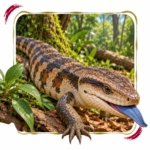
Central Bearded Dragon Fact Highlight
From the full animal facts page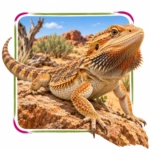
More Animal Comparisons
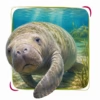
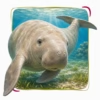
Pick another animal matchup and keep exploring. Compare appearances, habitats, diets, abilities, and surprising differences.

Make an Animal Story
Create an outback story about a blue-tongued Skink and a beard-flashing Dragon!