
Dingo vs Dog: Wild vs Domestic Canid Comparison
A dingo is an ancient dog-line canid that has lived independently in Australia for thousands of years, while a domestic dog is a human-associated animal shaped into hundreds of breeds. Dingoes and dogs are very closely related and can interbreed, but dingoes have a more consistent lean body, wedge-shaped head, erect ears, bushy tail, and suite of wild-survival behaviors. Dog appearance and behavior vary enormously because people selectively bred different populations for different jobs.
About Dingo
- Type Mammal
- Diet Omnivore
- Group Ancient Dog Lineage
- Known for Australia’s largest native land predator, lean build, erect ears, bushy tail, endurance, howling, and wild survival
- Special skill Wild hunting, endurance travel, surviving extreme Australian habitats, flexible diet, and ecological predator role
About Domestic Dog
- Type Mammal
- Diet Omnivore
- Group Domesticated Canid
- Known for Thousands of years living with humans, enormous variety in size and shape, trainability, communication, work, and companionship
- Special skill Reading human gestures, learning tasks, scent work, herding, guarding, retrieving, assistance, and companionship
Dingo vs Domestic Dog: Quick Answer
A dingo is an ancient dog lineage living mainly as a wild predator in Australia. A domestic dog has been bred and raised alongside people in countless forms around the world. Dingoes and dogs are close relatives and can produce fertile offspring, but dingoes are not simply escaped modern pets. Their exact scientific classification remains debated among authorities.
Where Do They Fit?
Follow the branches to see how Dingo and Domestic Dog are classified and related.
Dingo vs Domestic Dog: Quick Comparison
| Feature | Dingo | Domestic Dog |
|---|---|---|
| Animal type | Mammal and canid | Mammal and canid |
| Scientific treatment | Often Canis familiaris dingo or Canis lupus dingo; classification varies | Usually Canis familiaris or Canis lupus familiaris |
| Lifestyle | Mainly free-living wild predator | Mainly domesticated companion or working animal |
| Main range | Australia, with related lineages in Southeast Asia | Worldwide with humans |
| Body shape | Medium-sized, lean, athletic, wedge-headed, and fairly consistent | Ranges from tiny and short-legged to giant and heavily built |
| Ears and tail | Erect ears and bushy tail | Ear and tail shapes vary greatly among breeds |
| Common coat | Ginger or tan, black and tan, or creamy white, often with white points | Almost every canine color, pattern, and coat length |
| Communication | Howls and other calls; barking is less common and different from many dogs | Barks, howls, growls, whines, and human-directed signals |
| Food | Wild prey, carrion, insects, fruit, and other available foods | Human-provided food plus varied foods in free-ranging populations |
| Baby name | Pup | Puppy or pup |
| Special ability | Independent survival and hunting in Australian landscapes | Working and communicating closely with humans |
How Are Dingoes and Dogs Alike?
- Both dingoes and domestic dogs are mammals in the family Canidae.
- Both have excellent hearing and smell, non-retractable claws, canine teeth, and digitigrade feet.
- Both communicate with vocalizations, scents, facial expressions, posture, and tail movement.
- Both can live alone or socially, form bonds, use dens, and care for pups.
- Dingoes and domestic dogs can interbreed and produce fertile offspring because they are extremely close relatives.
How Are Dingoes and Dogs Different?
- Dingoes are established free-living predators with an ancient history in Australia, while domestic dogs are primarily human-associated animals.
- Dingoes have a relatively consistent natural body plan, while dog breeds show enormous variation in size, skull, ears, legs, tail, and coat.
- Dingoes usually breed once per year, while many domestic dogs can breed more frequently.
- Dingoes rely strongly on hunting and independent survival, while most dogs depend partly or completely on people.
- Domestic dogs have been selectively bred for companionship and specialized work, while dingoes have been shaped strongly by survival and natural selection in wild landscapes.
Dingo vs Dog Showdown
Canid showdown: Domestic dog wins the widest possible size, speed, and strength categories because hundreds of breeds include giant guardians, racing sighthounds, and powerful working dogs. The dingo wins stealth and independent wild survival. Dogs win social cooperation with humans, while swimming is a tie because ability varies in both. The dingo takes our weirdest-fact prize because it is an ancient dog lineage whose arrival and exact taxonomic label still inspire scientific debate.
Fun Dingo vs Dog Facts
Ancient Wild Lineage vs Domesticated Variety
Dingoes descend from ancient dogs that reached Australia with people thousands of years ago and then lived largely independent lives. Domestic dogs remained closely tied to humans and were selectively bred into hundreds of recognizable forms.
One Body Plan vs Hundreds of Shapes
Most dingoes share a medium-sized athletic build, wedge-shaped head, upright ears, straight legs, and bushy tail. Domestic dogs range from tiny Chihuahuas to towering Great Danes and include flattened faces, long bodies, curled tails, floppy ears, and many coat types.
Howl Specialist vs Bark Specialist
Dingoes use howls to maintain contact and advertise their presence, and their barking is less frequent than in many domestic dogs. Dogs were shaped by domestication to use barking and other signals extensively around people.
Wild Diet vs Human Menu
Dingoes hunt animals ranging from small mammals to larger prey and also eat carrion, reptiles, insects, or plant foods. Most domestic dogs receive food from people, though free-ranging dogs may hunt, scavenge, or search through human waste.
Dingoes Can Turn Their Heads Far Around
Dingoes have very flexible necks and can rotate their heads farther than most domestic dogs, which may help them observe sounds or movement around their bodies. This does not mean the head spins completely around like an owl’s.
Dingo vs Dog Quiz
- Where do wild dingoes mainly live? Answer: Australia.
- Which animal includes hundreds of human-created breeds? Answer: The domestic dog.
- Can dingoes and dogs interbreed? Answer: Yes, and their offspring can be fertile.
- Which animal usually depends more on independent hunting? Answer: The dingo.
- What are baby dingoes and dogs called? Answer: Pups; young dogs are also called puppies.
Dingo vs Dog FAQ
What is the main difference between a dingo and a dog?
A dingo belongs to an ancient dog lineage established mainly as a wild predator in Australia. Domestic dogs have been extensively bred and maintained by humans for companionship and work.
Is a dingo a dog?
Dingoes are members of the dog lineage and are extremely close to domestic dogs. Authorities differ on whether to label them Canis familiaris dingo, Canis lupus dingo, a breed or form of dog, or another taxonomic treatment.
Can a dingo breed with a domestic dog?
Yes. Dingoes and domestic dogs can mate and produce fertile offspring, creating hybrids with mixed ancestry.
Which is bigger, a dingo or a dog?
Dingoes are medium-sized, while dogs range from much smaller to much larger. A giant dog breed is larger than a dingo, but many small and medium breeds are smaller.
Can a dingo be kept like an ordinary pet?
Dingoes retain demanding wild behaviors and are regulated differently by location. They are not suitable substitutes for ordinary domestic dogs, and local wildlife and ownership laws must be followed.
Animal Words to Know
- Canid: A member of the dog family Canidae.
- Domestication: A long process in which animal populations adapt genetically and behaviorally to life with humans.
- Lineage: A line of descent connecting a population with its ancestors.
- Selective breeding: Choosing animals with desired traits to become parents of future generations.
- Hybrid: An animal whose parents come from genetically different populations or groups.
Dingo and Dog Drawing Activity
Dingo and Dog Drawing Activity
Draw a ginger dingo beside three domestic dogs with very different breed shapes. Give the dingo upright ears, a wedge-shaped head, a lean body, and a bushy tail. Give the dogs recognizable breed features such as floppy ears, a curled tail, or very short legs. Add a note explaining that dingoes are an old free-living dog lineage, while people created modern dog breeds through selective breeding. Label dingo, dog, breed, pup, howl, and bark.
Meet Each Animal
Want the full fact file? Here are quick highlights from each animal’s own facts page.
Dingo Fact Highlight
From the full animal facts page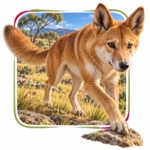
Domestic Dog Fact Highlight
From the full animal facts page
More Animal Comparisons
Pick another animal matchup and keep exploring. Compare appearances, habitats, diets, abilities, and surprising differences.



Make an Animal Story
Turn this dingo vs dog comparison into a wild-outback and household adventure with our free Animal Story Generator.
Source notes: References used for this comparison. See more See less
Try Another Matchup
Explore this comparison →