
Elk vs Deer: Living Cervid Species-to-Representative Comparison
An elk is a deer, not an animal outside the deer family. In everyday North American comparisons, “deer” usually means a smaller familiar species, so this page uses the white-tailed deer as the named reference. Elk are generally much taller and heavier, carry a broad pale rump patch, form larger herds, and bulls produce high bugles and sweeping antlers. White-tailed deer are smaller, show a white flag-like tail when alarmed, use denser edge cover, and bucks carry main-beam antlers. Both are cervids, ruminant herbivores, fast runners, strong swimmers, and mothers of spotted young.
About Elk
- Type Mammal
- Diet Mixed-feeding herbivore that grazes grasses, sedges, and forbs and browses leaves, twigs, bark, and shrubs; seasonal diet changes with snow, plant growth, habitat, and local availability
- Group Wapiti or North American elk (Cervus canadensis)
- Known for The second-largest living member of the deer family, with regional and sex-dependent size variation; adult bulls commonly stand about 1.4–1.5 meters at the shoulder and may weigh roughly 320–500 kilograms, while cows are smaller, and both sexes carry a tan-to-brown body, dark shaggy neck, slender dark legs, and a large pale rump patch but only bulls normally grow long branching antlers
- Special skill Long efficient legs and broad cloven hooves for travel through varied country, a four-chambered ruminant stomach, insulating seasonal coat, pale rump signal, annually renewed bull antlers, upper canine teeth called ivories, a powerful high bugle, and coordinated herd vigilance
About White-Tailed Deer
- Type Mammal
- Diet Selective browsing herbivore eating leaves, buds, twigs, forbs, fruits, nuts, fungi, farm crops, and some grasses according to season and region; rumen microbes help digest plant fiber
- Group White-tailed deer (Odocoileus virginianus), used here as a familiar representative deer
- Known for A highly variable medium-sized deer rather than a definition of every deer species; northern mature bucks may stand around 0.8–1 meter at the shoulder and weigh roughly 70–140 kilograms, does are smaller, and both sexes have a reddish summer or gray-brown winter coat with a white belly and striking white underside to the tail, while only bucks normally carry branching antlers
- Special skill White tail raised as a visible alarm flag, spotted fawn camouflage, flexible edge-habitat living, keen smell and hearing, quick bounding escape, annually renewed buck antlers with tines rising from a main beam, split cloven hooves, and a four-chambered ruminant stomach
Elk vs White-Tailed Deer: Quick Answer
Elk are a species of deer. Compared with the white-tailed deer used here as the familiar reference, an elk is usually far larger, with a pale rump patch, darker shaggy neck, longer sweeping bull antlers, large herds, a calf, and a famous bugle. A white-tailed deer is smaller, has a bright white tail underside, a fawn, and buck antlers whose tines rise from a main beam. Both belong to family Cervidae.
Where Do They Fit?
Follow the branches to see how Elk and White-Tailed Deer are classified and related.
Elk vs White-Tailed Deer: Quick Comparison
| Feature | Elk | White-Tailed Deer |
|---|---|---|
| Family relationship | A large species within the deer family | Another species within the deer family and the page’s representative “deer” |
| Scientific name | Cervus canadensis | Odocoileus virginianus |
| Relative size | Usually much taller and heavier; bulls may approach 500 kilograms or more in large populations | Usually much smaller; large northern bucks may approach about 140 kilograms, with broad regional variation |
| Rear signal | Large pale cream or tan rump patch around a short tail | Longer tail with brilliant white underside raised like a flag |
| Male antlers | Long beams sweeping backward with upward-pointing tines | Main beams curve forward, with tines usually rising upward |
| Famous sound | Bull’s high carrying bugle during the autumn rut | Snorts, blows, grunts, bleats, and rattling or antler sounds; no elk-style bugle |
| Social pattern | Often forms large cow-calf or seasonal herds | Usually smaller, looser groups; social pattern changes by sex and season |
| Food emphasis | Often grazes more grass while also browsing | Often selects leaves, buds, forbs, fruits, nuts, and woody browse |
| Young | Calf, usually one and born spotted | Fawn, often one or two and born spotted |
| Global status | Globally widespread, but local herds require active management | Globally widespread, with some local populations rare and others extremely abundant |
How Are Elk and Deer Alike?
- Elk and white-tailed deer are both true deer, or cervids, with split hooves, long legs, side-set eyes, keen senses, and four-chambered stomachs.
- In both species, males normally grow bone antlers under living velvet, shed the velvet, use the hard antlers during the rut, and cast them before growing a new set.
- Both eat plants, chew cud, change their diets with the seasons, and affect forests and grasslands through grazing, browsing, seed movement, and nutrient cycling.
- Both can run quickly, jump, swim, communicate through scent and posture, and become dangerous if approached, fed, cornered, or separated from young.
- Both usually give birth in late spring or early summer to young with pale spots that provide camouflage during their first weeks.
How Are Elk and Deer Different?
- “Deer” names an entire family, so elk are deer; this comparison uses one smaller family member, the white-tailed deer, rather than claiming that all other deer look alike.
- Elk are generally several times heavier and stand much taller, while white-tailed deer are compact enough to move rapidly through denser edge vegetation.
- An elk has a broad pale rump patch and short tail; a white-tail reveals a long, brilliant white tail underside when alarmed.
- Bull elk antlers sweep backward and outward, while a white-tailed buck’s tines usually rise from a forward-curving main beam.
- Elk often gather in much larger herds and may make long seasonal migrations; white-tails commonly use smaller home ranges and looser sex- and season-based groups.
- A bull elk’s piercing bugle is a signature rut call, whereas white-tails rely more on scent, scrapes, rubs, grunts, bleats, snorts, and body signals.
Elk vs Deer Adaptation Showdown
Cervid adaptation showdown: Elk wins size and absolute strength because a typical adult is much larger than the white-tailed reference. Speed is a tie: both can sprint impressively, and published maximums vary with measurement and conditions. Camouflage is a tie because elk blend into open forest and meadow edges while white-tails excel in thickets and broken woodland. Elk wins group-level social spectacle for its large herds, migrations, and coordinated rut gatherings, although white-tails also have complex social lives. Swimming is a tie because both readily cross water. Elk wins weirdest adaptation for a bull’s whistle-like bugle and retained ivory canine teeth. These categories compare adaptations, not combat.
Fun Elk vs Deer Facts
Elk Is One Kind of Deer
The word deer includes every living member of family Cervidae, from tiny pudus to giant moose. Elk, white-tailed deer, mule deer, caribou, and moose therefore sit on branches of the same family tree. “Elk versus deer” is useful only when the second side names or clearly represents a different deer species.
A Bugle Sounds Too High for Such a Huge Animal
During the autumn rut, a bull elk can begin with a low note and climb into a long piercing whistle heard across valleys. The call advertises the bull, helps organize cows, and challenges rivals. A large throat and specialized larynx produce a surprisingly high sound rather than the deep roar many children expect.
The Rear-End Clues Work Differently
An elk’s pale rump patch remains visible around a short tail and can help herd members track one another. A white-tailed deer raises its longer tail to expose a flashing white underside while fleeing. Both are visual signals, but one is a broad permanent patch and the other is a movable flag.
Both Babies Begin with Spots
Elk calves and white-tailed fawns are commonly born with pale spots that break up the outline of a still young animal among sunlit vegetation. Mothers hide or leave very young offspring resting while they feed nearby. A quiet spotted youngster is not automatically abandoned, so people should leave it alone and contact wildlife professionals only when directed.
Elk Carry Tiny Ivory Teeth
Modern elk lack the large upper front canines seen in some ancient deer, but both sexes retain small rounded upper canine teeth called ivories or whistlers. They are evolutionary remnants of more prominent tusk-like canines found in other deer lineages and are separate from the annually shed antlers on a bull’s skull.
Elk vs Deer Quiz
- Is an elk a deer? Answer: Yes. Elk belong to the deer family Cervidae.
- Which species represents the everyday word “deer” on this page? Answer: The white-tailed deer.
- Which animal usually has the larger body? Answer: The elk.
- Which animal raises a bright white tail like a flag? Answer: The white-tailed deer.
- What is an elk’s young called? Answer: A calf.
Elk vs Deer FAQ
Is an elk the same as a deer?
An elk is one species of deer, but it is not the same species as a white-tailed deer, mule deer, roe deer, or every other cervid. It belongs to family Cervidae and genus Cervus.
Which is bigger, an elk or deer?
Compared with familiar white-tailed or mule deer, an elk is much bigger. The question changes if “deer” includes the whole family, because moose are deer too and are larger than elk.
How can children tell elk from white-tailed deer?
Use several clues: elk are taller, have dark shaggy necks and broad pale rump patches, and bulls carry sweeping antlers. White-tails are smaller and flash the white underside of a longer tail.
Do female elk and deer have antlers?
Female elk and female white-tailed deer normally do not grow antlers, although rare hormone-related exceptions occur. Reindeer are the famous deer in which females commonly carry antlers.
Are elk dangerous?
They can be. Bulls may charge during the rut and cows defend calves. Watch from the distance required by the park, never feed or approach them, and retreat if an elk changes behavior because of you.
Animal Words to Know
- Cervid: Any member of the deer family Cervidae.
- Wapiti: Another common name for the animal called elk in North America.
- Rump patch: A contrasting area of fur across the rear of an animal.
- Rut: The seasonal mating period when males call, display, scent-mark, and compete.
- Velvet: The soft living skin that feeds a growing antler before it hardens.
Elk and White-Tailed Deer Activity
Elk and White-Tailed Deer Activity
Draw a bull elk and white-tailed buck at the same scale. Make the elk much larger, with a dark neck, pale rump patch, short tail, and long sweeping antlers. Give the deer a slimmer body, smaller antlers, and a long tail that flashes white underneath. Add a bugle bubble for the elk and a snort bubble for the deer. Label bull, buck, calf, fawn, antlers, rump, and tail.
Meet Each Animal
Want the full fact file? Here are quick highlights from each animal’s own facts page.
Elk Fact Highlight
From the full animal facts page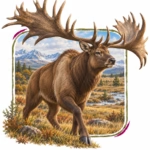
White-Tailed Deer Fact Highlight
From the full animal facts page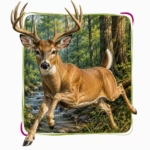
More Animal Comparisons
Pick another animal matchup and keep exploring. Compare appearances, habitats, diets, abilities, and surprising differences.




Make an Animal Story
Turn this elk vs deer comparison into a bugling-herd and white-tail mystery with our free Animal Story Generator.
Source notes: References used for this comparison. See more See less
Try Another Matchup
Explore this comparison →