
Goat vs Deer: Hoofed Mammal Comparison
Goats and deer are hoofed plant-eating mammals with alert eyes, strong legs, and excellent balance, but they belong to different families. Domestic goats are caprine bovids shaped by thousands of years of human care. Deer are wild cervids best known for swift movement and antlers that many males grow and shed each year.
About Goat
- Type Mammal
- Diet Herbivore
- Group Caprine Bovid
- Known for Climbing, permanent horns, rectangular pupils, beards, browsing, and farm life
- Special skill Balancing and climbing on steep, rocky, or narrow surfaces with flexible cloven hooves
About Deer
- Type Mammal
- Diet Herbivore
- Group Cervid
- Known for Antlers in many males, graceful running, camouflage, large ears, and alert senses
- Special skill Running, leaping, freezing, and using sharp senses and camouflage to escape danger
Goat vs Deer: Quick Answer
Goats are bovids with permanent horns, rectangular pupils, and remarkable climbing ability. Deer are cervids, and many males grow branched antlers that are shed and regrown. Baby goats are kids, while baby deer are fawns.
Where Do They Fit?
Follow the branches to see how Goat and Deer are classified and related.
Goat vs Deer: Quick Comparison
| Feature | Goat | Deer |
|---|---|---|
| Animal type | Mammal | Mammal |
| Animal group | Caprine bovid | Cervid |
| Known for | Climbing, horns, browsing, beards, and farm life | Antlers, running, leaping, camouflage, and alert senses |
| Main habitat | Farms, mountains, scrublands, and rocky country | Forests, grasslands, wetlands, mountains, and tundra |
| Where found | Domestic worldwide | Most continents except Antarctica and Australia as a native group |
| Diet | Herbivore and browser | Herbivore; browser or grazer depending on species |
| Baby name | Kid | Fawn |
| Headgear | Permanent horns in many breeds | Antlers in many males, shed and regrown |
| Feet | Flexible cloven hooves for climbing | Cloven hooves for running and leaping |
| Special skill | Rocky-slope balance | Rapid escape and camouflage |
How Are Goats and Deer Alike?
- Both goats and deer are hoofed herbivorous mammals.
- Both are ruminants that chew cud and digest plants in multi-compartment stomachs.
- Both have cloven hooves, horizontal pupils, strong legs, and excellent senses.
- Both may live socially in herds and communicate with sounds, scents, and body postures.
- Both give birth to well-developed young that can stand and walk soon after birth.
How Are Goats and Deer Different?
- Goats are bovids, while deer are cervids.
- Goat horns are permanent and usually unbranched, while deer antlers are often branched and usually shed each year.
- Domestic goats depend on human care, while deer are mainly wild animals.
- Goats are exceptional climbers, while deer are generally faster runners and stronger leapers.
- Baby goats are called kids, while baby deer are called fawns.
Goat vs Deer Showdown
Hoofed-mammal showdown: Deer win for maximum size, speed, stealth, and swimming because the group includes huge moose as well as swift, camouflaged forest species. The goat takes strength and climbing power on steep ground. Social life is a tie because both can form herds. The goat wins our weirdest-fact prize for rectangular pupils that create a broad panoramic view.
Fun Goat vs Deer Facts
Permanent Horns vs Renewable Antlers
Goat horns contain a bony core covered by keratin and normally remain for life. Deer antlers are solid bone, grow rapidly under a soft velvet covering, harden, and are usually shed after the breeding season.
Kid vs Fawn
A baby goat is called a kid, while a baby deer is called a fawn. Both can stand soon after birth, but many fawns spend their earliest days lying quietly in cover while their mothers feed nearby.
Climber vs Runner
Goats have flexible hooves with hard outer rims and softer gripping pads that help them cross rocks and steep slopes. Deer have long springy legs suited to running, bounding, and leaping over obstacles.
Both Chew Cud
Goats and deer are ruminants. They swallow plant food, later bring partly digested cud back to the mouth, chew it again, and rely on microbes to break down tough plant fibers.
Goats Have Rectangular Pupils
A goat’s horizontal rectangular pupils provide a very wide field of view and rotate as the head moves, helping keep the horizon level while the animal grazes or climbs.
Goat vs Deer Quiz
- Which animal belongs to the bovid family? Answer: Goat.
- Which animal belongs to the cervid family? Answer: Deer.
- What is a baby goat called? Answer: A kid.
- What is a baby deer called? Answer: A fawn.
- Which animal usually sheds and regrows its headgear? Answer: Deer.
Goat vs Deer FAQ
What is the main difference between a goat and a deer?
A goat is a bovid with permanent horns and strong climbing adaptations. A deer is a cervid, and many males grow antlers that are shed and regrown.
Which is bigger, a goat or a deer?
Deer vary enormously. Tiny deer may be smaller than goats, while moose and elk are far larger than any domestic goat.
Are goats and deer closely related?
They are both even-toed hoofed ruminants, but goats belong to the bovid family and deer belong to the cervid family.
Can female goats and deer have horns or antlers?
Female goats commonly have horns in horned breeds. Female reindeer and caribou grow antlers, while females of most other deer species do not.
Can goats and deer live together?
They may use nearby land, but mixed keeping can create fencing, nutrition, parasite, disease, and welfare problems. Wild deer should not be treated as farm animals.
Animal Words to Know
- Bovid: A hoofed mammal in the family containing cattle, goats, sheep, bison, and antelopes.
- Cervid: A member of the deer family.
- Horn: Permanent headgear with a bony core and keratin covering.
- Antler: Branched bone grown and usually shed by deer.
- Ruminant: A herbivore that regurgitates and rechews partly digested food called cud.
Goat and Deer Hoofed-Mammal Activity
Goat and Deer Hoofed-Mammal Activity
Draw a domestic goat beside an adult male deer. Give the goat permanent curved horns, a beard, and a rocky slope. Give the deer branching antlers, long legs, a woodland edge, and a fawn nearby. Label horn, antler, goat kid, deer fawn, and habitat.
Meet Each Animal
Want the full fact file? Here are quick highlights from each animal’s own facts page.
Goat Fact Highlight
From the full animal facts page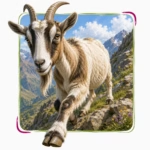
Deer Fact Highlight
From the full animal facts page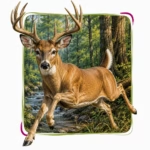
More Animal Comparisons
Pick another animal matchup and keep exploring. Compare appearances, habitats, diets, abilities, and surprising differences.




Make an Animal Story
Turn this goat vs deer comparison into a mountain-and-forest adventure with our free Animal Story Generator.
Source notes: References used for this comparison. See more See less
Try Another Matchup
Explore this comparison →