
Honey Bee vs Bumblebee: Closely Related Social-Bee Species Comparison
Honey bees and bumblebees are both true bees in family Apidae, and their female workers gather nectar and pollen with branched hairs and hind-leg pollen baskets. A western honey bee worker is usually slimmer, lives in a large perennial colony, builds flat vertical comb, stores a major honey reserve, and can advertise flower locations with a waggle dance. A common eastern bumble bee worker is rounder and hairier, belongs to a smaller annual colony, nests in a cavity with clustered wax cells and pots, flies in cooler conditions, and can shake pollen loose through buzz pollination. Both are valuable pollinators, and neither is “best” for every flower or ecosystem.
About Honey Bee
- Type Insect
- Diet Adults use nectar or stored honey for carbohydrate and pollen for much of their protein; workers collect nectar, pollen, water, and plant resins, process food inside the colony, and feed larvae glandular secretions and stored provisions
- Group Western honey bee (Apis mellifera), represented here by a nonreproductive female worker; other honey-bee species in genus Apis differ in range, nesting, size, and behavior
- Known for A relatively slender bee commonly about 12–15 millimeters long as a worker, with a golden-brown banded abdomen, fuzzy thorax, branched pollen-catching hairs, elbowed antennae, two pairs of clear wings, a more pointed abdominal tip, and a smooth pollen basket on each hind leg
- Special skill Branched pollen hairs, hind-leg corbiculae, wax glands, vertical hexagonal comb, large honey stores, ultraviolet-sensitive flower vision, odor learning, waggle-dance direction and distance signals, winter clustering, evaporative cooling, and a barbed worker sting that can remain in elastic mammal skin
About Bumblebee
- Type Insect
- Diet Adults drink nectar and gather pollen, while workers mix pollen and nectar to feed developing larvae; the colony stores nectar in small wax pots but does not build the huge long-term honey reserve familiar from managed honey-bee hives
- Group Bumblebee, represented here by a female worker common eastern bumble bee (Bombus impatiens); more than 250 Bombus species vary in color, tongue length, body size, range, nesting, and colony size
- Known for A chunky, rounded bee with a black head, densely hairy black-and-yellow body, broad abdomen, elbowed antennae, two pairs of dusky clear wings, sturdy legs, and a pollen basket on each hind leg; common eastern bumble-bee workers vary widely in size and queens are much larger
- Special skill Thick insulating hairs, active heat production by flight muscles, cold-weather foraging, branched pollen hairs, hind-leg corbiculae, flexible flower handling, buzz pollination made by vibrating flight muscles while the wings are disengaged, wax nectar pots, scent learning, and a relatively smooth female sting that can normally be withdrawn and used again
Honey Bee vs Bumblebee: Quick Answer
A honey bee worker is generally slimmer and lives in a huge, long-lasting colony that builds vertical wax comb and stores plenty of honey. A bumblebee is usually larger, rounder, and fuzzier; its smaller colony normally lasts one warm season, and a new queen starts again after winter. Bumblebees can buzz-pollinate tomatoes and blueberries, while honey bees can tell nestmates a flower’s direction and distance with a waggle dance.
Where Do They Fit?
Follow the branches to see how Honey Bee and Bumblebee are classified and related.
Honey Bee vs Bumblebee: Quick Comparison
| Feature | Honey Bee (Western Honey Bee Worker) | Bumblebee (Common Eastern Bumble Bee Worker) |
|---|---|---|
| Scientific name | Apis mellifera | Bombus impatiens |
| Bee family | Apidae | Apidae |
| Body clue | Slender, golden-brown, moderately fuzzy, and more pointed at the abdomen | Chunky, densely fuzzy, black-and-yellow, and more rounded at the abdomen |
| Worker size | Fairly uniform, commonly about 12–15 mm long | More variable and often larger-bodied; queens are much larger than workers |
| Colony calendar | Normally perennial, surviving for several years through replacement queens | Normally annual in temperate regions; only new queens overwinter |
| Typical colony scale | Thousands to tens of thousands of workers | Usually dozens to several hundred workers, depending on species and conditions |
| Nest architecture | Parallel vertical sheets of precise hexagonal wax comb | Clustered brood cells, cocoons, and rounded wax nectar pots |
| Food storage | Large long-term honey reserve supports the perennial colony | Small nectar stores support short-term colony needs |
| Special pollination | Cannot perform true buzz pollination but efficiently recruits many nestmates | Vibrates certain flowers to release hidden pollen through buzz pollination |
| Worker sting | Barbs may trap it in elastic mammal skin, usually killing the worker | Smoother sting can normally be withdrawn and used again; males cannot sting |
How Are Honey Bees and Bumblebees Alike?
- Both are true bees in family Apidae and pass through egg, larva, pupa, and adult stages.
- Both representatives are eusocial, with a queen, nonreproductive female workers, male bees, cooperative brood care, and overlapping generations.
- Both female workers collect nectar and pollen, have branched body hairs, and pack pollen into smooth baskets called corbiculae on their hind legs.
- Both make wax, learn flower colors and odors, communicate inside the colony, and pollinate wild plants and crops while foraging.
- Both are usually calm at flowers but females may sting if grabbed, stepped on, trapped, or if their nest is disturbed.
How Are Honey Bees and Bumblebees Different?
- A western honey bee worker is usually slimmer and golden-brown, while a common eastern bumble bee worker is usually chunkier, rounder, and covered with denser black-and-yellow hair.
- Honey-bee colonies are generally perennial and may contain tens of thousands of workers; temperate bumblebee colonies normally last one season and contain dozens to several hundred workers.
- Honey bees build parallel vertical comb sheets and store large honey reserves; bumblebees build irregular clusters of brood cells and wax pots holding much smaller nectar stores.
- Bumblebees can buzz-pollinate flowers such as tomatoes by vibrating their flight muscles; honey bees cannot perform true buzz pollination.
- Honey bees communicate a profitable food patch with waggle dances, while bumblebees recruit nestmates mainly through odor, excitement, and information gained by individual foragers rather than a directional dance map.
- A worker honey bee’s barbed sting may remain in mammal skin and kill her; a female bumblebee can normally withdraw her smoother sting and sting again, although neither bee seeks people to attack.
Honey Bee vs Bumblebee Adaptation Showdown
Flower-pollinator showdown: Bumblebee wins typical individual size and strength because the selected worker is generally bulkier, although worker ranges overlap and queens change the comparison. Speed and stealth are ties because flight varies with species, load, temperature, wind, and measurement method. Honey bee wins teamwork for coordinating a much larger perennial workforce with dance information, food sharing, heating, cooling, and stored honey. Swimming is a tie because neither bee is aquatic and open water is hazardous. Bumblebee wins weirdest adaptation for buzz pollination—using flight muscles to shake pollen from a flower without flapping its wings. These categories compare adaptations, not a fight.
Fun Honey Bee vs Bumblebee Facts
Buzz Pollination Is a Wingless Flight-Muscle Shake
A bumblebee can bite or grip a flower’s anther, disengage its wings, and rapidly contract the same muscles normally used for flight. The vibration shoots dry pollen from tiny pores onto the bee. Tomatoes, peppers, cranberries, and blueberries are among the plants that benefit. Western honey bees cannot perform this true floral buzzing.
One Bee City Winters and the Other Reboots
A healthy temperate honey-bee colony keeps its queen and many workers alive through winter by clustering, generating heat, and eating stored honey. In a typical temperate bumblebee cycle, newly mated queens shelter alone through winter. Each surviving queen starts a fresh colony in spring while the previous workers, males, and old queen die.
Honey Stores Match the Colony Calendar
Honey bees ripen watery nectar by adding enzymes and fanning away moisture, then seal concentrated honey inside many comb cells for seasons when flowers disappear. Bumblebees also collect and store nectar in wax pots, but their annual colonies usually keep only smaller working supplies rather than a harvestable winter warehouse.
A Dance Gives Directions but a Buzz Opens Flowers
A honey-bee forager can waggle across comb so nestmates learn the direction and approximate distance of a rich food patch relative to the Sun. Bumblebees do not give that same directional map. Their signature trick happens on the flower itself, where vibration unlocks pollen that otherwise stays trapped.
The One-Sting Rule Belongs to a Worker Honey Bee
A female worker western honey bee has barbs that may lodge in stretchy mammal skin, pulling out the sting apparatus as she flies away and causing her death. A female bumblebee has a smoother sting that can normally be withdrawn. Honey-bee queens can also withdraw their stings more readily, and male bees of both kinds cannot sting.
Honey Bee vs Bumblebee Quiz
- Are honey bees and bumblebees both true bees? Answer: Yes. Both representatives belong to family Apidae.
- Which bee can buzz-pollinate a tomato flower? Answer: The bumblebee.
- Which colony normally stores a large honey reserve and survives winter as a group? Answer: The western honey-bee colony.
- Which bee gives directional food information with a waggle dance? Answer: The honey bee.
- Can male honey bees or male bumblebees sting? Answer: No. The sting is a modified egg-laying structure, so only females have one.
Honey Bee vs Bumblebee FAQ
Which is bigger, a honey bee or a bumblebee?
Bumblebees are usually bulkier and many are longer than worker western honey bees, but size overlaps among workers and differs by species. A queen bumblebee can be much larger than either kind of worker.
Do bumblebees make honey?
They collect nectar, add enzymes, and store sweet liquid in wax pots, so it is sometimes loosely called honey. Their annual colonies keep only modest supplies and do not make the large capped reserve harvested from managed honey-bee hives.
Which bee is the better pollinator?
It depends on the flower, climate, place, and goal. Bumblebees excel at buzz pollination and cool-weather work. Honey bees can mobilize huge managed colonies across large crops. Diverse native bees are often essential partners, so no single bee replaces a healthy pollinator community.
Can honey bees and bumblebees sting?
Queens and workers are female and can sting, but foragers usually sting only when trapped or handled. Bumblebee females can normally sting more than once. A worker honey bee often leaves her barbed sting in mammal skin. Males of both kinds cannot sting.
Do honey bees and bumblebees live in the same nest?
No. Each species forms its own colony. They may visit the same flowers, but a bumblebee does not join a honey-bee hive and a honey bee does not become part of a bumblebee nest.
Animal Words to Know
- Corbicula: A smooth, hair-edged pollen basket on the hind leg of a worker honey bee or bumblebee.
- Buzz pollination: Releasing pollen by vibrating a flower with flight muscles while the wings remain still.
- Eusocial: Living with cooperative brood care, overlapping generations, and reproductive and nonreproductive castes.
- Perennial colony: A colony that survives and continues for more than one year.
- Waggle dance: A honey-bee movement pattern that communicates a food source’s direction and approximate distance.
Honey Bee and Bumblebee Pollination Activity
Honey Bee and Bumblebee Pollination Activity
Draw a honey bee beside a wax comb and a bumblebee visiting a tomato flower. Make the honey bee slimmer and golden-brown, with pollen baskets and stored honey. Make the bumblebee rounder and fuzzier, with vibration lines showing it shaking pollen from the flower. Add a note that bumblebees can perform buzz pollination, while honey bees cannot. Label pollen basket, comb, honey, buzz pollination, colony, and queen.
Meet Each Animal
Want the full fact file? Here are quick highlights from each animal’s own facts page.
Honey Bee Fact Highlight
From the full animal facts page
Bumblebee Fact Highlight
From the full animal facts page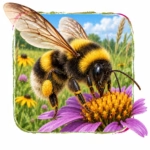
More Animal Comparisons
Pick another animal matchup and keep exploring. Compare appearances, habitats, diets, abilities, and surprising differences.






Make an Animal Story
Turn this honey bee vs bumblebee comparison into a waggle-dance and buzzing-flower mystery with our free Animal Story Generator.
Source notes: References used for this comparison. See more See less
Try Another Matchup
Explore this comparison →