
Hornet vs Yellow Jacket: Social Wasp Comparison
Hornets and yellow jackets are close relatives in the social-wasp subfamily Vespinae, but they are not the same taxonomic group. True hornets belong to genus Vespa and are usually larger and more robust. Yellow jacket commonly refers to wasps in Vespula and Dolichovespula, which are often smaller and brightly patterned. Common names can be tricky: the bald-faced hornet is actually a Dolichovespula yellow jacket.
About Hornet
- Type Insect
- Diet Omnivore
- Group True Wasp (Genus Vespa)
- Known for Large robust bodies, paper nests, powerful jaws, insect hunting, repeated stings, and organized social colonies
- Special skill Building strong enclosed paper nests and coordinating large workers to hunt and defend the colony
About Yellow Jacket
- Type Insect
- Diet Omnivore
- Group Vespine Wasp (Vespula and Dolichovespula)
- Known for Bold markings, fast flight, enclosed paper nests, insect hunting, scavenging in some species, repeated stings, and busy colonies
- Special skill Finding hidden nest entrances, hunting insects, scavenging food in some species, and rapidly defending the colony
Hornet vs Yellow Jacket: Quick Answer
True hornets are social wasps in genus Vespa; yellow jackets are usually social wasps in genera Vespula and Dolichovespula. Hornets are generally larger and stouter, while yellow jackets are often smaller with sharp black-and-yellow or black-and-white patterns. Both build enclosed paper nests, feed animal protein to larvae, drink sugary liquids as adults, and can sting repeatedly when threatened.
Where Do They Fit?
Follow the branches to see how Hornet and Yellow Jacket are classified and related.
Hornet vs Yellow Jacket: Quick Comparison
| Feature | True Hornet | Yellow Jacket |
|---|---|---|
| Animal type | Insect | Insect |
| Animal group | Genus Vespa | Usually genera Vespula and Dolichovespula |
| Typical build | Large, robust, and broad-headed | Usually smaller and more compact |
| Colors | Yellow, orange, red-brown, black, or combinations depending on species | Often bright black and yellow; some are black and white |
| Social life | Queen, workers, and males in a colony | Queen, workers, and males in a colony |
| Nest | Enclosed paper combs in cavities, trees, shrubs, buildings, or sometimes soil | Enclosed paper combs, often in soil or cavities for Vespula and above ground for many Dolichovespula |
| Food for larvae | Chewed insects and other animal prey | Chewed insects, carrion, or other animal protein depending on species |
| Adult food | Nectar, sap, ripe fruit, and other sugary liquids | Nectar, fruit, sugary drinks, and other sweet liquids |
| Sting | Females can sting repeatedly | Females can sting repeatedly |
| Name surprise | Only Vespa species are true hornets | The bald-faced hornet is actually a yellow jacket |
How Are Hornets and Yellow Jackets Alike?
- Both hornets and yellow jackets are social wasps in the family Vespidae and subfamily Vespinae.
- Both live in colonies containing queens, female workers, and males.
- Both make enclosed paper nests by chewing plant fibers and mixing them with saliva.
- Both adults seek sugary liquids while workers supply larvae with animal protein.
- Both female workers can sting repeatedly, especially when defending a nest.
How Are Hornets and Yellow Jackets Different?
- True hornets belong to genus Vespa, while yellow jackets are usually classified in Vespula and Dolichovespula.
- Hornets are generally larger, heavier, and broader-headed than yellow jackets.
- Yellow jackets often show crisp black-and-yellow or black-and-white markings, while many hornets include orange or reddish-brown tones.
- Many Vespula yellow jackets hide nests underground or in cavities, while many hornets use tree hollows, wall spaces, branches, or shrubs; both groups have exceptions.
- Some yellow jacket species commonly scavenge around carrion, rubbish, or outdoor food, while hornets are better known for hunting live insects, though diets vary.
Hornet vs Yellow Jacket Showdown
Social-wasp showdown: The true hornet wins typical size and strength because Vespa species are generally larger and more robust. The yellow jacket takes stealth because many Vespula colonies hide behind a tiny ground or wall entrance, and it wins our weirdest-fact prize because the bald-faced hornet is actually a Dolichovespula yellow jacket. Speed, social life, and swimming are ties: both are fast-flying colony wasps, and neither is an aquatic insect.
Fun Hornet vs Yellow Jacket Facts
Different Genera, Same Social-Wasp Subfamily
True hornets belong to Vespa. The yellow jacket name usually covers Vespula and Dolichovespula. All three genera sit in the vespine subfamily Vespinae, which is why their colonies, paper nests, diets, and body plans can look so similar.
The Bald-Faced Hornet Is a Yellow Jacket
Despite its common name, the bald-faced hornet is Dolichovespula maculata, not a member of the true-hornet genus Vespa. Its ivory-white facial marks also prove that not every yellow jacket is literally yellow.
Ground Door vs Tree or Cavity Door
Many Vespula yellow jackets build paper nests in abandoned animal burrows or enclosed wall spaces, leaving only a small entrance visible. Many hornets nest in tree hollows, buildings, branches, or shrubs, and some hornet species also use underground cavities. Dolichovespula yellow jackets often build aerial nests.
Adults Like Sugar, Larvae Need Protein
Adult hornets and yellow jackets fuel flight with nectar, sap, ripe fruit, and other sugars. Workers hunt or scavenge animal food, chew it, and feed it to growing larvae; the larvae can return sweet nutrient-rich droplets to the adults.
Temperate Colonies Usually Start Over
In many cool-climate species, a mated queen survives winter alone and starts a new nest in spring. Workers appear, the colony expands through summer, and new queens and males are produced before cold weather ends the old colony. Tropical cycles and some species can differ.
Hornet vs Yellow Jacket Quiz
- What genus contains true hornets? Answer: Vespa.
- Which genera are usually called yellow jackets? Answer: Vespula and Dolichovespula.
- What do both groups use to make paper nests? Answer: Chewed plant or wood fibers mixed with saliva.
- Is the bald-faced hornet a true hornet? Answer: No; it is a Dolichovespula yellow jacket.
- What food do adult hornets and yellow jackets commonly seek? Answer: Sugary liquids such as nectar, sap, and fruit juice.
Hornet vs Yellow Jacket FAQ
What is the main difference between a hornet and a yellow jacket?
A true hornet belongs to genus Vespa and is generally larger and stouter. A yellow jacket usually belongs to Vespula or Dolichovespula and is often smaller with sharper black-and-yellow or black-and-white markings.
Are hornets and yellow jackets both wasps?
Yes. Both are social wasps in the family Vespidae and the subfamily Vespinae.
Which is more dangerous?
Either can sting repeatedly and defend a disturbed nest. Risk depends on species, colony size, circumstances, and a person’s allergy, so children should never touch a nest and should calmly move away from busy nest traffic.
Do yellow jackets always nest underground?
No. Many Vespula species use soil or cavities, while many Dolichovespula species make aerial nests. Some species choose wall voids, trees, shrubs, eaves, or other protected spaces.
Why is a bald-faced hornet not a true hornet?
Its scientific name is Dolichovespula maculata, placing it with yellow jackets rather than with true hornets in Vespa.
Animal Words to Know
- Vespinae: The social-wasp subfamily containing true hornets and yellow jackets.
- Genus: A scientific group of closely related species.
- Vespa: The genus containing true hornets.
- Vespula: A yellow jacket genus whose species often nest in the ground or cavities.
- Dolichovespula: A yellow jacket genus that includes many aerial nesters and the bald-faced hornet.
Hornet and Yellow Jacket Nest Activity
Hornet and Yellow Jacket Nest Activity
Draw a European hornet beside a smaller common yellow jacket. Place the hornet near a paper nest inside a tree cavity and the yellow jacket near a hidden ground nest. Give both narrow waists, folded wings, and bold warning colors, but make their markings different. Add a note that nest sites vary by species. Label hornet, yellow jacket, size, markings, colony, and nest.
Meet Each Animal
Want the full fact file? Here are quick highlights from each animal’s own facts page.
Hornet Fact Highlight
From the full animal facts page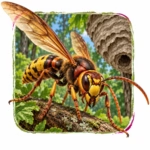
Yellow Jacket Fact Highlight
From the full animal facts page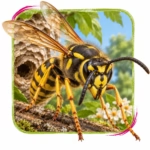
More Animal Comparisons
Pick another animal matchup and keep exploring. Compare appearances, habitats, diets, abilities, and surprising differences.


Make an Animal Story
Turn this hornet vs yellow jacket comparison into a buzzing paper-city adventure with our free Animal Story Generator.
Source notes: References used for this comparison. See more See less
Try Another Matchup
Explore this comparison →