
Mink vs Otter: Semiaquatic Mustelid Comparison
Mink and otters are sleek semiaquatic members of Mustelidae, but otters are more specialized for life in water. “Mink” covers the American and European mink, while “otter” covers numerous river and sea species. This page uses the American mink and North American river otter as familiar visual representatives. A mink is smaller and narrower with only partly webbed feet; a river otter is much larger with strongly webbed feet and a powerful tapered swimming tail.
About Mink
- Type Mammal
- Diet Carnivore
- Group Mustelid
- Known for Dark glossy fur, long narrow body, shoreline hunting, scent marking, small size, and partially webbed feet
- Special skill Slipping into holes and shoreline cover, swimming after prey, climbing, scent marking, and storing extra food
About Otter
- Type Mammal
- Diet Carnivore
- Group Mustelid
- Known for Streamlined body, webbed feet, powerful tail, swimming, diving, dense fur, whisker sensing, and playful behavior
- Special skill Fast swimming, underwater hunting, closing ears and nostrils, detecting prey with whiskers, and sliding over snow or mud
Mink vs Otter: Quick Answer
A mink is a small, slender mustelid that hunts along shorelines and swims well. An otter is generally larger and more strongly adapted to water, with webbed feet, a streamlined body, closable ears and nostrils, and a powerful tail. Both have dense water-resistant fur and eat animal prey, but otters spend more time swimming and diving.
Where Do They Fit?
Follow the branches to see how Mink and Otter are classified and related.
Mink vs Otter: Quick Comparison
| Feature | American Mink | North American River Otter |
|---|---|---|
| Animal type | Mammal | Mammal |
| Family | Mustelidae | Mustelidae |
| Scientific name | Neogale vison | Lontra canadensis |
| Typical size | Small and light | Much longer and heavier |
| Body shape | Very narrow body, short legs, pointed face, and bushy tail | Streamlined cylindrical body, small head, and thick tapered tail |
| Feet | Partly webbed | Strongly webbed |
| Main habitat | Shorelines, marshes, streams, lakes, and riverbanks | Rivers, lakes, wetlands, coasts, and estuaries |
| Swimming style | Paddles with feet and flexes the body | Uses webbed feet, powerful tail, and whole-body undulation |
| Food | Rodents, rabbits, birds, frogs, fish, crayfish, reptiles, and insects | Fish, crayfish, frogs, turtles, insects, and other aquatic or shoreline animals |
| Baby name | Kit | Pup |
| Social life | Usually solitary and territorial | Alone or in family and temporary social groups |
How Are Mink and Otters Alike?
- Both mink and otters are mammals in the weasel family Mustelidae.
- Both have long bodies, short legs, dense fur, scent glands, sharp teeth, and non-retractable claws.
- Both live near water, swim, dive, hunt animal prey, and use shoreline shelters.
- Both have water-resistant outer guard hairs protecting warm underfur.
- Both may use abandoned burrows, hollow logs, roots, rocks, or other sheltered spaces as dens.
How Are Mink and Otters Different?
- River otters are generally much larger and heavier than mink.
- Mink have partly webbed feet, while river otters have more complete webbing and stronger aquatic adaptations.
- A mink has a relatively bushy tail, while a river otter has a thick muscular tail that narrows toward the tip.
- Mink often hunt along the water’s edge and enter narrow holes, while otters spend more time actively swimming and diving.
- Mink babies are called kits, while otter babies are usually called pups.
Mink vs Otter Showdown
Semiaquatic showdown: Using American mink and North American river otter as representatives, the otter wins size, swimming speed, total strength, social flexibility, and aquatic ability. The mink wins stealth in narrow shoreline cover because its smaller body fits into tight burrows and crevices. Mink takes the weirdest-fact prize because it can release a strong-smelling defensive musk and may cache extra prey. These are adaptation categories, not a prediction of combat.
Fun Mink vs Otter Facts
Small Shoreline Hunter vs Aquatic Specialist
American mink patrol stream banks, marshes, and lake edges, frequently moving between land and water. River otters are more fully adapted to swimming, with webbed feet, muscular tails, and bodies shaped to reduce drag.
Partly Webbed vs Strongly Webbed Feet
Mink toes have some webbing that helps them paddle without preventing effective movement on land. River otters have more developed webbing and short claws suited to powerful propulsion and control in water.
Bushy Tail vs Swimming Rudder
A mink’s long tail is furry and somewhat bushy, helping with balance. An otter’s thick tapered tail is strongly muscular and works with the flexible body and feet during turns, dives, and underwater acceleration.
Both Wear Layered Waterproof Coats
Dense underfur traps insulating air close to the skin, while oily guard hairs help repel water. Both animals groom carefully because clean, aligned fur is essential for staying warm in cold water.
Mink Can Release a Powerful Musk
Like several mustelids, mink have scent glands and can release a strong-smelling liquid when threatened. They also use scent marks to communicate territory, though they cannot direct their spray as accurately as a skunk.
Mink vs Otter Quiz
- Which animal is generally larger? Answer: The otter.
- Which animal has more strongly webbed feet? Answer: The otter.
- What family contains mink and otters? Answer: Mustelidae.
- What is a baby mink called? Answer: A kit.
- Which animal has a thick tapered swimming tail? Answer: The river otter.
Mink vs Otter FAQ
What is the main difference between a mink and an otter?
A mink is a smaller, narrower shoreline hunter with partly webbed feet. An otter is generally larger and more specialized for swimming, with strongly webbed feet, a powerful tail, and other aquatic adaptations.
Are mink and otters related?
Yes. Both belong to Mustelidae, along with weasels, badgers, wolverines, ferrets, and martens.
Which is bigger, a mink or an otter?
River otters are much larger than American or European mink. Exact sizes vary by species, sex, age, and individual.
Can mink swim?
Yes. Mink are capable swimmers and divers that hunt fish, frogs, crayfish, and other prey near water, although they are less specialized for aquatic life than otters.
Are all otters river otters?
No. Otters include several freshwater and coastal species plus the highly marine sea otter. Body size, social behavior, diet, and swimming adaptations vary among species.
Animal Words to Know
- Mustelid: A member of the weasel family Mustelidae.
- Semiaquatic: Spending substantial time both in water and on land.
- Webbed feet: Feet with skin connecting the toes to improve swimming.
- Guard hairs: Outer hairs that protect dense insulating underfur.
- Cache: Food hidden or stored for later use.
Mink and Otter Drawing Activity
Mink and Otter Drawing Activity
Draw an American mink beside a much larger North American river otter. Give the mink a pointed face, dark-brown coat, small partly webbed feet, and furry tail along a stream bank. Give the otter a broad muzzle, long body, strongly webbed feet, and thick tapered tail in deeper water. Label mustelid, size, webbed feet, tail, shoreline, and swimming.
Meet Each Animal
Want the full fact file? Here are quick highlights from each animal’s own facts page.
Mink Fact Highlight
From the full animal facts page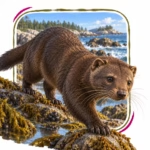
Otter Fact Highlight
From the full animal facts page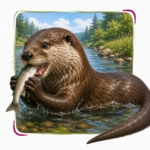
More Animal Comparisons
Pick another animal matchup and keep exploring. Compare appearances, habitats, diets, abilities, and surprising differences.

Make an Animal Story
Turn this mink vs otter comparison into a splashy riverside adventure with our free Animal Story Generator.
Source notes: References used for this comparison. See more See less
Try Another Matchup
Explore this comparison →