
Mink Facts for Kids
Minks are long-bodied, short-legged carnivorous mammals in the weasel family. Two living species carry the mink name: the American Mink, Neogale vison, and the much rarer European Mink, Mustela lutreola. Both live close to freshwater and are strong swimmers, but they are distinct animals with different native ranges and conservation stories. A third species, the Sea Mink, became extinct in the 1800s.
Quick Mink Facts
- Animal Type: Mammal
- Group: Two living semi-aquatic species in the weasel family Mustelidae
- Known For: Sleek bodies, dark water-resistant fur, swimming, riverside hunting, and scent marking
- Habitat: Riverbanks, streams, lakeshores, marshes, wetlands, and coastal edges
- Diet: Fish, frogs, crayfish, rodents, birds, eggs, insects, and other small animals
What You’ll Learn
Explore 10 sleek mink facts for kids about swimming, thick fur, hunting, wetlands, and long flexible bodies, plus a quiz, glossary, and activity
These easy facts are made for kids, parents, teachers, and curious young learners.
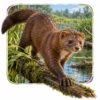
10 Fun Mink Facts for Kids
1. There Are Two Living Mink Species
The American Mink and European Mink are not regional versions of one species. They belong to different genera, and the American Mink is generally larger and has been introduced far beyond its native North American range.
Kid Decode: Two sleek river hunters share the mink name but carry different scientific passports.
2. Minks Belong to the Weasel Family
Minks are mustelids, relatives of weasels, otters, badgers, ferrets, and wolverines. Their flexible bodies and relatively short legs help them enter bank holes, dense vegetation, rocky gaps, and narrow prey shelters.
Kid Decode: The weasel family built the mink as a furry riverbank explorer.
3. Their Double Coat Resists Water
Dense insulating underfur traps warmth close to the skin, while longer oily guard hairs help shed water. This coat reduces heat loss when a mink repeatedly enters cold streams or wetlands.
Kid Decode: A mink swims wearing a built-in warm undercoat and splash-resistant jacket.
4. Partly Webbed Feet Help Them Swim
Minks paddle with all four feet and steer with their bodies and tails. Toes with partial webbing improve propulsion without preventing the animal from running, climbing, digging, or gripping land.
Kid Decode: Its feet are part swimming paddles and part riverside running shoes.
5. Whiskers Help Find Underwater Prey
Sensitive whiskers around the muzzle detect touch and movements in water or dark spaces. Along with smell, hearing, and vision, they help a mink locate prey around roots, rocks, vegetation, and murky banks.
Kid Decode: Those face whiskers read tiny underwater wiggles like secret messages.
6. Their Menu Changes With the Season
Minks are carnivores that take whatever suitably sized prey is locally available, including fish, frogs, crayfish, rodents, rabbits, birds, eggs, reptiles, and insects. Aquatic prey may be especially important in warmer months.
Kid Decode: A mink’s menu follows whatever is swimming, hopping, crawling, or rustling nearby.
7. They Usually Live and Hunt Alone
Outside breeding and family care, minks are mainly solitary. Individuals travel along waterways, leave scent marks, and use home ranges that may overlap differently depending on sex, food, season, and habitat.
Kid Decode: The riverbank trail usually belongs to one mink adventurer at a time.
8. A Mink Den May Be Borrowed
Minks shelter in hollow logs, rock crevices, root tangles, or burrows beside water. They may enlarge a natural space or take over a den made by another animal, lining a resting or nursery chamber with dry material.
Kid Decode: Why dig an entire house when a riverbank neighbor left a useful tunnel?
9. American Mink Embryos Can Pause
After mating, a fertilized American Mink embryo may remain unattached in the uterus before implantation and active development begin. This delayed implantation helps births occur during a more suitable spring period.
Kid Decode: The future kits press a tiny biological pause button before development continues.
10. The Two Species Face Opposite Conservation Stories
American Minks remain widespread and can become damaging invasive predators where people introduced them. European Minks are Critically Endangered, threatened by habitat loss, trapping history, disease, hybridization with polecats, and competition from introduced American Minks.
Kid Decode: One mink spreads beyond its old map while the other vanishes from much of its own.
The Weirdest Mink Fact
A fertilized American Mink embryo can pause before attaching to the uterus. The total time between mating and birth therefore varies, even though active development after implantation takes much less time.
Try This Mink Activity
American-and-European Mink Activity
Draw an American Mink and a European Mink beside a stream. Add long flexible bodies, short legs, partly webbed feet, wet guard hairs over dense underfur, sensitive whiskers, fish, frogs, crayfish, a riverbank den, kits, and a map showing native ranges. Add a warning that introduced American Minks can threaten wildlife where they do not belong.
Quick Mink Quiz
- How many living mink species are there? Answer: Two: the American Mink and European Mink.
- What animal family contains minks? Answer: The weasel family, Mustelidae.
- What keeps a mink warm in water? Answer: Dense underfur beneath oily guard hairs.
- What are baby minks called? Answer: Kits.
- Which mink is Critically Endangered? Answer: The European Mink.
Mini Glossary
- Mustelid: A member of the weasel family, including minks, otters, badgers, and related mammals.
- Semi-Aquatic: Spending substantial time both in water and on land.
- Guard Hair: A longer outer hair that protects softer insulating fur underneath.
- Delayed Implantation: A reproductive pause before an embryo attaches to the uterus and resumes development.
- Invasive Species: A non-native organism that spreads and harms local ecosystems.


 Duck Facts for Kids
 Brittle Star Facts for Kids
 Saola Facts for Kids
 Dire Wolf Facts for Kids
More Animal Facts for Kids
Visit the full animal facts library or explore a focused animal group.
More Extinct Animal Facts for Kids
Discover dinosaurs, Ice Age giants, prehistoric sea creatures, recently extinct species, and other animals from the past.
Fact check note: Fact checked with U.S. National Park Service American Mink resources, University of Michigan Animal Diversity Web accounts for American and European mink, the IUCN Red List assessments for Neogale vison and Mustela lutreola, and European conservation resources on invasive American Mink impacts.

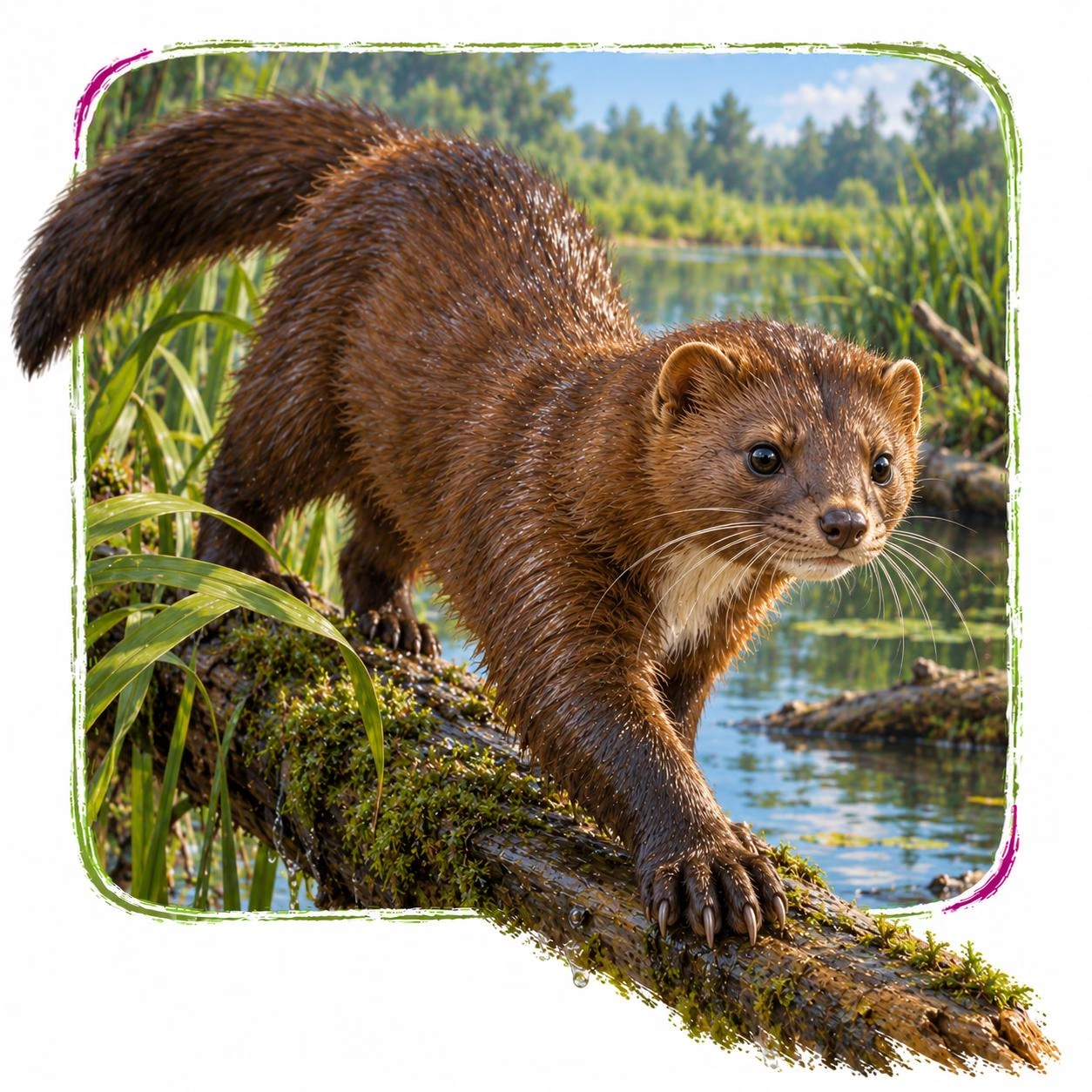
Mink in its natural Riverbanks, streams, lakeshores, marshes, wetlands, wooded waterways, reed beds, and some coastal habitats habitat