
Moose vs American Bison: Giant Herbivore Comparison
A Moose and an American Bison are both enormous hoofed plant eaters, but their bodies solve different habitat problems. The Moose is the largest deer, standing high on long legs that cross snow, wetlands, and deep water. The American Bison is North America’s heaviest land mammal, with a massive head, a shoulder hump, and shaggy forequarters built for life on open grasslands.
About Moose
- Type Mammal
- Diet Herbivore; leaves, twigs, bark, buds, and aquatic plants
- Group Deer; family Cervidae
- Known for Being the largest deer, with long legs and broad antlers on adult males
- Special skill Strong swimming and long-legged travel through deep water, mud, and snow
About American Bison
- Type Mammal
- Diet Herbivore; mainly grasses, sedges, and other grass-like plants
- Group Wild cattle; family Bovidae
- Known for Being North America’s largest land mammal, with a shoulder hump and shaggy front
- Special skill Huge neck and shoulder muscles sweep the head through snow to uncover food
Moose vs American Bison: Quick Answer
American Bison are generally heavier, while Moose stand taller at the shoulder and stretch long on stilt-like legs. Both can run about 35 miles per hour, and both swim well. A bull Moose grows broad antlers made of bone and sheds them yearly; both male and female bison keep curved horns with keratin sheaths over bony cores. Moose are usually solitary, while bison often gather in herds.
Where Do They Fit?
Follow the branches to see how Moose and American Bison are classified and related.
Moose vs American Bison: Quick Comparison
| Feature | Moose | American Bison |
|---|---|---|
| Scientific identity | Alces alces | Bison bison |
| Mammal family | Cervidae, the deer family | Bovidae, the cattle and antelope family |
| Published adult mass | About 270-771 kg | About 318-900 kg |
| Body shape | Very tall with long legs, a broad muzzle, and a hanging bell | Heavy body with a huge head, shoulder hump, and shaggy forequarters |
| Headgear | Adult males grow broad antlers and shed them yearly | Both sexes grow permanent horns with keratin sheaths |
| Best-known habitat | Forests, willow thickets, wetlands, and lakeshores | Prairies, meadows, grasslands, and open valleys |
| Food | Browses leaves, twigs, bark, buds, and aquatic plants | Grazes mainly grasses, sedges, and other grass-like plants |
| Top speed | About 35 mph or 56 km/h | About 35 mph or 55 km/h |
| Social pattern | Usually solitary; strongest bond is cow and calf | Often forms herds directed by older females |
| Water and winter | Strong swimmer; long legs cross water and snow | Strong swimmer; neck and shoulder muscles sweep snow from forage |
How Are Moose and Bison Alike?
- Both are very large hoofed mammals and plant eaters.
- Both have insulating coats that help them live through cold winters.
- Both can run close to 35 miles per hour despite their great size.
- Both are strong swimmers and may cross deep water.
- Both give birth to calves and mothers protect and nurse their young.
How Are Moose and Bison Different?
- A Moose is a deer, while an American Bison is a wild member of the cattle family.
- The Moose is taller and long-legged; the bison is heavier, broader, and marked by a shoulder hump.
- Bull Moose grow and shed antlers, while both male and female bison have permanent horns.
- Moose browse woody and aquatic plants in forests and wetlands; bison graze mostly grasses and sedges in open country.
- Moose are usually solitary, while bison often live and travel in herds.
Moose vs American Bison Showdown
Adaptation showdown: American Bison wins size because its published adult mass reaches about 900 kilograms, above the Moose maximum used here. Speed is a Tie because both are documented near 35 miles per hour. American Bison wins functional strength because its huge neck and shoulder muscles can swing the head through deep snow to uncover grass. Moose wins stealth because it can run quietly through dense forest despite its size. American Bison wins social behavior because females, calves, and many males gather in organized herds. Moose wins swimming because it is documented crossing up to 20 kilometers and feeding in deep water, although bison also swim strongly. Moose wins weirdest for antlers that can span about 5 feet, grow in a few months, and fall off every year.
Fun Moose vs American Bison Facts
The Heavier Giant
American Bison are the largest land mammals in North America. Yellowstone reports bulls up to about 2,000 pounds, or 900 kilograms, while the biggest Moose records used here reach about 771 kilograms.
A Dead Heat on Land
Moose and American Bison can both reach about 35 miles per hour. Long Moose legs and compact bison power produce similar top-speed numbers in the sources used here.
Antlers Are Not Horns
A bull Moose grows antlers made of bone and sheds them after the breeding season. Bison horns have keratin sheaths over bony cores and remain on both males and females.
A Long-Distance Swimmer
Moose are strong swimmers documented traveling up to 20 kilometers in water. They also enter lakes and wetlands to reach protein-rich aquatic plants.
The Living Snowplow
A bison’s shoulder hump is supported by powerful muscles. The animal swings its huge head from side to side to clear snow from feeding patches.
Moose vs Bison Quiz
- Which animal is generally heavier? Answer: The American Bison.
- Which animal is the largest member of the deer family? Answer: The Moose.
- Do Moose have horns or antlers? Answer: Adult males have antlers.
- Which animal usually lives in larger herds? Answer: The American Bison.
- About how fast can both animals run? Answer: About 35 miles per hour.
Moose vs American Bison FAQ
Which is bigger, a Moose or a bison?
The American Bison is generally heavier, while the Moose is taller and longer-legged.
Can Moose and bison both swim?
Yes. Both are strong swimmers, and Moose are especially well documented crossing long stretches of water.
Do female bison have horns?
Yes. Both male and female American Bison have horns, though the shapes differ slightly.
Do female Moose have antlers?
Normally no. Adult bull Moose grow the broad antlers.
Do Moose and bison live together?
Their ranges overlap in parts of North America, but Moose favor forests and wetlands while bison favor open grasslands and meadows.
Animal Words to Know
- Antler: A branching bony structure that is grown and shed, usually once each year.
- Horn: A keratin sheath over a bony core that is normally kept rather than shed.
- Browser: An herbivore that eats leaves, shoots, twigs, and other higher-growing plants.
- Grazer: An herbivore that feeds mainly on grasses and similar low plants.
- Wallow: A shallow dusty or muddy hollow where an animal rolls.
Build a Giant-Herbivore Field Guide
Build a Giant-Herbivore Field Guide
Draw exactly one adult bull Moose and exactly one adult American Bison at honest relative scale. Make the bison heavier and the Moose taller at the shoulder. Add clue cards for antlers, horns, long legs, shoulder hump, willow leaves, grass, lake, herd, and snow clearing. Sort each clue under Moose, Bison, or Both, then explain why height and weight are different size measurements. Observe wildlife from a distance without people handling animals.
Meet Each Animal
Want the full fact file? Here are quick highlights from each animal’s own facts page.
Moose Fact Highlight
From the full animal facts page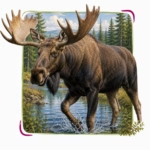
American Bison Fact Highlight
From the full animal facts page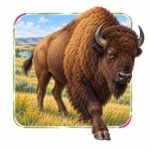
More Animal Comparisons
Pick another animal matchup and keep exploring. Compare appearances, habitats, diets, abilities, and surprising differences.


Make an Animal Story
Send a swimming Moose and a snow-clearing American Bison into a giant winter adventure with our free Animal Story Generator.
Source notes: References used for this comparison. See more See less
Try Another Matchup
Explore this comparison →