
Moose vs Caribou: Living Northern Deer Species Comparison
Moose and caribou are both northern deer with cloven hooves, hollow antlers, plant-based diets, strong swimming ability, and calves that must grow quickly. A moose is much taller and heavier, usually lives alone among forests and wetlands, and only males grow broad palm-shaped antlers. Caribou have wide travel-ready hooves, often live in herds, and males plus many females grow branching antlers. Some caribou migrate great distances, but not every population follows the same route or schedule.
About Moose
- Type Mammal
- Diet Herbivore and browser; willow, birch, aspen and other twigs and leaves, grasses, sedges, herbs, and aquatic vegetation depending on season
- Group Moose (Alces alces; Family Cervidae)
- Known for Largest living deer, with towering long legs, dark-brown coat, huge head, broad flexible muzzle, large ears, shoulder hump, short tail, throat bell, cloven hooves, and broad palmate antlers grown only by adult males
- Special skill Using extremely long legs in deep snow and wetlands, swimming strongly, and dipping the head underwater to gather mineral-rich aquatic plants
About Caribou
- Type Mammal
- Diet Herbivore; lichens and dried sedges are important in winter, with grasses, sedges, mushrooms, willows, leaves, and flowering plants in warmer seasons
- Group Caribou or Reindeer (Rangifer tarandus; Family Cervidae)
- Known for Medium-to-large northern deer with dense insulating coat, pale neck and rump, compact muzzle, wide spreading cloven hooves, long legs, and branching antlers grown by males and by many females
- Special skill Using broad scoop-like hooves as snowshoes, digging tools, paddles, and traction on soft tundra while some herds complete long seasonal journeys
Moose vs Caribou: Quick Answer
The moose is the giant: a large bull may stand 5–7 feet at the shoulder and weigh around 1,500 pounds or more in the largest subspecies. It has a broad muzzle, throat bell, very long legs, and male-only palmate antlers. A caribou is smaller and more herd-oriented, with broad scoop-shaped hooves for snow, tundra, digging, and paddling. Both male caribou and many females grow antlers, and some herds make spectacular seasonal migrations.
Where Do They Fit?
Follow the branches to see how Moose and Caribou are classified and related.
Moose vs Caribou: Quick Comparison
| Feature | Moose | Caribou |
|---|---|---|
| Scientific name | Alces alces | Rangifer tarandus |
| Deer family | Largest living member of Cervidae | Northern herd-forming member of Cervidae |
| Shoulder height | Commonly about 5–7 ft in adults, varying by sex and region | Usually much shorter, often about 3–5 ft depending on sex and population |
| Antler growers | Males only | Males and many females |
| Antler shape | Broad and palmate, like an open hand | Long, branching, and swept in complex curves |
| Hooves | Large cloven hooves on extremely long wetland-and-snow legs | Very broad spreading hooves used on snow, tundra, ice, and water |
| Habitat | Forests, shrublands, wetlands, lakes, and river edges | Tundra, taiga, open woodland, alpine country, and coastal plains |
| Food style | Browses shrubs, twigs, leaves, and aquatic plants | Grazes and browses, with lichens important in many winter diets |
| Social life | Usually solitary | Often lives and travels in herds |
| Movement | Seasonal local movements; strong swimmer | Some populations make long migrations; strong swimmer |
How Are Moose and Caribou Alike?
- Both are even-toed hoofed mammals in the deer family Cervidae.
- Both grow and shed true antlers rather than keeping permanent horns.
- Both are herbivorous ruminants that rechew cud and depend on seasonal northern plants.
- Both have dense winter coats, cloven hooves, long legs, strong senses, and the ability to travel through snow and swim across water.
- Both give birth to calves that can stand and begin following their mothers very soon.
How Are Moose and Caribou Different?
- Moose are the world’s largest deer and can be several times heavier than caribou.
- Only male moose grow antlers, while male caribou and many female caribou grow them.
- Moose antlers are broad and palmate; caribou antlers are narrower, branching, and often asymmetrical.
- Moose usually browse alone in forest and wetland mosaics; caribou often feed and travel in open tundra or taiga herds.
- Moose have taller legs, a bulbous muzzle, and a throat bell; caribou have especially broad scoop-like hooves and a more compact head.
- Some caribou populations migrate hundreds of miles between seasonal ranges, while moose movements are generally shorter and less synchronized.
Moose vs Caribou Adaptation Showdown
Northern-deer adaptation showdown: Moose wins size and whole-body strength, and its dark coat plus solitary life give it the stealth category in thick willow and forest cover. Caribou wins speed and endurance for herd travel across open country, social skill for coordinated seasonal grouping, and weirdest fact because many females grow antlers. Swimming is a tie: moose can swim and feed in deep water, while caribou cross rivers and use broad hooves as paddles. These categories compare survival adaptations, not combat.
Fun Moose vs Caribou Facts
Female Caribou Can Carry Antlers
Caribou are the only living deer species in which females commonly grow antlers, although not every female does. Mature males usually shed theirs after the autumn rut. Pregnant females often keep antlers through winter and may use them while competing for feeding craters, then shed them around the spring calving season. Timing varies with sex, age, nutrition, and population.
A Caribou Hoof Is a Four-Season Tool
The two main toes spread to support the animal on snow, boggy tundra, and soft ground. Hard rims provide grip, and the hollowed underside helps scrape snow away from lichens. In water, the broad feet paddle. Hoof pads and edges also change with season, improving performance on summer ground and winter ice.
Moose Can Feed Below the Waterline
Moose wade into ponds and lakes for aquatic plants rich in useful minerals. Their long legs carry them into deep water, and they can swim strongly. A feeding moose may submerge its muzzle or much of its head, but it still breathes air and must surface; it is a deer, not a diving marine mammal.
Caribou and Reindeer Are One Species
Both names refer to Rangifer tarandus. In North America, wild animals are generally called caribou, while reindeer often refers to Eurasian populations and domesticated or semidomesticated herds. Subspecies, management histories, body sizes, coats, behavior, and migration patterns differ, so the two words are not perfect labels for identical lifestyles.
Not Every Caribou Makes a Giant Migration
Some tundra herds travel long distances between calving, summer, and winter ranges. Woodland and island populations may move much shorter distances or remain relatively local. Scientists track individuals and survey herds because routes can shift with snow, insects, food, fire, development, weather, and population size.
Moose vs Caribou Quiz
- Which animal is the largest living deer? Answer: The moose.
- Which species has antlers on males and many females? Answer: The caribou.
- What winter food is especially important to many caribou? Answer: Lichens.
- How does a caribou use its broad hooves? Answer: For support, traction, digging through snow, and paddling.
- Do all caribou migrate enormous distances? Answer: No; movement patterns vary greatly among populations.
Moose vs Caribou FAQ
Which is bigger, a moose or caribou?
A moose is much bigger. Large bulls may weigh around 1,500 pounds or more, whereas caribou vary by population but are generally several times lighter.
Do female moose and caribou have antlers?
Female moose do not normally grow antlers. Many female caribou do, making Rangifer unusual among living deer.
Are caribou and reindeer the same animal?
They are the same species, Rangifer tarandus. Caribou usually means wild North American populations, while reindeer is common for Eurasian and domesticated or semidomesticated populations.
Can moose and caribou swim?
Yes. Moose are powerful swimmers and forage in lakes, while caribou cross rivers and use their broad hooves as paddles.
Do moose live in herds?
Moose are normally solitary outside mating and cow-calf care, although temporary concentrations can form in good seasonal habitat.
Animal Words to Know
- Palmate: Broad and flattened like the palm of a hand, describing an adult bull moose’s antlers.
- Antler: A branched bone structure grown and shed on a seasonal cycle.
- Taiga: The northern belt of cold conifer forest south of much of the tundra.
- Lichen: A partnership of fungi with algae or cyanobacteria that supplies important winter food for many caribou.
- Migration: Regular seasonal movement between different ranges.
Moose and Caribou Habitat Activity
Moose and Caribou Habitat Activity
Draw a moose and caribou on the same ground line and at the same scale. Make the moose much taller, with long legs, a broad muzzle, and wide palmate antlers beside a wetland. Give the caribou branching antlers, broad hooves, and a tundra herd; include an antlered female. Label antlers, hooves, browser, herd, wetland, tundra, and migration.
Meet Each Animal
Want the full fact file? Here are quick highlights from each animal’s own facts page.
Moose Fact Highlight
From the full animal facts page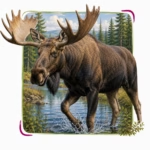
Caribou Fact Highlight
From the full animal facts page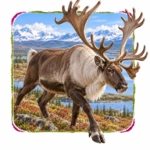
More Animal Comparisons
Pick another animal matchup and keep exploring. Compare appearances, habitats, diets, abilities, and surprising differences.

Make an Animal Story
Turn this moose vs caribou comparison into a northern forest-and-tundra journey with our free Animal Story Generator.
Source notes: References used for this comparison. See more See less
Try Another Matchup
Explore this comparison →