
Numbat vs Bandicoot for Kids
Numbats and Southern Brown Bandicoots are small Australian marsupials with pointed snouts, but their coats and schedules quickly tell them apart. The Numbat, Myrmecobius fasciatus, has white rump stripes and searches for termites in daylight. The Southern Brown Bandicoot, Isoodon obesulus, has a coarse speckled coat and usually emerges around dusk or at night. It digs cone-shaped holes for insects, worms, fungi and roots instead of following one main food.
About Numbat
- Type Living
- Diet Specialist insectivore; eats almost entirely termites found in shallow soil and wood
- Group Small Australian marsupial and only living member of family Myrmecobiidae (Myrmecobius fasciatus)
- Known for A pointed face, white back bands, a bushy tail and an almost all-termite diet
- Special skill Tracks termites by smell and collects them with a long, narrow, sticky tongue
About Southern Brown Bandicoot
- Type Living
- Diet Omnivore; digs for insects, earthworms, fungi and roots and also eats other plant material
- Group Small ground-dwelling Australian marsupial in family Peramelidae (Isoodon obesulus)
- Known for A pointed snout, rounded ears, large rump, short thick tail and coarse brown-and-gold coat
- Special skill Uses strong front feet and a long nose to make neat cone-shaped holes while searching underground food
Quick Answer
A Numbat is a slim, striped termite specialist about 35–45 cm long including its bushy tail. A Southern Brown Bandicoot is a small, round-rumped omnivore with a short thick tail and no white back bands. The Numbat licks termites from shallow galleries by day. The Bandicoot digs little cone-shaped holes for a mixed meal and is mostly active after daylight fades.
Numbat vs Southern Brown Bandicoot: Quick Comparison
| Feature | Numbat | Southern Brown Bandicoot |
|---|---|---|
| Scientific name | Myrmecobius fasciatus | Isoodon obesulus |
| Overall shape | Slim body, pointed snout, small ears and a long bushy tail | Compact body, long pointed snout, rounded ears, big rump and short thick tail |
| Coat | Rusty brown in front with distinct pale bands across the darker rump | Coarse brown or gray-brown fur flecked with gold and a pale underside |
| Main food | Almost entirely termites | Insects, earthworms, fungi, roots and other plant material |
| Busy time | Daytime, when termites are moving near the soil surface | Mostly dusk and night, although exact activity changes with weather and place |
| Foraging sign | Small scratches and opened termite galleries in soil or rotting wood | Neat cone-shaped holes dug into soft soil with the nose reaching into the centre |
| Shelter | A hollow log, tree hollow or small lined burrow | A shallow nest of grass and leaves hidden in dense cover |
| Young | Several joeys cling to the mother’s underside because she lacks a complete pouch | Tiny joeys grow inside a rear-opening pouch |
| Best habitat clue | Open eucalypt woodland with logs, hollows and termite-rich ground | Thick low vegetation that offers hiding places beside soft feeding soil |
| Conservation | Threatened and helped by predator control, habitat protection and reintroductions | Threatened in several regions; status differs among subspecies and states |
How Are Numbats and Bandicoots Alike?
- Both are small ground-dwelling marsupials found only in Australia.
- Both have long pointed snouts that help them search for small food.
- Both use strong front claws to open soil or surface shelters.
- Both usually live alone and rely on plant cover or logs for safety.
- Both are threatened by habitat loss and introduced predators in parts of their ranges.
How Are Numbats and Bandicoots Different?
- A Numbat has clear white back bands and a bushy tail; the Bandicoot is speckled brown with a short tail.
- The Numbat eats almost only termites, while the Bandicoot eats both animals and plants.
- Numbats forage by day; Southern Brown Bandicoots are mainly active at dusk and night.
- A Numbat often probes termite galleries, while a Bandicoot leaves deep cone-shaped feeding holes.
- Numbat joeys cling beneath their pouchless mother, while Bandicoot joeys grow in a rear-opening pouch.
Numbat vs Bandicoot Showdown
- Size – Tie: Their measurements overlap in different ways, and length depends greatly on whether the tail is included.
- Speed – Tie: Both can dash into cover, but there is no fair same-course race proving one is always faster.
- Strength – Southern Brown Bandicoot: Its sturdy front feet and powerful shoulders scoop repeated cone-shaped holes through soil.
- Stealth – Southern Brown Bandicoot: A dark speckled coat, night activity and dense scrub make it especially difficult to spot.
- Social – Tie: Each usually rests and feeds alone, apart from breeding and a mother’s care of young.
- Swimming – Tie: Neither is a water specialist, and no matched swimming evidence gives one a clear win.
- Weirdest – Numbat: It is a daytime, almost termite-only marsupial whose mothers do not have a complete pouch.
Fun Numbat vs Bandicoot Facts
A Built-In Termite Brush
A Numbat’s long tongue is coated with sticky saliva that traps termites.
A Nose at the Bottom
A Bandicoot digs a narrow cone, then pushes its long nose into the deepest point to reach food.
A Pouch That Faces Back
The Southern Brown Bandicoot’s pouch opens toward the rear, helping keep digging soil away from its joeys.
Striped Camouflage
A Numbat’s pale bands break up its outline among sunlit bark, twigs and leaf litter.
A Mixed Underground Menu
Bandicoots uncover insects, worms, fungi and roots and help turn and mix the soil as they feed.
Numbat vs Bandicoot Quiz
Which animal has white rump bands? A) Numbat B) Southern Brown Bandicoot C) Both Answer: A) Numbat
Which animal eats a mixed diet? A) Numbat B) Southern Brown Bandicoot C) Neither Answer: B) Southern Brown Bandicoot
When does a Numbat usually feed? A) Day B) Night only C) Underwater Answer: A) Day
What feeding sign does a Bandicoot leave? A) Cone-shaped holes B) Giant dams C) Tree nests Answer: A) Cone-shaped holes
What are baby marsupials called? A) Joeys B) Calves C) Chicks Answer: A) Joeys
Numbat vs Bandicoot FAQ
Is a Numbat a Kind of Bandicoot?
No. They are separate branches of the marsupial family tree. Similar pointed snouts do not make them close relatives.
Which Animal Is Bigger?
There is no simple winner. Southern Brown Bandicoots are stockier, while a Numbat’s long bushy tail adds greatly to its total length.
Why Do Bandicoots Dig Cone-Shaped Holes?
They scrape away soil with their front feet and probe the narrow bottom with the snout to find worms, insects, fungi and roots.
Do Numbats and Bandicoots Meet?
Their wider historical ranges overlapped in parts of Australia, but different activity times and feeding styles would reduce direct competition.
Can Either Animal Be Kept as a Pet?
No. They are protected native wildlife with specialized food, habitat and conservation needs. Leave care to licensed wildlife experts.
Animal Words to Know
- Crepuscular: Most active around dawn or dusk.
- Invertebrate: An animal without a backbone, such as an insect or earthworm.
- Marsupial: A mammal whose tiny newborns continue growing while attached to the mother’s milk supply, often in a pouch.
- Omnivore: An animal that eats both animal and plant foods.
- Specialist: An animal that depends on a narrow kind of food or habitat.
Read the Night-and-Day Ground Clues
Read the Night-and-Day Ground Clues
Fill one tray with crumpled brown paper and cardboard logs. Make shallow scratches for a daytime Numbat and cone-shaped holes for a night-time Bandicoot. Add paper termites beside the logs and paper worms, fungi and roots inside the cones. Ask a partner to identify each forager from the tracks, food and time clues.
Meet Each Animal
Want the full fact file? Here are quick highlights from each animal’s own facts page.
Numbat Fact Highlight
From the full animal facts page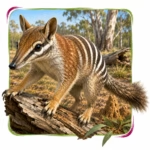
Southern Brown Bandicoot Fact Highlight
From the full animal facts pageMore Animal Comparisons
Pick another animal matchup and keep exploring. Compare appearances, habitats, diets, abilities, and surprising differences.

Make an Animal Story
Create an Australian woodland story about a daytime Numbat and a night-digging Bandicoot!