
Robin vs Sparrow: Living British Garden Bird Species Comparison
This comparison uses the European robin and house sparrow, two familiar British garden birds that people often see near homes. Both are small songbirds that eat invertebrates and raise chicks in sheltered nests, but they are not close relatives. A robin is rounder, red-breasted, fine-billed, and usually territorial. A house sparrow is slightly larger and chunkier, has a thick seed-cracking bill, shows obvious male and female plumage differences, and normally lives in noisy social groups.
About Robin
- Type Bird
- Diet Omnivore that mainly takes insects, spiders, worms, and other invertebrates, then adds berries, fruit, and seeds, especially in colder months
- Group European Robin (Erithacus rubecula; Family Muscicapidae)
- Known for Small round songbird about 12–14 centimeters long, with orange-red face and breast, warm olive-brown back, pale belly, large dark eyes, fine pointed insect-catching bill, slim legs, and nearly identical adult male and female plumage
- Special skill Singing through much of winter and using a fine bill, alert ground-hopping, sharp eyesight, and rapid dashes from cover to find tiny prey
About Sparrow
- Type Bird
- Diet Mostly seeds and grain, plus buds, fruit, food scraps, and many insects and other invertebrates, especially when adults are feeding growing chicks
- Group House Sparrow (Passer domesticus; Family Passeridae)
- Known for Chunky songbird about 14–15 centimeters long with a stout cone-shaped seed bill and short legs; adult male has gray crown, chestnut nape, patterned brown back, pale cheeks, and black bib, while female and young are plainer buff-brown with a pale eyebrow
- Special skill Cracking seeds with a powerful conical bill while using flock vigilance, flexible feeding, communal chatter, dust baths, and building cavities to thrive beside people
Robin vs Sparrow: Quick Answer
An adult European robin has an orange-red face and breast, a fine pointed bill, longish legs, and usually stands alone. A house sparrow is slightly larger and chunkier with a thick cone-shaped bill. Male house sparrows have a gray crown and black bib; females and young are plainer brown. Robins defend territories, while house sparrows commonly feed, bathe, roost, and nest in groups.
Where Do They Fit?
Follow the branches to see how Robin and Sparrow are classified and related.
Robin vs Sparrow: Quick Comparison
| Feature | European Robin | House Sparrow |
|---|---|---|
| Scientific name | Erithacus rubecula | Passer domesticus |
| Family | Muscicapidae, Old World flycatchers | Passeridae, Old World sparrows |
| Length | About 12–14 cm | About 14–15 cm |
| Bill | Fine and pointed for small invertebrates | Short, stout, and conical for seeds |
| Adult colors | Orange-red face and breast with brown back | Patterned male; plainer buff-brown female |
| Young bird | Mottled brown without a red breast | Resembles a plain brown female |
| Typical social life | Usually solitary and territorial | Usually social and often colonial |
| Voice | Thin ticking call and flowing song, even in winter | Repeated cheeps, chirps, and group chatter |
| Nest | Open cup tucked into dense cover, a bank, ledge, or cavity | Untidy grass nest in a hole, eave, nest box, or dense hedge |
| UK conservation | Green-listed | Red-listed after a major long-term decline |
How Are Robins and Sparrows Alike?
- Both are small passerine songbirds commonly seen in British gardens, parks, farms, and towns.
- Both have feathers, wings, lightweight skeletons, perching feet, keen senses, and cup-shaped nests for eggs and chicks.
- Both eat insects and other invertebrates, especially when feeding protein-rich food to young.
- Both can live near people and may visit bird tables, feeders, hedges, lawns, and water dishes.
- Both need clean food, fresh water, thick cover, safe nest sites, and protection from disturbance and domestic predators.
How Are Robins and Sparrows Different?
- Robins belong to Muscicapidae; house sparrows belong to Passeridae and are not miniature robins.
- A robin has a fine pointed bill and orange-red adult breast; a sparrow has a thick seed bill and brown, gray, black, and buff markings.
- Adult male and female robins look alike, while adult male and female house sparrows are easy to distinguish.
- Young robins are spotted brown without red breasts; young house sparrows resemble dull brown females.
- Robins generally defend individual territories, but house sparrows feed, roost, dust-bathe, and often nest socially.
- A robin gives a rich flowing song and ticking calls; a house sparrow produces repeated cheeps and lively group chatter.
Robin vs Sparrow Adaptation Showdown
Garden-bird adaptation showdown: House sparrow wins size by a small margin, bill strength for cracking seeds, and social skill through flock and colony life. Robin wins close-cover agility, solitary stealth, and weirdest fact because a young robin lacks the famous red breast. Swimming is a tie because neither is a swimming specialist, although both may bathe. These are broad adaptation comparisons, not race results or combat.
Fun Robin vs Sparrow Facts
Robin Red Is a Warning as Well as a Badge
Adult male and female European robins both have the orange-red face and breast. A robin may turn its colored chest toward a rival during a territorial encounter, so the patch can help signal ownership and warning. Plumage alone does not reliably reveal an adult robin’s sex.
Young Robins Start Out Spotted Brown
A newly fledged European robin has mottled golden-brown plumage and no orange-red breast. This makes it less likely to trigger territorial reactions from adults. The orange feathers appear gradually during the juvenile bird’s first partial molt.
House Sparrow Boys and Girls Look Different
An adult male house sparrow has a gray crown, chestnut neck, pale cheeks, and black throat bib. A female is softer buff-brown with a pale eyebrow and no black bib. Juveniles look much more like females than adult males.
Sparrows Bathe in Dust
House sparrows crouch in dry loose soil, flutter their wings, and toss dust through their feathers. Dust bathing helps maintain plumage and may reduce excess oil or some parasites. They also bathe in water, so a dusty sparrow is behaving normally rather than being stuck.
A “Sparrow” Is Not Just One Bird
Sparrow is a broad common name used for many species. This page compares the house sparrow, Passer domesticus, with the European robin. In North America, “robin” usually means the much larger American robin, so scientific names prevent a transatlantic mix-up.
Robin vs Sparrow Quiz
- Which bird has the thicker seed-cracking bill? Answer: The house sparrow.
- Which bird is usually solitary and territorial? Answer: The European robin.
- Does a juvenile robin have a red breast? Answer: No; it begins with mottled brown plumage.
- Which bird often nests and feeds in groups? Answer: The house sparrow.
- Are robins and house sparrows in the same family? Answer: No; they belong to Muscicapidae and Passeridae.
Robin vs Sparrow FAQ
Is a robin a type of sparrow?
No. The European robin belongs to Muscicapidae, while the house sparrow belongs to Passeridae.
Which is bigger, a robin or sparrow?
A house sparrow is usually a little longer and heavier, but the difference is small. Bill shape, plumage, and behavior are better field clues.
Do female robins have red breasts?
Yes. Adult male and female European robins look very similar and both have orange-red faces and breasts.
Why does a young robin have no red breast?
Its mottled brown juvenile plumage provides camouflage and may keep territorial adults from treating it like a rival.
How can children watch garden birds safely?
Watch quietly from a distance, use binoculars, keep cats indoors or supervised, clean feeders and water dishes regularly, and never touch nests, eggs, or chicks.
Animal Words to Know
- Passerine: A perching bird in the large songbird order Passeriformes.
- Territory: An area an animal occupies and may defend from others of its species.
- Conical bill: A short cone-shaped beak suited to gripping and cracking seeds.
- Juvenile: A young animal that has left its earliest baby stage but is not yet an adult.
- Dust bath: Feather-maintenance behavior in which a bird works dry dust through its plumage.
Robin and Sparrow Spotter Activity
Robin and Sparrow Spotter Activity
Draw an adult European robin, a young robin, a male house sparrow, and a female house sparrow. Give the adult robin an orange-red face and breast with a fine insect-catching bill; make the young robin brown and spotted. Give the sparrows stout seed-cracking bills, and add the male’s dark bib. Label bill, breast, bib, juvenile, insects, seeds, and flock.
Meet Each Animal
Want the full fact file? Here are quick highlights from each animal’s own facts page.
Robin Fact Highlight
From the full animal facts page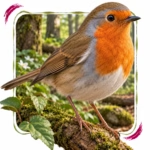
Sparrow Fact Highlight
From the full animal facts page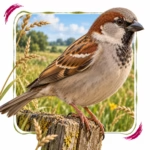
More Animal Comparisons
Pick another animal matchup and keep exploring. Compare appearances, habitats, diets, abilities, and surprising differences.




Make an Animal Story
Turn this robin vs sparrow comparison into a chirpy garden mystery with our free Animal Story Generator.
Source notes: References used for this comparison. See more See less
Try Another Matchup
Explore this comparison →