
Sheep vs Lamb: Life Stage Comparison
“Sheep” names the animal species and can include individuals of any age, while “lamb” specifically means a young sheep. For the clearest visual comparison, this page places an adult ewe beside a lamb of the same breed. The adult is larger, stronger, and fully developed; the lamb begins by drinking milk, grows rapidly, plays often, and gradually becomes a grazing ruminant. A female lamb may grow into a ewe, and an intact male lamb may grow into a ram.
About Sheep
- Type Mammal
- Diet Herbivore
- Group Adult Domestic Sheep
- Known for Wool or hair coats, flocking, grazing, bleating, rumination, milk, meat, and centuries of life alongside people
- Special skill Digesting fibrous plants through rumination, recognizing familiar faces, following flock movement, and growing insulating fleece in wool breeds
About Lamb
- Type Mammal
- Diet Herbivore
- Group Young Sheep
- Known for Small size, soft young coat, playful hopping, staying near its mother, drinking milk, rapid growth, and learning flock behavior
- Special skill Standing and walking soon after birth, recognizing its mother by sound and scent, drinking milk, and quickly learning to graze
Sheep vs Lamb: Quick Answer
A lamb is a young sheep, generally less than one year old in common livestock usage. “Sheep” can mean the whole species, but in an adult-versus-young comparison an adult sheep is larger, has permanent teeth, and may have a fuller coat. A lamb is smaller, has baby teeth, drinks its mother’s milk early in life, and later changes to grazing plants.
Where Do They Fit?
Follow the branches to see how Sheep and Lamb are classified and related.
Sheep vs Lamb: Quick Comparison
| Feature | Adult Sheep | Lamb |
|---|---|---|
| Animal type | Adult domestic sheep | Young domestic sheep |
| Scientific name | Ovis aries | Ovis aries |
| Main meaning | The species generally or a mature individual in this comparison | An age term for a young sheep |
| Age | Usually at least one year old in this comparison | Generally under one year old |
| Size | Fully grown or close to adult size | Smaller and rapidly growing |
| Female term | Ewe | Ewe lamb |
| Male term | Ram if intact; wether if castrated | Ram lamb or wether lamb |
| Diet | Grasses, hay, herbs, and other suitable forage | Milk at first, followed gradually by grass and other forage |
| Teeth | Permanent incisors gradually replace milk teeth as the sheep matures | Starts with temporary milk teeth |
| Social group | Flock | Stays with its ewe and flock |
| Special ability | Rumination and mature flock behavior | Standing quickly after birth and learning to identify its mother |
How Are Sheep and Lambs Alike?
- An adult sheep and a lamb are the same species, Ovis aries.
- Both are mammals, hoofed bovids, ruminants, and members of a flock.
- Both have cloven hooves, sideways pupils, strong social instincts, and bleating calls.
- Both grow wool, hair, or a mixture depending on breed.
- Both learn from other sheep and depend on appropriate food, shelter, space, and care.
How Are Sheep and Lambs Different?
- A lamb is a young sheep, while an adult sheep has reached a later life stage.
- Adult sheep are generally much larger and stronger than lambs of the same breed.
- Newborn lambs drink milk, while adult sheep eat plant forage and chew cud.
- Lambs begin with temporary milk teeth, while adults gradually develop permanent incisors.
- A lamb may grow into a ewe, ram, or wether depending on sex and reproductive status.
Sheep vs Lamb Showdown
Sheep showdown: The adult sheep wins size and strength because it is fully grown. Speed is a tie because lambs are playful and quick while adults have longer, stronger strides, and comparable results depend on age and breed. Stealth, social behavior, and swimming are ties because the two are the same species at different ages. The adult sheep takes the weirdest-fact prize because “sheep” has the same singular and plural form: one sheep, two sheep, and a whole flock of sheep.
Fun Sheep vs Lamb Facts
A Lamb Is a Young Sheep
Lamb is not the name of a separate species or breed. It is an age word for a young sheep, commonly one under a year old. As the animal matures, a female becomes a ewe, an intact male becomes a ram, and a castrated male is called a wether.
Milk First, Grass Next
A newborn lamb depends on its ewe’s first milk, called colostrum, which provides concentrated nutrients and protective antibodies. As its rumen develops, the lamb samples forage and gradually changes from a milk-based diet to grazing and chewing cud.
Lambs Stand Soon After Birth
Healthy lambs of many breeds attempt to stand within a short time after birth so they can reach the udder and remain near their mother. Exact timing varies, and vulnerable newborns depend on warmth, milk, protection, and attentive care.
Teeth Help Estimate Age
Sheep have temporary lower front teeth when young. As they mature, pairs of larger permanent incisors replace those milk teeth in a sequence that farmers and veterinarians can use as one clue to age, though wear varies with diet and environment.
Not Every Sheep Has a Woolly Fleece
Many familiar sheep breeds grow wool that people shear, but hair sheep grow coats that shed more naturally and may not need traditional shearing. Lamb coat texture and adult fleece also vary greatly among breeds.
Sheep vs Lamb Quiz
- Is a lamb a different species from a sheep? Answer: No.
- What is an adult female sheep called? Answer: A ewe.
- What does a newborn lamb drink? Answer: Its mother’s milk, beginning with colostrum.
- What is an intact adult male sheep called? Answer: A ram.
- What is the plural of sheep? Answer: Sheep.
Sheep vs Lamb FAQ
What is the main difference between a sheep and a lamb?
A lamb is a young sheep. “Sheep” names the species and can include all ages, but people often use it for an older or adult animal when making this comparison.
When does a lamb become a sheep?
Livestock guides commonly describe a lamb as a sheep under one year old, but exact commercial, show, and regional definitions can vary. Yearling terms may be used during the transition.
Can a lamb be male or female?
Yes. A young female is an ewe lamb, while a young intact male is a ram lamb.
Do lambs eat grass?
Yes. Lambs begin sampling grass and suitable feed while still nursing, and their developing rumen gradually allows them to depend on forage after weaning.
Do all sheep need shearing?
No. Wool breeds generally need regular shearing for health and comfort, while many hair sheep naturally shed much of their coat.
Animal Words to Know
- Lamb: A young sheep, commonly less than one year old.
- Ewe: An adult female sheep.
- Ram: An intact adult male sheep.
- Colostrum: The nutrient-rich first milk produced after birth.
- Weaning: The gradual change from drinking a mother’s milk to eating independently.
Sheep and Lamb Life-Stage Activity
Sheep and Lamb Life-Stage Activity
Draw an adult ewe and her lamb from the same sheep breed. Make the ewe larger, with a full fleece and longer face. Make the lamb smaller, with youthful proportions, a shorter muzzle, and a soft coat. Add an arrow from lamb to adult sheep to show that lamb is a life stage, not a separate species. Label sheep, ewe, ram, lamb, flock, and grazing.
Meet Each Animal
Want the full fact file? Here are quick highlights from each animal’s own facts page.
Sheep Fact Highlight
From the full animal facts page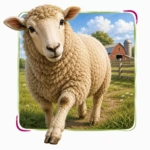
Lamb Fact Highlight
From the full animal facts page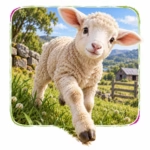
More Animal Comparisons
Pick another animal matchup and keep exploring. Compare appearances, habitats, diets, abilities, and surprising differences.





Make an Animal Story
Turn this sheep vs lamb comparison into a gentle flock-and-farm adventure with our free Animal Story Generator.
Source notes: References used for this comparison. See more See less
Try Another Matchup
Explore this comparison →