
Skink vs Salamander: Reptile vs Amphibian Comparison
Skinks and salamanders may both have long bodies, short legs, smooth-looking skin, and secretive habits beneath logs, but they belong to different vertebrate classes. A skink is a reptile lizard with true scales, claws, lungs, and amniotic reproduction. A salamander is an amphibian with moist permeable skin, clawless toes, and a life cycle often connected to water or very damp places.
About Skink
- Type Reptile
- Diet Carnivore or Omnivore
- Group Lizard
- Known for Smooth shiny scales, long cylindrical bodies, short or reduced legs in many species, burrowing, and tail shedding
- Special skill Sliding through soil or leaf litter with smooth scales and releasing the tail to distract predators in many species
About Salamander
- Type Amphibian
- Diet Carnivore
- Group Caudate
- Known for Moist permeable skin, adult tails, hidden forest or stream life, diverse breathing methods, and regeneration
- Special skill Breathing partly or entirely through moist skin and regenerating limbs or tails in many species
Skink vs Salamander: Quick Answer
A skink is a reptile covered in smooth scales, while a salamander is an amphibian with moist glandular skin and no scales. Skinks breathe only with lungs and have clawed toes when limbs are present. Salamanders may breathe through lungs, gills, skin, or a combination, and their soft toes normally lack claws.
Where Do They Fit?
Follow the branches to see how Skink and Salamander are classified and related.
Skink vs Salamander: Quick Comparison
| Feature | Skink | Salamander |
|---|---|---|
| Animal type | Reptile | Amphibian |
| Animal group | Lizard in family Scincidae and related classifications | Caudate amphibian |
| Known for | Smooth scales, cylindrical bodies, short legs, burrowing, and tail shedding | Moist skin, adult tails, hidden habitats, and tissue regeneration |
| Main habitat | Forests, grasslands, deserts, scrub, gardens, rocks, and burrows | Moist forests, streams, ponds, caves, leaf litter, and burrows |
| Body covering | Dry-looking overlapping scales with skin beneath | Moist, permeable, glandular skin without scales |
| Feet | Usually clawed when limbs are present | Soft toes normally without claws |
| Breathing | Lungs | Skin, lungs, gills, or combinations depending on species and stage |
| Reproduction | Amniotic eggs or live birth depending on species | Usually jelly-coated eggs or live birth in damp environments depending on species |
| Baby name | Hatchling or neonate | Larva or juvenile |
| Special skill | Burrowing through loose material and tail autotomy | Cutaneous respiration and regeneration in many species |
How Are Skinks and Salamanders Alike?
- Both skinks and salamanders are ectothermic vertebrates with long tails in most species.
- Both groups contain small, secretive animals that hide beneath logs, rocks, bark, or leaf litter.
- Both commonly eat insects, spiders, worms, and other small animals.
- Both may release or regenerate tail tissue after injury, although the processes differ.
- Both include burrowing, climbing, terrestrial, and water-associated species.
How Are Skinks and Salamanders Different?
- Skinks are reptiles and lizards, while salamanders are amphibians.
- Skinks have scales, while salamanders have moist permeable skin without scales.
- Skinks breathe with lungs, while salamanders may use skin, lungs, gills, or mouth membranes.
- Skink toes usually carry claws, while salamander toes normally do not.
- Skinks produce amniotic young in shelled eggs or by live birth, while many salamanders lay jelly-coated eggs in water or damp places.
Skink vs Salamander Showdown
Reptile-and-amphibian showdown: The salamander wins size because giant salamanders grow much heavier than any skink. The skink takes speed and strength on land with firmer bodies, claws, and smooth scales that slide through soil or leaves. Stealth and social life are ties because both include secretive camouflage experts and mostly solitary species. Salamanders win swimming through numerous aquatic specialists. The salamander takes our weirdest-fact prize because many species can regrow a complete limb rather than only replacing part of a tail.
Fun Skink vs Salamander Facts
Shiny Scales vs Moist Skin
Skink scales are smooth keratin coverings that reduce water loss and protect the body while moving through soil, grass, or leaf litter. Salamander skin has mucus and poison glands and must remain permeable enough for water and gases to pass through.
Claws vs Soft Toes
Most skinks with legs have small claws that grip soil, bark, rocks, or prey. Salamander toes are generally soft and clawless, although their feet may be shaped for walking, climbing, digging, or swimming.
Lungs Only vs Many Breathing Systems
A skink breathes air using lungs throughout life. Salamanders are much more varied: larvae may have gills, adults may have lungs, and lungless salamanders exchange gases through moist skin and the lining of the mouth.
Amniotic Young vs Moist Eggs
Skink embryos develop inside amniotic membranes, whether the species lays eggs or gives birth to live young. Many salamander eggs lack hard shells and must remain in water or moist surroundings, although direct development and live birth also occur.
Tail Repair vs Limb Rebuilding
Many skinks escape by releasing a tail that continues wriggling, then grow a replacement supported partly by cartilage rather than the original bone structure. Many salamanders can rebuild tails and entire limbs with bone, muscle, nerves, vessels, and skin.
Skink vs Salamander Quiz
- Which animal is a reptile? Answer: Skink.
- Which animal is an amphibian? Answer: Salamander.
- Which animal has true scales and claws? Answer: Skink.
- Which animal may breathe through moist skin? Answer: Salamander.
- Which animal can regrow an entire limb in many species? Answer: Salamander.
Skink vs Salamander FAQ
What is the main difference between a skink and a salamander?
A skink is a scaled reptile lizard that breathes with lungs. A salamander is a moist-skinned amphibian that may breathe through skin, lungs, gills, or a combination.
Why do skinks and salamanders look alike?
Both often move through narrow shelters or leaf litter, so long low bodies and short legs can be useful. Their resemblance does not mean they belong to the same animal group.
Can skinks and salamanders regrow their tails?
Many species can, but the replacement differs. A skink’s new tail is usually structurally simpler, while salamanders may regenerate more complete tissues and can often rebuild limbs too.
Do skinks need water like salamanders?
Skinks need hydration, but their scales reduce water loss and many live in dry habitats. Salamander skin is far more permeable, so most require moist shelters or aquatic environments.
Do salamanders have scales?
No. Salamanders have soft glandular amphibian skin. A shiny animal with visible scales and claws is more likely to be a skink or another lizard.
Animal Words to Know
- Skink: A lizard in the diverse skink family or related modern classifications.
- Permeable: Allowing water, gases, or dissolved substances to pass through.
- Amniotic egg: An embryo-supporting reproductive system with protective membranes used by reptiles, birds, and mammals.
- Cutaneous respiration: Breathing by exchanging gases through the skin.
- Autotomy: Deliberately releasing a body part, such as a tail, to escape danger.
Skink and Salamander Drawing Activity
Skink and Salamander Drawing Activity
Draw a brown skink beside a spotted salamander near the same damp log. Give the skink shiny overlapping scales, clawed toes, movable eyelids, and a small ear opening. Give the salamander smooth moist skin, clawless toes, and no scales or ear opening. Label reptile, amphibian, scales, moist skin, claws, and eggs.
Meet Each Animal
Want the full fact file? Here are quick highlights from each animal’s own facts page.
Skink Fact Highlight
From the full animal facts page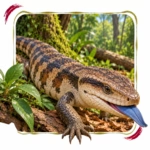
Salamander Fact Highlight
From the full animal facts page
More Animal Comparisons
Pick another animal matchup and keep exploring. Compare appearances, habitats, diets, abilities, and surprising differences.






Make an Animal Story
Turn this skink vs salamander comparison into an under-the-log animal mystery with our free Animal Story Generator.
Source notes: References used for this comparison. See more See less
Try Another Matchup
Explore this comparison →