
Skink Facts for Kids
Skinks are lizards in the enormous family Scincidae, which contains more than 1,500 living species. Many have shiny overlapping scales, long cylindrical bodies, small legs, and a barely visible neck, but the family also includes sturdy blue-tongued skinks, spiny crocodile skinks, burrowers with reduced limbs, and completely legless species.
Quick Skink Facts
- Scientific Group: Family Scincidae within order Squamata
- Animal Type: Reptile and lizard
- Living Species: More than 1,500, making Scincidae one of the largest lizard families
- Size: From tiny species only a few centimetres long to the prehensile-tailed skink at roughly 70 centimetres
- Appearance: Usually smooth shiny scales, cylindrical body, long tail, small head, and short or reduced limbs
- Range: Native across Africa, Asia, Europe, Australia, Pacific islands, and the Americas
- Habitat: Forests, deserts, grasslands, mountains, beaches, farms, gardens, trees, rocks, leaf litter, and soil
- Diet: Mostly insects and other small animals; some also eat fruit, flowers, leaves, fungi, or carrion
- Young: Depending on species, skinks lay eggs or give birth to live young
- Conservation: Status varies from common to highly threatened, especially for island species with tiny ranges
What You’ll Learn
Learn 10 fascinating skink facts for kids about smooth scales, short legs, burrowing, tail loss, and the huge variety of skinks, with a quiz, glossary, and activity
Simple explanations make them fun for children, families, teachers, and young reptile fans.
10 Fun Skink Facts for Kids
1. Skinks Form a Giant Lizard Family
With more than 1,500 described species, Scincidae is one of the largest families of lizards. A tiny ground skink, a heavy blue-tongued skink, and a long prehensile-tailed tree climber can all be relatives.
Kid Decode: The word skink covers an enormous lizard family, not one body design.
2. Legs Range from Strong to Missing
Many skinks have four short legs, but separate lineages have reduced the number of toes, shrunk their limbs, or lost the limbs completely. Long bodies and reduced legs help burrowing species move through soil or dense grass.
Kid Decode: A legless skink is still a lizard even when it looks like a tiny snake.
3. Smooth Scales Hide Tiny Armor
Overlapping scales create the glossy surface typical of many skinks. Small bony plates called osteoderms may lie beneath the skin, adding support and protection while the flexible body still squeezes into narrow shelters.
Kid Decode: A smooth-looking skink can wear secret pieces of bone armor under its scales.
4. They Live Almost Everywhere Warm Enough
Skinks inhabit most continents and many islands, from tropical rainforest and dry desert to alpine grassland, coastal dunes, farms, and gardens. Antarctica and the coldest far-northern regions are too chilly for native populations.
Kid Decode: There may be a skink under a log, inside sand, on a rock, or high in a tree.
5. Tongues Sample Chemical Clues
A skink flicks its tongue to collect scent particles and transfers them to the vomeronasal organ in the roof of its mouth. The chemical information helps it identify prey, predators, mates, and familiar places.
Kid Decode: A skink’s tongue delivers smell clues to a special detector inside its mouth.
6. A Dropped Tail Distracts Predators
Many species can break the tail at built-in weak zones. The detached section wriggles while the skink escapes, and a replacement grows later, although it contains a cartilage rod and may be shorter or differently colored.
Kid Decode: The wiggling tail keeps the predator busy while the important half runs away.
7. Burrowers Swim Through Loose Ground
A streamlined head, long body, smooth scales, and reduced limbs lower resistance in sand, soil, or leaf litter. Sandfish skinks even fold their limbs against the body and undulate through loose desert sand.
Kid Decode: Some skinks swim under dunes without needing water.
8. Skink Menus Are Highly Varied
Many hunt insects, spiders, worms, snails, and other small animals. Larger or more omnivorous species may add flowers, fruit, fungi, leaves, carrion, or small vertebrates, while the prehensile-tailed skink is largely plant-eating.
Kid Decode: One skink chases beetles while another climbs a tree for leaves.
9. Bright Colors Can Startle an Enemy
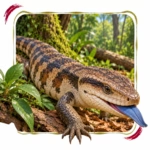
Juvenile five-lined skinks wave brilliant blue tails that may pull attacks away from the body. Blue-tongued skinks open wide and flash a cobalt tongue, making a predator hesitate long enough for the lizard to escape.
Kid Decode: A sudden streak of blue can work like a reptile warning flag.
10. They Use Eggs and Live Birth
Some skinks lay eggs and may guard them, while many retain embryos and give birth to live young. In certain species, a placenta-like connection transfers nutrients between the pregnant female and developing babies.
Kid Decode: Skink babies can hatch from eggs or arrive alive, depending on the species.
The Weirdest Skink Fact
Different populations of the Australian three-toed skink use different birth methods: some lay thin-shelled eggs and others deliver live young. Researchers even observed one female lay eggs and later give birth to another baby from the same pregnancy.
Try This Skink Activity
Invent a Skink for Four Habitats
Divide a page into rainforest tree, desert sand, rocky grassland, and garden leaf litter. Design one skink body for each habitat by choosing limb length, toe number, body shape, scale texture, color, tail defense, diet, and egg-laying or live birth. Label which changes help climbing, digging, hiding, warning predators, or keeping developing babies safe.
Quick Skink Quiz
- Which lizard family contains skinks? Answer: Scincidae.
- Does every skink have four full-sized legs? Answer: No.
- What are osteoderms? Answer: Small bony plates beneath the skin.
- Why can a skink drop its tail? Answer: To distract a predator while escaping.
- Do all skinks lay eggs? Answer: No, many give birth to live young.
Mini Glossary
- Scincidae: The scientific family containing all true skinks.
- Osteoderm: A small plate of bone embedded beneath the skin.
- Autotomy: Deliberately shedding a body part such as the tail.
- Vomeronasal organ: A chemical-sensing organ in the roof of the mouth.
- Viviparous: Giving birth to live young instead of laying external eggs.
 Southern Elephant Seal Facts for Kids
 Reticulated Python Facts for Kids
 Parrot Facts for Kids
 Rhamphosuchus Facts for Kids
More Animal Facts for Kids
Visit the full animal facts library or explore a focused animal group.
More Extinct Animal Facts for Kids
Discover dinosaurs, Ice Age giants, prehistoric sea creatures, recently extinct species, and other animals from the past.
Fact check note: Fact checked against The Reptile Database’s Scincidae taxonomy; Australian Museum and Museums Victoria skink profiles; university and zoo resources on blue-tongued, prehensile-tailed, sandfish, five-lined, crocodile, and three-toed skinks; IUCN species assessments; and peer-reviewed research on limb reduction, osteoderms, chemoreception, autotomy, sand swimming, diet, sociality, oviparity, viviparity, placentation, and bimodal reproduction in Saiphos equalis. The more-than-1,500-species total, body diversity, worldwide range, diet variation, warning colors, and species-limited reproductive examples were cross-checked.

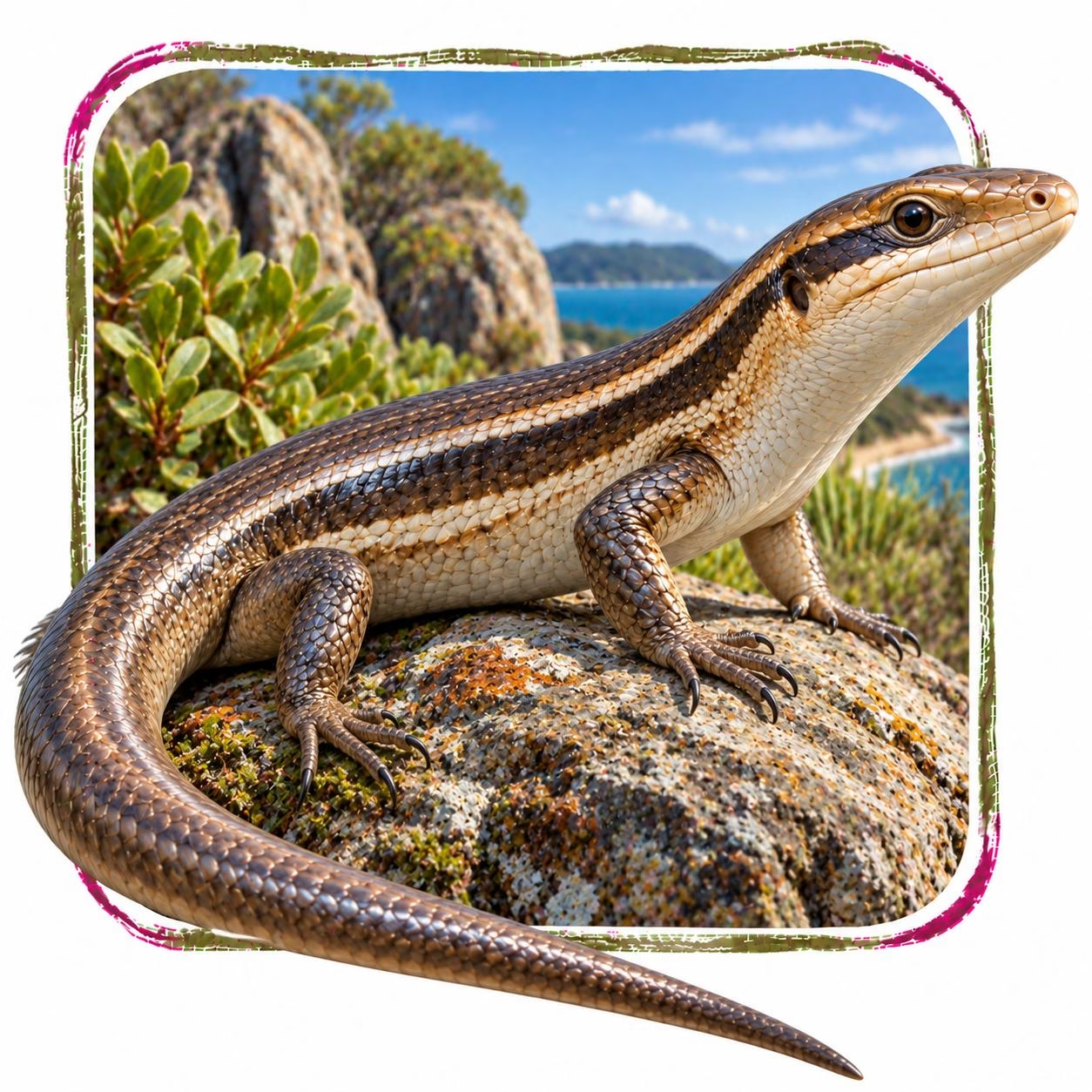
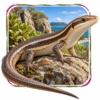
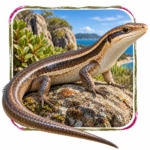
Skink in its natural Forests, deserts, grasslands, mountains, beaches, farms, gardens, rocks, trees, leaf litter, and soil in warm regions worldwide habitat