
Sun Bear vs Sloth Bear: Asian Bear Comparison
Sun bears and sloth bears are dark, shaggy bears from warm parts of Asia. Both love insects and use long claws to open nests, but they solve the job differently. The smaller sun bear is a powerful rainforest climber with a very long tongue. The larger sloth bear is a ground-foraging specialist with a flexible muzzle that works like a vacuum cleaner.
About Sun Bear
- Type Living
- Diet Omnivore
- Group Small tropical bear species (Helarctos malayanus)
- Known for Small size, golden chest patch, long tongue and excellent tree climbing
- Special skill Climbs and tears into wood with long curved claws, then reaches insects and honey with an extra-long tongue
About Sloth Bear
- Type Living
- Diet Omnivore with strong ant-and-termite specialisation
- Group South Asian bear species (Melursus ursinus)
- Known for Shaggy coat, pale muzzle, huge claws, noisy insect suction and cubs riding on mothers
- Special skill Closes its nostrils, blows away dust and sucks termites through a gap in its front teeth
Sun Bear vs Sloth Bear: Quick Answer
Sun bears are the smallest living bears. They have short sleek coats, small ears, bare footpads and long tongues for feeding in tropical trees. Sloth bears are larger and much shaggier. Their long pale muzzles, closable nostrils, missing upper front incisors and powerful lungs help them suck ants and termites from nests. Sloth bear wins size, whole-body strength and the weirdest feeding system; sun bear wins stealth in the trees.
Where Do They Fit?
Follow the branches to see how Sun Bear and Sloth Bear are classified and related.
Sun Bear vs Sloth Bear: Quick Comparison
| Feature | Sun Bear | Sloth Bear |
|---|---|---|
| Scientific name | Helarctos malayanus | Melursus ursinus |
| Native range | Southeast Asia, Sumatra and Borneo | India, Nepal, Bhutan and Sri Lanka |
| Adult mass | About 27-65 kg in the ADW account; other sources extend the range to about 90 kg | About 55-140 kg, with males usually heavier than females |
| Body clue | Compact build, short sleek black coat and small round ears | Long shaggy coat, pale almost bare muzzle and hair-fringed ears |
| Chest mark | Cream or golden U-shaped patch that varies by individual | Cream, white or yellow U- or Y-shaped patch |
| Claws and feet | Long curved claws and large bare-soled paws for climbing | Very long curved front claws and huge feet for breaking insect nests |
| Feeding tool | Extra-long tongue reaches insects and honey inside trees | Flexible lips, tooth gap and strong suction pull termites from tunnels |
| Habitat | Dense lowland tropical forest with frequent tree use | Forest, scrub, grassland and rocky ground, often in drier country |
| Social life | Mostly solitary except mothers with cubs | Mostly solitary; cubs commonly ride on their mother’s back |
| Cold-season behaviour | Does not normally hibernate in its tropical range | Does not hibernate and lacks the warm underfur of cold-climate bears |
How Are Sun Bears and Sloth Bears Alike?
- Both are living bear species in the family Ursidae.
- Both are native to warm forests in Asia.
- Both are omnivores that eat fruit, honey and many insects.
- Both use strong curved claws to break wood or open insect nests.
- Both usually live alone, apart from mothers caring for cubs.
How Are Sun Bears and Sloth Bears Different?
- Sun bears are smaller and more compact; sloth bears are generally larger and shaggier.
- Sun bears are superb tree climbers; sloth bears do most specialised insect hunting on the ground.
- A sun bear reaches food with an extremely long tongue; a sloth bear also uses strong blowing and suction.
- Sloth bears have a pale mobile muzzle and a gap where the upper front incisors would be; sun bears do not share that full vacuum system.
- Sloth bear cubs regularly ride on their mother, while this is not normal sun bear transport.
Sun Bear vs Sloth Bear Adaptation Showdown
- Size – Sloth Bear: Its typical adult mass range extends far above the sun bear’s, although large sun bears overlap with small sloth bears.
- Speed – Tie: Sloth bears can gallop quickly and sun bears move with agility in trees, but no fair same-course race has been measured.
- Strength – Sloth Bear: The sloth bear’s larger frame and enormous digging forelimbs give it more whole-body power; sun bears remain remarkably strong for their size.
- Stealth – Sun Bear: Its smaller body and climbing skill let it move and rest above the forest floor in dense tropical cover.
- Social – Tie: Both are mainly solitary. Each forms its strongest bond when a mother raises her dependent cubs.
- Swimming – Tie: Both bears can enter water, but the sources do not provide a fair species-to-species swimming test.
- Weirdest – Sloth Bear: It can seal its nostrils, blow dirt away, extend its lips and suck insects through a front-tooth gap like a living vacuum.
Fun Sun Bear vs Sloth Bear Facts
The Smallest Bear Has a Giant Tongue
The sun bear is the smallest living bear, yet its tongue may reach about 46 centimetres. It probes deep cracks for termites, beetle larvae and honey.
Sloth Bears Are Not Sloths
Early zoologists saw the long claws and unusual teeth and mistakenly linked this animal with tree sloths. It is a true bear and can move quickly.
A Tooth Gap Helps Make a Vacuum
Adult sloth bears lack the two upper middle incisors. Air and insects can pass through that opening when the bear seals its lips and sucks.
Sun Bear Paws Work Like Climbing Gear
Large paws, naked soles and long sickle-shaped claws help a sun bear grip trunks, pull apart wood and reach food above the ground.
Cubs Can Ride Through the Forest
Sloth bear cubs commonly cling to the long hair on their mother’s back. The ride keeps young cubs close while she travels or searches for food.
Sun Bear vs Sloth Bear Quiz
Which is the smallest living bear? A) Sun bear B) Sloth bear C) Both are the same size Answer: A) Sun bear
Which bear uses a tooth gap and suction to eat insects? A) Sun bear B) Sloth bear C) Neither bear Answer: B) Sloth bear
Which bear is especially adapted for climbing tropical trees? A) Sun bear B) Sloth bear C) Polar bear Answer: A) Sun bear
What may a sloth bear cub do? A) Ride on its mother’s back B) Build a nest alone C) Fly between trees Answer: A) Ride on its mother’s back
What do both bears eat? A) Only grass B) Fruit and insects C) Only fish Answer: B) Fruit and insects
Sun Bear vs Sloth Bear FAQ
Are sun bears and sloth bears the same animal?
No. They are separate bear species with different ranges, body shapes and feeding adaptations.
Which is bigger, a sun bear or a sloth bear?
The sloth bear is generally bigger. Published adult ranges overlap, but sloth bears reach much greater mass.
Why is a sun bear called a sun bear?
Its pale yellow or cream chest patch can look like a rising sun, although every bear’s marking is different.
Why does a sloth bear make loud feeding sounds?
It blows loose soil from an insect nest, seals its lips around an opening and forcefully sucks termites or ants inside.
Do either of these bears hibernate?
They live mainly in warm climates with food available through the year, so they do not normally hibernate.
Animal Words to Know
- Incisor: A front tooth used for biting or cutting.
- Omnivore: An animal that eats both plant and animal foods.
- Solitary: Living mainly alone instead of in a permanent group.
- Suction: Pulling air and food inward by creating lower pressure.
- Ursidae: The scientific family containing all living bears.
Sun Bear and Sloth Bear Feeding-Tools Activity
Sun Bear and Sloth Bear Feeding-Tools Activity
Draw a sun bear on a rainforest trunk and a sloth bear beside a termite mound. Give the sun bear bare footpads, hooked claws and a long reaching tongue. Give the sloth bear shaggy hair, huge digging claws, closed nostrils and tube-like lips. Add five labels: tree grip, long tongue, digging claws, tooth gap and suction.
Meet Each Animal
Want the full fact file? Here are quick highlights from each animal’s own facts page.
Sun Bear Fact Highlight
From the full animal facts page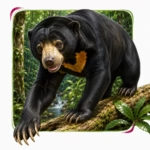
Sloth Bear Fact Highlight
From the full animal facts page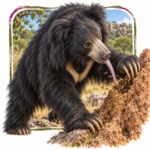
More Animal Comparisons
Pick another animal matchup and keep exploring. Compare appearances, habitats, diets, abilities, and surprising differences.



Make an Animal Story
Create a forest story with a tree-climbing sun bear and a termite-hunting sloth bear!
Source notes: References used for this comparison. See more See less
Try Another Matchup
Explore this comparison →