
Wasp vs Hornet: Wasp Group Comparison
A hornet is not separate from all wasps: every true hornet is a wasp. Wasp is a broad everyday name for an enormous variety of narrow-waisted hymenopterans, most of which are solitary or parasitoid. True hornets are one much smaller branch—the large, social species in genus Vespa that build enclosed paper nests and raise larvae on captured prey.
About Wasp
- Type Insect
- Diet Varies: omnivore, carnivore, herbivore, or parasitoid depending on species and life stage
- Group Wasp
- Known for Extraordinary diversity, narrow waists in many species, hunting, parasitoid life cycles, nest building, pollination, and natural pest control
- Special skill Hunting or parasitizing other animals, pollinating plants, and controlling insect populations
About Hornet
- Type Insect
- Diet Omnivore
- Group True Wasp (Genus Vespa)
- Known for Large social bodies, powerful jaws, paper nests, colony defense, insect hunting, and repeated stings
- Special skill Building large enclosed paper nests and coordinating workers to hunt and defend the colony
Wasp vs Hornet: Quick Answer
Every true hornet is a wasp, but most wasps are not hornets. The word wasp covers a huge variety of insects, from tiny parasitoids to paper wasps and yellow jackets. True hornets belong to genus Vespa; they are relatively large, stout, social wasps that make enclosed paper nests. Common names can mislead: the bald-faced hornet is actually a yellow jacket, not a true hornet.
Where Do They Fit?
Follow the branches to see how Wasp and Hornet are classified and related.
Wasp vs Hornet: Quick Comparison
| Feature | Wasp | True Hornet |
|---|---|---|
| Animal type | Insect | Insect |
| Animal group | Broad everyday group within Hymenoptera | One wasp genus: Vespa |
| Number of forms | More than 100,000 described species with immense variety | A few dozen recognized species, depending on taxonomy |
| Typical body | Tiny to large; delicate, slender, or stout | Relatively large, robust, and strongly waisted |
| Social life | Most are solitary or parasitoid; some are social | All are social colony-formers |
| Food for young | Plants, pollen, prey, hosts, or other provisions depending on species | Chewed insects and other animal prey brought by workers |
| Nest | May use soil, mud, wood, plants, paper, or another animal’s body | Enclosed layered paper nest made from chewed wood |
| Adult food | Often nectar or other sugars; extremely variable | Mostly nectar, sap, fruit juice, and other sugary liquids |
| Sting | Many cannot sting people; some females can sting repeatedly | Queens and workers can sting repeatedly |
| Special role | Predator, parasitoid, pollinator, gall-maker, or decomposer | Social predator and scavenger that can also visit flowers |
How Are Wasps and Hornets Alike?
- Hornets are wasps, so both have six legs, antennae, an exoskeleton, and two pairs of wings as adults.
- Both undergo complete metamorphosis through egg, larva, pupa, and adult stages.
- Many wasps and all hornets have a narrow connection between the thorax and abdomen.
- Adults in both groups commonly drink nectar, sap, fruit juice, or other sugary liquids.
- Both can benefit ecosystems by hunting insects, recycling animal material, or visiting flowers.
How Are Wasps and Hornets Different?
- Wasp is a very broad name covering more than 100,000 described species, while true hornets belong only to genus Vespa.
- Wasps range from nearly microscopic parasitoids to large hunters, while hornets are generally large and stout.
- Most wasp species are solitary or parasitoid, while all true hornets live in organized colonies.
- Wasp nests and life cycles vary enormously, while hornets build layered, enclosed paper nests.
- Many wasps cannot sting people at all, while female hornets can deliver repeated defensive stings.
Wasp vs Hornet Showdown
Insect showdown: The hornet wins typical size, strength, and colony teamwork because genus Vespa contains robust social hunters. Speed and swimming are ties: both comparisons span different flyers, and neither group is adapted to swim. The broader wasp world takes stealth and weirdest fact because it includes minute parasitoids, gall-makers, mud builders, jewel-colored hunters, and thousands of other specialized forms. These winners compare common patterns, not every species.
Fun Wasp vs Hornet Facts
Every Hornet Is a Wasp
True hornets are the wasps classified in genus Vespa within the family Vespidae. Comparing a hornet with a wasp is like comparing an eagle with a bird: the first is one specialized member of the much larger group.
The Wasp World Is Enormous
Scientists have described more than 100,000 wasp species, and many more probably remain unnamed. They include predators, parasitoids, plant feeders, gall-makers, pollinators, mud daubers, paper wasps, yellow jackets, and true hornets.
All Hornets Are Social
A true hornet colony has a reproductive queen and female workers that build, forage, feed larvae, and defend the nest. Most other wasp species do not have workers or shared colonies; a solitary female handles her own nest and young.
Hornets Make Wood into Paper
Hornet workers scrape fibers from weathered wood, chew them with saliva, and spread the pulp into thin paper. Layered combs hold the brood, and a protective paper envelope surrounds the nest. Some other social wasps use similar paper-making methods.
Most Wasps Are Not Out to Sting People
The wasps people notice most are defensive social species near a shared nest. Most wasp species are solitary or parasitoid, many are tiny, and a huge number cannot sting humans; those that can generally use the sting for prey or self-defense.
Wasp vs Hornet Quiz
- Is every hornet a wasp? Answer: Yes.
- What genus contains true hornets? Answer: Vespa.
- Are most wasp species social? Answer: No; most are solitary or parasitoid.
- What material do hornets make by chewing wood fibers? Answer: Paper for their nest.
- Is the bald-faced hornet a true hornet? Answer: No; it is a yellow jacket with a misleading common name.
Wasp vs Hornet FAQ
What is the main difference between a wasp and a hornet?
Wasp is a broad name for a vast variety of insects. A true hornet is one particular kind of large social wasp in genus Vespa.
Are all hornets wasps?
Yes. Every true hornet is a wasp, but most wasps are not hornets.
Are hornets always bigger than wasps?
Hornets are large compared with most familiar wasps, but the broad wasp world includes species of many sizes, including some other very large wasps.
Do all wasps live in paper nests?
No. Hornets and several other social wasps build paper nests, but solitary wasps may use soil, mud, wood, hollow stems, or the bodies and nests of other organisms.
Can wasps and hornets sting more than once?
Female hornets and many other stinging wasps can sting repeatedly because their stingers do not normally remain behind. Many wasp species cannot sting people or are unlikely to do so.
Animal Words to Know
- Vespa: The scientific genus containing the true hornets.
- Vespidae: The wasp family containing hornets, yellow jackets, and paper wasps.
- Parasitoid: An animal whose young develop on or inside one host and eventually kill it.
- Exoskeleton: A hard outer covering that supports and protects an insect’s body.
- Paper nest: A nest made from chewed plant fibers formed into thin papery layers.
Wasp and Hornet Family Activity
Wasp and Hornet Family Activity
Draw a simple wasp family umbrella. Place a paper wasp, mud dauber, yellow jacket, and true hornet beneath it. Circle the hornet and write, “A hornet is one kind of wasp.” Add a small true-hornet paper nest with a queen, workers, and larvae. Label wasp, hornet, solitary, social, colony, and paper nest.
Meet Each Animal
Want the full fact file? Here are quick highlights from each animal’s own facts page.
Wasp Fact Highlight
From the full animal facts page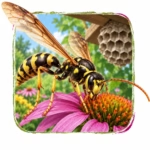
Hornet Fact Highlight
From the full animal facts page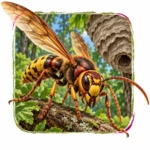
More Animal Comparisons
Pick another animal matchup and keep exploring. Compare appearances, habitats, diets, abilities, and surprising differences.




Make an Animal Story
Turn this wasp vs hornet comparison into a paper-nest mystery with our free Animal Story Generator.
Source notes: References used for this comparison. See more See less
Try Another Matchup
Explore this comparison →