
Crayfish Facts for Kids
Crayfish are freshwater decapod crustaceans closely related to lobsters. They are also called crawfish, crawdads, or freshwater lobsters in different regions. Hundreds of living species inhabit streams, rivers, lakes, swamps, caves, temporary pools, and burrows across many parts of the world. Crayfish have a hard exoskeleton, two large claws, four additional pairs of walking legs, feathery gills, long antennae, swimmerets, and a muscular tail used for rapid backward escapes.
Quick Crayfish Facts
- Animal Type: Invertebrate
- Group: Freshwater crayfish in the superfamilies Astacoidea and Parastacoidea
- Known For: Large claws, ten limbs, tail-flip escapes, burrows, molting, limb regrowth, and carrying young beneath the tail
- Habitat: Streams, rivers, lakes, ponds, swamps, wetlands, caves, rice fields, and damp burrows
- Diet: Plants, algae, detritus, insects, snails, worms, carrion, eggs, and small animals depending on species
What You’ll Learn
Discover 10 fascinating crayfish facts for kids about claws, antennae, freshwater habitats, molting, and hiding, plus a quiz, glossary, and activity
Clear explanations make them ideal for children, families, teachers, and little fact-hunters.
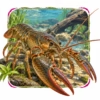
10 Fun Crayfish Facts for Kids
1. They Are Freshwater Lobster Relatives
Crayfish and true lobsters belong to the decapod infraorder Astacidea. Crayfish lineages adapted mainly to fresh water, while their closest lobster relatives remain marine.
Kid Decode: The stream-bottom animal is a lobster cousin that traded saltwater for rivers and ponds.
2. Five Limb Pairs Make Ten
A crayfish has five main limb pairs. The first pair forms large chelipeds, while the other four pairs walk, grasp food, clean the body, or carry smaller pincers depending on species.
Kid Decode: Ten limbs become claws, walking tools, cleaning brushes, and underwater cutlery.
3. Gills Hide Beneath the Carapace
Feathery gills sit in protected chambers along the sides of the body. Moving legs and specialized mouthparts help circulate oxygen-rich water across them.
Kid Decode: The breathing feathers stay hidden inside two watery rooms beneath the shell.
4. The Tail Launches a Backward Escape
When startled, a crayfish contracts powerful abdominal muscles and snaps the tail fan beneath the body. The sudden movement shoots it backward away from danger.
Kid Decode: One tail clap turns the slow walker into a backwards underwater rocket.
5. Claws Handle Food and Arguments
Crayfish use their large claws to defend shelter, threaten rivals, grasp food, dig, and sometimes court. Claw size and symmetry differ among species, sexes, ages, and individuals.
Kid Decode: The pincers work as forks, shovels, shields, and debate-ending hand gestures.
6. They Eat Plants and Animals
Most crayfish are opportunistic omnivores. They graze algae, clip plants, shred fallen leaves, scavenge carrion, and capture worms, snails, insects, eggs, and other small animals.
Kid Decode: The menu combines pond salad, leaf compost, leftovers, and any tiny prey slow enough to catch.
7. Molting Makes Growth Possible
A rigid exoskeleton cannot enlarge continuously. The crayfish forms a new covering underneath, pulls free from the old shell, expands while soft, and later hardens the replacement.
Kid Decode: Growing means crawling out of one suit of armor before the next one becomes solid.
8. Lost Limbs Can Return Slowly
A crayfish can release a trapped or damaged limb at a special break point. A small replacement appears and becomes larger during later molts, often requiring several molts to recover.
Kid Decode: The replacement claw begins as a miniature and upgrades with every new shell.
9. Burrows Can Reshape Wetlands
Many species shelter beneath rocks, but some dig simple tunnels or deep chimney-topped burrows that reach groundwater. Heavy burrowing can mix soil, move nutrients, alter banks, and change wetland vegetation.
Kid Decode: A crayfish tunnel can turn one small animal into a muddy ecosystem engineer.
10. Mothers Carry Eggs and Babies
A female attaches fertilized eggs to swimmerets beneath her abdomen and cleans and ventilates them. The young hatch looking like miniature crayfish and remain attached for early molts before becoming independent.
Kid Decode: The mother’s tail becomes an underwater nursery crowded with tiny clawed copies.
The Weirdest Crayfish Fact
Unlike many marine crustaceans that release drifting larvae, crayfish hatch as tiny crayfish-shaped juveniles and cling beneath their mother’s tail through their earliest stages.
Try This Crayfish Activity
Crayfish Cutaway-and-Life-Cycle Activity
Draw a crayfish in a rocky stream. Label the carapace, two antenna pairs, stalked eyes, large chelipeds, four additional walking-leg pairs, gill chambers, segmented abdomen, swimmerets, and tail fan. Add a backward tail-flip arrow, a burrow, an empty molt, a regenerating claw, a female carrying eggs, and tiny young clinging beneath her tail.
Quick Crayfish Quiz
- What other names are used for crayfish? Answer: Crawfish, crawdads, and freshwater lobsters.
- How many limb pairs does a crayfish have? Answer: Five pairs, or ten limbs.
- How does it make a rapid escape? Answer: By flipping its tail and shooting backward.
- Why must it molt? Answer: Its hard exoskeleton cannot stretch continuously.
- Where do newly hatched young remain? Answer: Attached beneath their mother’s tail.
Mini Glossary
- Decapod: A crustacean with five pairs of limbs.
- Exoskeleton: A hard outer covering that supports and protects the body.
- Cheliped: A limb ending in a claw or pincer.
- Swimmeret: A small appendage beneath the abdomen used in swimming, reproduction, or carrying eggs.
- Detritus: Dead and decaying organic material.
 Common Warthog Facts for Kids
 Galápagos Tortoise Facts for Kids
 Slow Worm Facts for Kids
 Cladoselache Facts for Kids
More Animal Facts for Kids
Visit the full animal facts library or explore a focused animal group.
More Extinct Animal Facts for Kids
Discover dinosaurs, Ice Age giants, prehistoric sea creatures, recently extinct species, and other animals from the past.
Fact check note: Fact checked with the International Association of Astacology’s crayfish overview, Crandall and De Grave’s updated world classification of freshwater crayfishes, U.S. Geological Survey crayfish research and invasive-species profiles, and comparative studies of crayfish anatomy, molting, tail-flip escape, burrowing, direct development, maternal care, and ecosystem engineering.

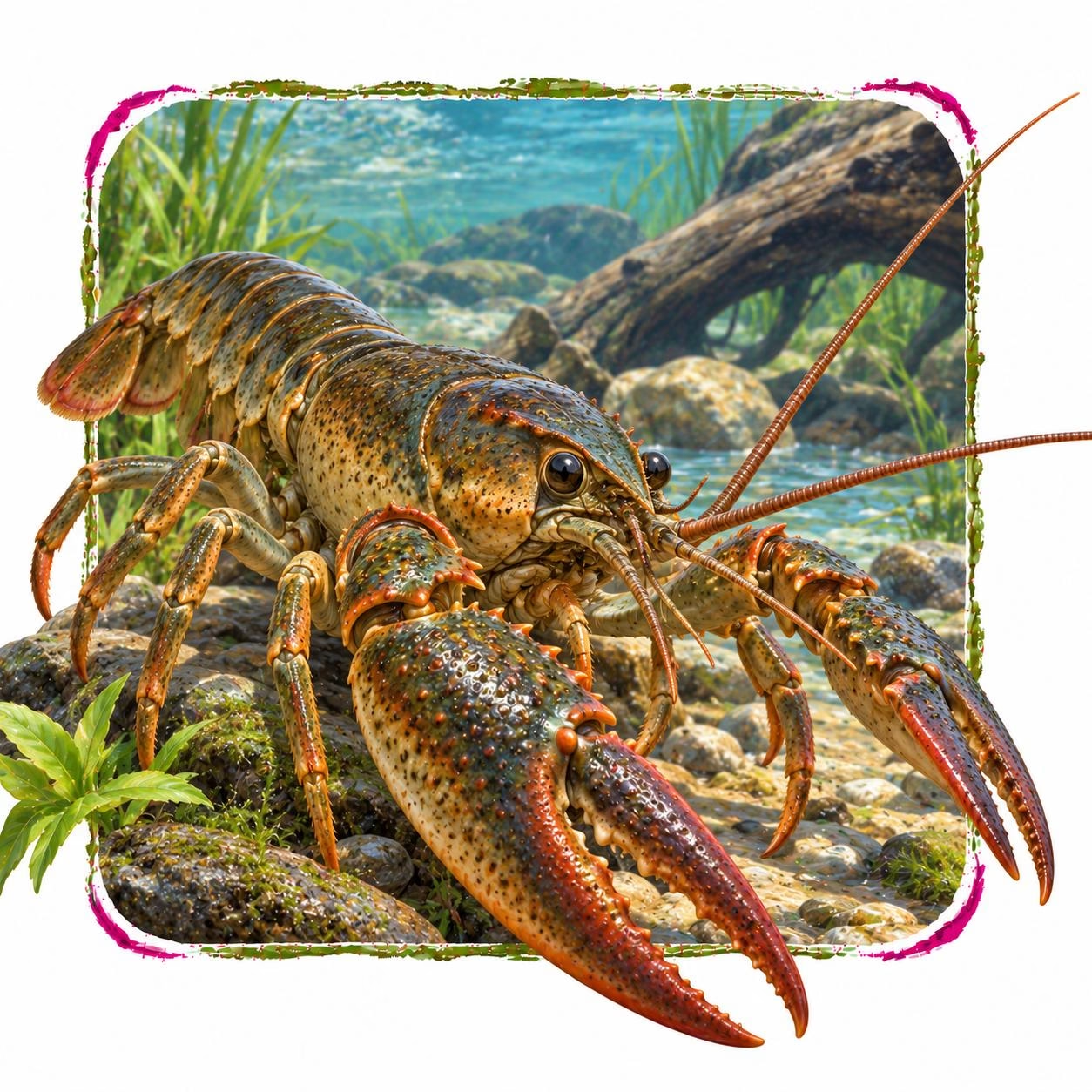
Crayfish in its natural Streams, rivers, creeks, lakes, ponds, swamps, marshes, temporary pools, caves, rice fields, and damp burrows across many regions worldwide habitat