
European Shag Facts for Kids
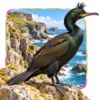
The European Shag, Gulosus aristotelis, is a sleek coastal member of the cormorant family found around the northeastern Atlantic, Mediterranean, and parts of the Black Sea region. Adults are dark with a beautiful green gloss, a narrow hooked bill, a small yellow gape patch, and during breeding season a forward-curving crest on the forehead. They are slimmer and generally smaller than Great Cormorants and are strongly tied to rocky marine coasts. European Shags chase fish underwater using their large webbed feet for propulsion while keeping the wings mostly folded. Their plumage is partly wettable, which reduces buoyancy during dives but means they frequently return to rocks to dry and rest. They nest in loose colonies on cliff ledges, caves, crevices, and beneath boulders. The species is globally Least Concern, although important regional declines have occurred.
Quick European Shag Facts
- Animal Type: Bird and cormorant
- Scientific Name: Gulosus aristotelis
- Known For: Green-black plumage, breeding crest, narrow hooked bill, yellow gape, foot-powered diving, partly wettable feathers, rocky coastal nests, and fish-rich diet
- Habitat: Rocky coasts, islands, sea cliffs, bays, channels, inshore marine waters, caves, and ledges
- Diet: Mainly coastal fish, with crustaceans and other marine prey varying by place and season
What You’ll Learn
Discover 10 fun European Shag facts for kids with accurate coastal seabird science, quick facts, a quiz, glossary, drawing activity, and European wildlife links.
These easy explanations are written for children, families, teachers, and curious young seabird fans.
10 Fun European Shag Facts for Kids
1. The Breeding Crest Gives the Shag Its Look
During the breeding season, adults grow a noticeable tuft or crest of feathers on the forehead. The dark plumage also shows a rich green sheen, while a small yellow patch stands out at the base of the narrow bill.
Kid Decode: Breeding season gives this black seabird a green shine and a feathered quiff.
2. It Is Smaller and Slimmer Than a Great Cormorant
European Shags have a slimmer neck, thinner bill, smaller yellow gape area, and more delicate overall build than Great Cormorants. The two species can share coasts, so shape and face pattern are often more useful than judging size alone.
Kid Decode: Think sleek coastal diver rather than the heavier silhouette of its larger cormorant cousin.
3. The Feet Power the Dive
A shag dives from the surface and chases prey underwater using powerful webbed feet. Its wings stay mostly folded against the body, unlike penguins and some diving seabirds that use their wings as underwater flippers.
Kid Decode: Underwater, the feet become the propellers while the wings ride folded.
4. Partly Wettable Feathers Reduce Buoyancy
European Shag plumage can become partly wetted during dives. Losing some trapped air reduces the upward force of buoyancy and helps the bird remain underwater, but the plumage later needs drying and maintenance.
Kid Decode: A little water in the feather layer makes the bird less like a floating cork.
5. Rocky Perches Become Drying Stations
After diving, shags often return to rocks and roost sites where they can rest, preen, and dry. Their partly wettable plumage and strong dependence on coastal roosts can make severe storms and rough weather especially costly.
Kid Decode: The fishing trip ends at a seaside feather-drying station.
6. Fish Are the Main Target
European Shags mainly pursue small and medium-sized coastal fish over rocky and sandy seabeds. Diet changes among regions and seasons and can also include crustaceans and other marine animals.
Kid Decode: The exact menu changes by coastline, but fish usually occupy the biggest plate.
7. Some Shags Fish in Moving Flocks
Shags may hunt alone or in large groups. In some feeding flocks, birds at the back repeatedly fly to the front while the group advances over schooling fish, creating a rolling wave of divers.
Kid Decode: A fishing flock can move like a living conveyor belt across the sea.
8. Nests Hide in Rocky Coastal Places
Pairs build nests on cliff ledges, inside caves and crevices, or beneath boulders, using seaweed, grasses, twigs, and other available material. Colonies are often loose rather than packed as tightly as some other seabird colonies.
Kid Decode: A crack in a sea cliff can become a nursery lined with seaweed.
9. Both Parents Raise the Young
A clutch commonly contains around three eggs, though numbers vary. Both parents incubate and later feed the chicks with regurgitated prey until the youngsters are ready to leave the nest and become independent.
Kid Decode: The rocky nursery runs on two parents and a steady fish-delivery schedule.
10. Global Least Concern Can Hide Regional Trouble
The European Shag is globally listed as Least Concern, but some regional populations have declined and are conservation priorities. Extreme weather, changing prey, entanglement in fishing gear, pollution, disease, and climate-related changes can all affect local colonies.
Kid Decode: A safe global label does not guarantee every cliff colony is doing well.
The Weirdest European Shag Fact
Its feathers are not simply waterproof or non-waterproof: they can trap air near the surface but become partly wetted during deeper dives, trading some insulation for lower buoyancy and easier underwater hunting.
Try This European Shag Activity
European Shag Coastal-Diver Activity
Draw a rocky European coastline with a breeding European Shag showing glossy green-black plumage, forehead crest, narrow hooked bill, yellow gape patch, long neck, and webbed feet. Add an underwater cutaway showing foot-powered pursuit of fish with wings folded, a feather diagram showing partial wetting and reduced buoyancy, a bird drying on a rock, a rolling fishing flock, and a loose colony with seaweed-lined nests tucked into cliff ledges and crevices.
Quick European Shag Quiz
- What is the European Shag’s scientific name? Answer: Gulosus aristotelis.
- What seasonal head feature do breeding adults grow? Answer: A crest.
- What mainly powers the bird underwater? Answer: Its webbed feet.
- Where does it usually nest? Answer: Rocky cliffs, ledges, caves, crevices, and beneath boulders.
- What is its current global IUCN category? Answer: Least Concern.
Mini Glossary
- Cormorant: A fish-eating water bird in the family Phalacrocoracidae.
- Buoyancy: The upward force that makes an animal or object tend to float.
- Gape: The opening of a bird’s mouth and the area around the bill base.
- Colony: A group of birds nesting near one another.
- Benthic: Associated with the bottom of a sea, lake, or other body of water.
 Deer Facts for Kids
 Parakeet Facts for Kids
 Dugong Facts for Kids
 Megalosaurus Facts for Kids
More Animal Facts for Kids
Visit the full animal facts library or explore a focused animal group.
More Extinct Animal Facts for Kids
Discover dinosaurs, Ice Age giants, prehistoric sea creatures, recently extinct species, and other animals from the past.
Fact check note: Fact checked with the British Trust for Ornithology Shag account for Gulosus aristotelis identification, rocky coastal habitat, feeding flocks, fish diet, loose colonies and long life; BirdLife material for the Mediterranean subspecies and coastal nesting; current genomic and ecological research describing European Shags as benthic foot-propelled pursuit divers with partly wettable plumage; and current global references listing the species as Least Concern while noting decreasing or vulnerable regional populations.

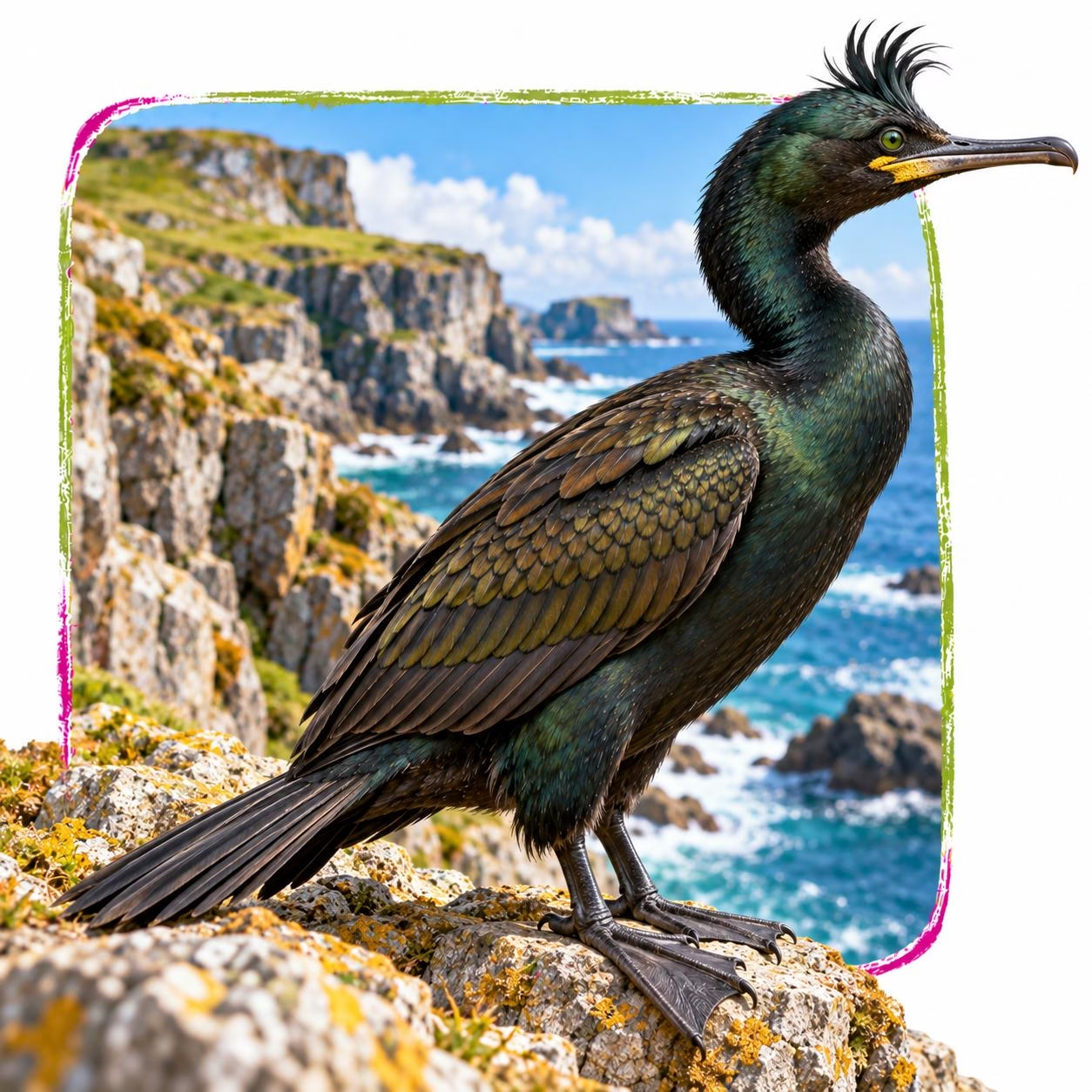
European Shag in its natural Rocky sea coasts, islands, sea cliffs, bays, channels, inshore marine waters, ledges, caves, and coastal roosting sites habitat