
Fox Facts for Kids
Fox is a common name for several small to medium-sized members of the dog family, Canidae. The best-known true foxes belong to the genus Vulpes and include Red, Arctic, Fennec, Swift, Kit, Bengal, Corsac, and Tibetan foxes. Other fox-named canids include gray foxes, bat-eared foxes, and South American foxes from separate evolutionary branches. Foxes inhabit tundra, deserts, mountains, forests, grasslands, farms, cities, and islands, using sharp senses, flexible diets, and remarkable behavior to survive.
Quick Fox Facts
- Animal Type: Mammal
- Group: Canids, especially true foxes in the genus Vulpes and several other fox-named genera
- Known For: Pointed faces, upright ears, bushy tails, sharp hearing, quiet pouncing, flexible diets, dens, and expressive calls
- Habitat: Tundra, deserts, mountains, forests, grasslands, farms, wetlands, cities, and islands
- Diet: Rodents, rabbits, insects, birds, eggs, reptiles, carrion, fruit, seeds, roots, and other foods depending on species
What You’ll Learn
Discover 10 clever fox facts for kids about bushy tails, sharp hearing, hunting, dens, and the many kinds of foxes, plus a quiz, glossary, and activity
These facts are explained simply for kids, parents, teachers, and curious little fact-finders.

10 Fun Fox Facts for Kids
1. Fox Is a Common Name, Not One Species
True foxes belong mainly to Vulpes, but gray foxes, bat-eared foxes, and South American foxes occupy other canid branches. Similar body shapes evolved within a diverse dog-family tree.
Kid Decode: The fox label covers several branches wearing variations of the same pointed-face costume.
2. Ears Act Like Sound Funnels
Large movable ears collect faint sounds and turn independently toward rustling prey. Red foxes can locate rodents beneath vegetation or snow, while desert foxes also use oversized ears to release body heat.
Kid Decode: Two furry satellite dishes search for dinner while doubling as desert radiators in some species.
3. A Bushy Tail Has Several Jobs
The tail helps balance during turns and jumps, displays mood and identity, and can wrap around the nose and feet during cold rests. Tail-tip color and pattern differ among species.
Kid Decode: The fox carries a balancing pole, signal flag, and winter scarf on the same furry handle.
4. Quiet Pounces Catch Hidden Prey
A fox listens, tilts its head, creeps forward, leaps high, and drops front paws onto a mouse or vole. Red fox research suggests Earth’s magnetic field may help align some hunting jumps, but this has not been shown for every fox.
Kid Decode: The famous mouse dive begins with ears, patience, geometry, and one spring-loaded leap.
5. The Menu Changes With Opportunity
Foxes eat rodents, rabbits, insects, birds, eggs, reptiles, carrion, fruit, seeds, and roots. Bat-eared foxes specialize strongly on insects, while Arctic foxes may follow polar bears or seabird colonies for food.
Kid Decode: One family name contains mouse hunters, termite specialists, berry eaters, and seaside scavengers.
6. Extra Food Can Be Cached
Many foxes hide surplus eggs, prey, or other food beneath soil, snow, leaves, or vegetation. They use memory and scent to relocate caches when hunting becomes less successful.
Kid Decode: The landscape becomes a secret pantry filled with tiny buried lunch boxes.
7. Most Hunt Alone but Families Cooperate
Foxes often forage alone even when living as pairs or family groups. Parents may share pup care, and older offspring sometimes help, but social systems vary among species and food conditions.
Kid Decode: The fox is often a solo shopper belonging to a small cooperative household.
8. Pups Begin Life Inside a Den
Baby foxes, called pups, kits, or cubs, are born small, blind, and dependent. Dens may be dug by the parents, enlarged from another animal’s burrow, or placed among rocks, roots, logs, and buildings.
Kid Decode: The sharp-eyed hunter begins as a blind pup inside a dark underground nursery.
9. Some Foxes Change With the Seasons
Arctic Foxes grow dense winter fur that may be white or blue-gray and replace it with a thinner brown or gray summer coat. Other foxes molt seasonally without such dramatic color change.
Kid Decode: One tundra fox swaps a snow suit for an earth-colored summer jacket.
10. Gray Foxes Can Climb Trees
Gray foxes have flexible ankles and curved claws that help them climb leaning trunks, rest on branches, and escape danger. They can descend headfirst or back down carefully.
Kid Decode: A dog-family animal turns a tree trunk into an emergency staircase.
The Weirdest Fox Fact
Gray foxes can rotate their wrists and climb tree trunks, making them among the few dog-family members able to climb trees regularly.
Try This Fox Activity
Fox Adaptation Map Activity
Draw several foxes in different habitats: a Red Fox in woodland, Arctic Fox in snow, Fennec in desert, gray fox climbing a tree, and bat-eared fox hunting insects. Label pointed ears, whiskers, narrow muzzle, bushy tail, fur-covered Arctic paws, large desert ears, a rodent pounce, food cache, den with pups, and scent-marking trail.
Quick Fox Quiz
- Which family contains foxes? Answer: Canidae, the dog family.
- Are all animals called foxes members of one genus? Answer: No.
- What does a bushy tail help with? Answer: Balance, signaling, warmth, and covering the face while resting.
- What are baby foxes called? Answer: Pups, kits, or cubs.
- Which fox-named canid can climb trees well? Answer: The gray fox.
Mini Glossary
- Canid: A member of the dog family, including dogs, wolves, jackals, and foxes.
- Vulpine: Relating to foxes or having fox-like qualities.
- Den: A sheltered resting or breeding place, often underground.
- Opportunistic Omnivore: An eater that uses many available plant and animal foods.
- Cache: Food hidden for later use.


 Tuatara Facts for Kids
 Weedy Sea Dragon Facts for Kids
 Giant Clam Facts for Kids
 Proconsul Facts for Kids
More Animal Facts for Kids
Visit the full animal facts library or explore a focused animal group.
More Extinct Animal Facts for Kids
Discover dinosaurs, Ice Age giants, prehistoric sea creatures, recently extinct species, and other animals from the past.
Fact check note: Fact checked with the Mammal Diversity Database’s current Canidae taxonomy, Animal Diversity Web’s Vulpes and species accounts, and comparative research on fox hearing, pouncing, diets, caching, dens, reproduction, communication, Arctic coat change, desert heat adaptations, and gray-fox climbing.

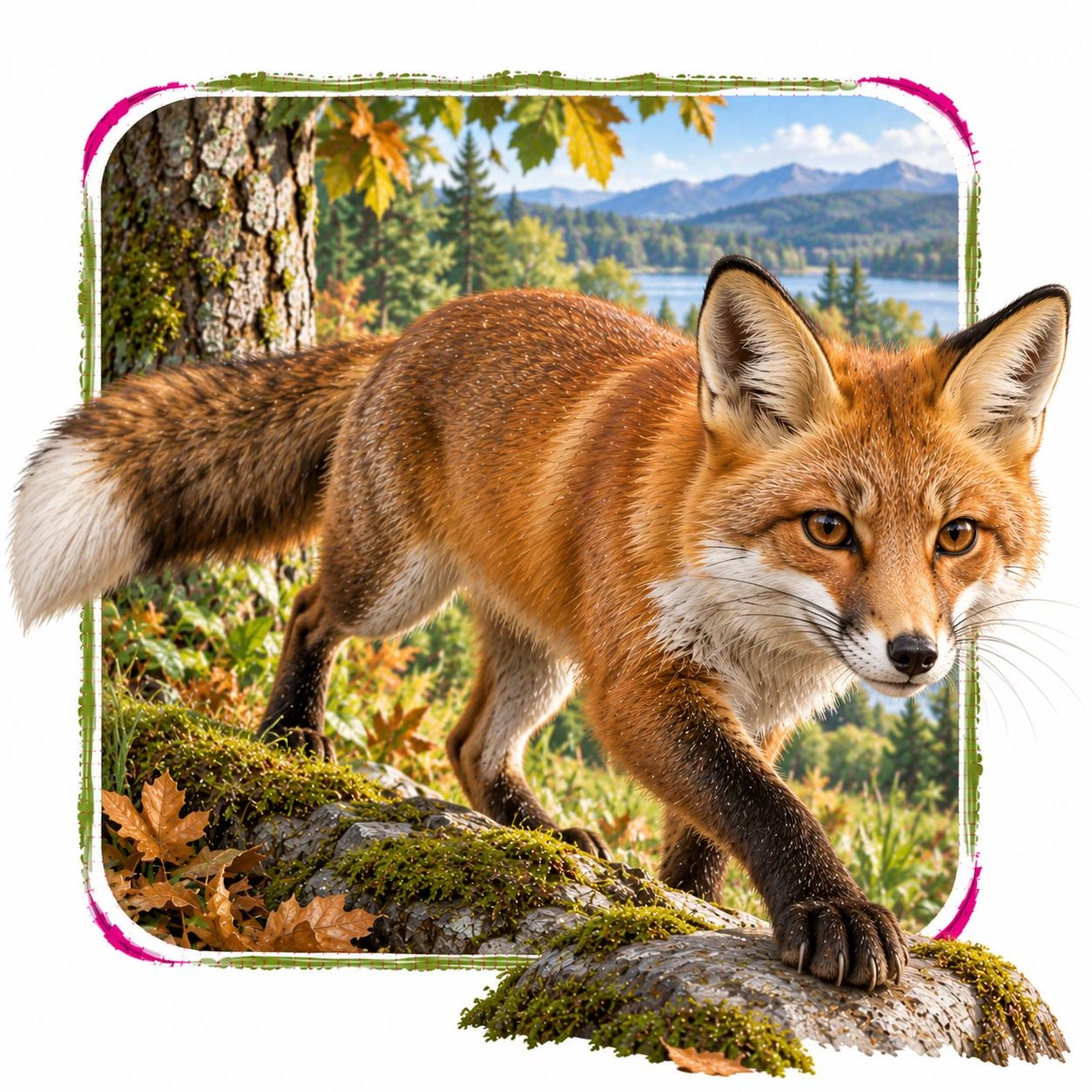
Fox in its natural Tundra, deserts, mountains, forests, woodland, grasslands, savannas, wetlands, farms, suburbs, cities, and islands across most continents habitat