
Frog Facts for Kids
Frogs and toads are tailless amphibians in the order Anura. More than 8,000 species are recognized, making them the largest amphibian group. Frogs live on every continent except Antarctica and occupy rainforest canopies, ponds, deserts, mountains, underground burrows, fast streams, and even brackish wetlands. Adults usually have short bodies, powerful hind legs, moist glandular skin, large eyes, and no tail, but their size, shape, color, reproduction, and life cycle vary astonishingly.
Quick Frog Facts
- Animal Type: Amphibian
- Group: Frogs and toads in the order Anura
- Known For: Tailless adults, powerful hind legs, permeable skin, calling males, metamorphosis, and extraordinary reproductive diversity
- Habitat: Freshwater, rainforest, woodland, grassland, desert, mountains, caves, burrows, trees, and wetlands
- Diet: Adults usually eat animals; tadpoles may eat algae, plants, detritus, eggs, or prey depending on species
What You’ll Learn
Explore 10 amazing frog facts for kids about jumping, sticky tongues, tadpoles, moist skin, and amphibian life cycles, with a quiz, glossary, and activity
Easy explanations make them fun for children, families, teachers, and young nature fans.
10 Fun Frog Facts for Kids
1. More Than 8,000 Species Are Known
AmphibiaWeb listed 8,011 frog and toad species in July 2026. New species continue to be described, especially in tropical forests and mountains, while taxonomy also changes as DNA reveals hidden lineages.
Kid Decode: The frog family album keeps gaining pages faster than most people can count them.
2. Adults Lose the Larval Tail
Anura means without tail. Most species hatch with a tail during the larval stage, then absorb it during metamorphosis, although a few primitive males retain a small tail-like mating structure.
Kid Decode: The swimming tail becomes recycled building material for the growing froglet.
3. Skin Can Breathe and Drink
Thin moist skin exchanges oxygen and carbon dioxide and absorbs water. Mucus limits drying, while skin glands may also release defensive chemicals, but permeable skin makes frogs sensitive to pollution and disease.
Kid Decode: The body wears a living raincoat that also acts as a lung, sponge, and chemical shield.
4. Hind Legs Match Different Lifestyles
Long-legged frogs can leap and swim powerfully, tree frogs grip branches, aquatic species carry broad webbing, and burrowing frogs may have short strong legs with digging spades.
Kid Decode: Frog legs come as springs, paddles, suction climbers, and underground shovels.
5. Calls Carry Species-Specific Messages
Many males inflate vocal sacs to amplify advertisement calls. Females use timing, pitch, rhythm, and location to recognize suitable mates, while other calls warn rivals, signal distress, or maintain contact.
Kid Decode: Each pond becomes a nighttime radio dial filled with species broadcasting on different channels.
6. Tongues Are Fast but Not Universal
Many frogs anchor the tongue near the front of the mouth and flip it outward to seize prey with sticky mucus. Aquatic and tongueless frogs may instead grab food directly with their jaws or hands.
Kid Decode: The famous tongue catapult belongs to many frogs, but some hunters skip it completely.
7. Eyes Can Help Push Food Down
A frog’s eyeballs can retract into openings in the skull and press against the mouth roof during swallowing. The movement helps shift prey toward the throat because frogs do not chew like mammals.
Kid Decode: The eyes briefly join the digestive team and push dinner down from above.
8. Tadpole Life Is Astonishingly Varied
Many tadpoles graze algae or filter particles, while others eat detritus, eggs, insects, or other tadpoles. Some cling to waterfalls, live in tree holes, develop inside eggs, or are carried by parents.
Kid Decode: The word tadpole covers pond grazers, waterfall climbers, hunters, passengers, and hidden egg-dwellers.
9. Not Every Frog Has a Free-Swimming Tadpole
Direct-developing species hatch from eggs as tiny froglets. Others brood young in skin pockets, vocal sacs, stomachs, backs, nests, or water-filled plants, showing that pond jelly is only one reproductive plan.
Kid Decode: Some frog babies skip the tadpole commute and hatch already wearing four legs.
10. Frogs Face a Global Conservation Crisis
Habitat loss, chytrid fungi, pollution, climate change, invasive predators, road deaths, and wildlife trade have caused severe declines and extinctions. Protecting connected clean habitats and preventing disease spread are crucial.
Kid Decode: A healthy frog chorus is an orchestra whose silence can warn that an ecosystem is in trouble.
The Weirdest Frog Fact
Many frogs pull their eyes downward into the mouth while swallowing, helping push food from the tongue toward the throat.
Try This Frog Activity
Frog Diversity-and-Life-Cycle Activity
Draw a central generalized frog and surround it with a tree frog, burrowing desert frog, glass frog, poison frog, aquatic frog, and direct-developing frog. Label moist skin, lungs, powerful hind legs, toe pads, webbed feet, tympanum, vocal sac, sticky tongue, eyes helping swallow, eggs, tadpole, metamorph, froglet, and a direct-developing egg that hatches as a tiny frog.
Quick Frog Quiz
- Which order contains frogs and toads? Answer: Anura.
- How many recognized frog and toad species are there? Answer: More than 8,000.
- Can frogs exchange gases through their skin? Answer: Yes.
- Does every frog hatch as a swimming tadpole? Answer: No.
- Why are frogs important environmental indicators? Answer: Their permeable skin and mixed water-land lives make them sensitive to environmental change.
Mini Glossary
- Anuran: A frog or toad belonging to the order Anura.
- Metamorphosis: A major change in body form during development.
- Tadpole: The usually aquatic larval stage of many frogs.
- Cutaneous Respiration: Gas exchange through the skin.
- Amplexus: The mating embrace in which one frog clasps another while eggs are released.
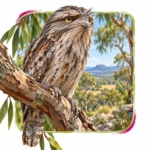

 Peacock Facts for Kids
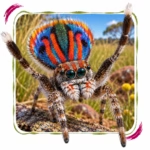 Peacock Spider Facts for Kids
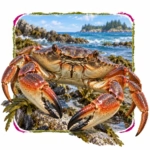 Crab Facts for Kids
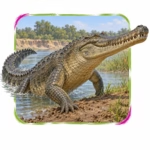 Rhamphosuchus Facts for Kids
More Animal Facts for Kids
Visit the full animal facts library or explore a focused animal group.
More Extinct Animal Facts for Kids
Discover dinosaurs, Ice Age giants, prehistoric sea creatures, recently extinct species, and other animals from the past.
Fact check note: Fact checked with AmphibiaWeb’s current Anura species totals and new-species database, Animal Diversity Web’s Anura overview, and amphibian research on skin respiration, locomotion, calling, feeding, eye-assisted swallowing, metamorphosis, direct development, parental care, toxins, chytridiomycosis, and global declines.

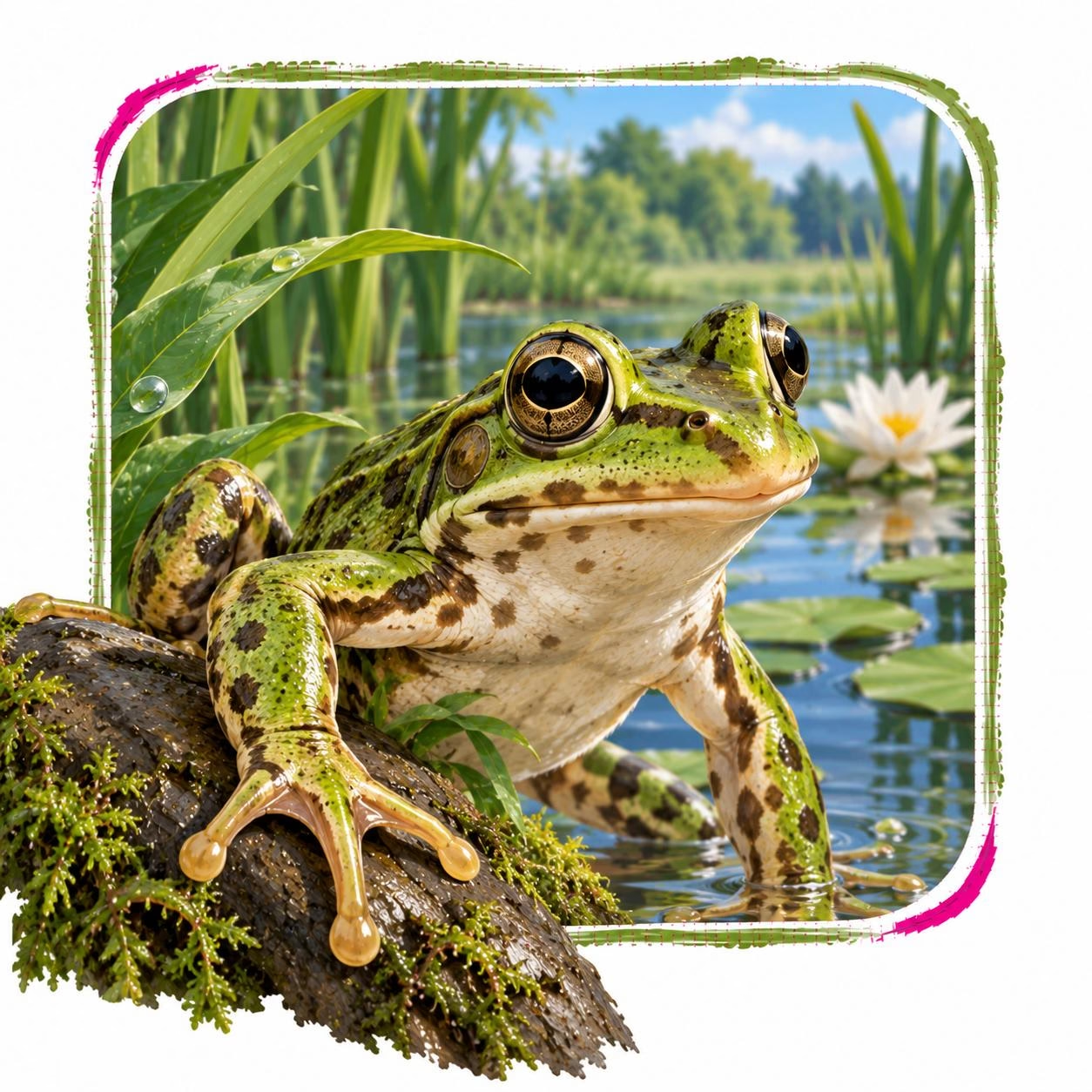
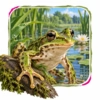
Frog in its natural Freshwater ponds, streams, rivers, lakes, wetlands, rainforest, woodland, grassland, deserts, mountains, trees, caves, burrows, and brackish habitats worldwide except Antarctica habitat