
King Snake Facts for Kids
King snake, usually written kingsnake in animal common names, refers to many nonvenomous New World snakes in the genus Lampropeltis. The genus currently contains 28 recognised species in the Reptile Database, although some are commonly called milk snakes rather than kingsnakes. These snakes range from southern Canada through the United States and Mexico into Central America and northwestern South America. They have smooth glossy scales and patterns that may be banded, ringed, striped, blotched, speckled, or nearly plain. Kingsnakes subdue many prey animals by constriction and are famous for eating other snakes, including some venomous species. Exact colour, size, habitat, diet, reproduction, venom resistance, and conservation status differ across the group.
Quick King Snake Facts
- Animal Type: Reptile and nonvenomous snake
- Group: Many species in Lampropeltis, family Colubridae; the genus also includes milk snakes
- Known For: Smooth glossy scales, bold patterns, constriction, eating other snakes, resistance to some snake venoms, forked-tongue scent tracking, and egg laying
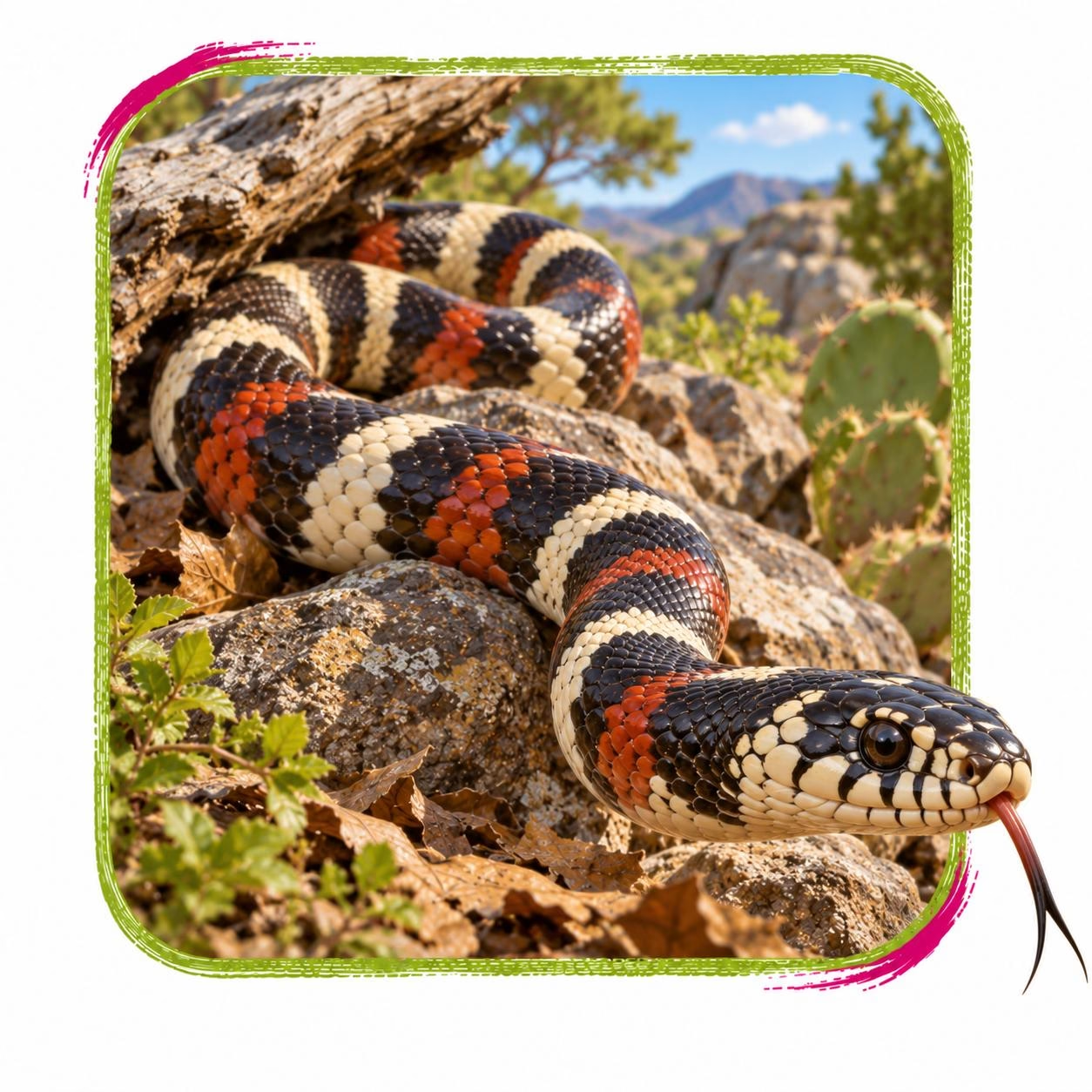
- Habitat: Forests, grasslands, deserts, scrub, mountains, wetlands, farms, rocky slopes, burrows, and human-modified areas depending on species
- Diet: Snakes, lizards, rodents, birds, eggs, frogs, and other small vertebrates depending on species and size
What You’ll Learn
Learn 10 fascinating king snake facts for kids about colorful patterns, constriction, hunting other snakes, camouflage, and the Lampropeltis group, plus a quiz, glossary, and activity
Simple explanations make them fun for children, families, teachers, and young reptile fans.
10 Fun King Snake Facts for Kids
1. King Snake Is Not One Species
The Reptile Database currently recognises 28 species in Lampropeltis. Common names within the genus include kingsnakes, milk snakes, scarlet kingsnakes, mountain kingsnakes, and several regional forms, so not every Lampropeltis species is ordinarily called a king snake.
Kid Decode: The royal snake shelf holds twenty-eight species wearing many different name tags.
2. Lampropeltis Means Shiny Shield
The genus name comes from Greek words linked to shining and shield, referring to the smooth glossy scales. Colours range from black and white to brown, gray, yellow, orange, red, and cream, with patterns varying by species and population.
Kid Decode: Each polished scale becomes one tile in a moving shield.
3. They Are Nonvenomous Constrictors
Kingsnakes do not use venom to subdue prey. They seize an animal, wrap muscular coils around it, and apply pressure that quickly stops effective blood circulation before swallowing the prey whole.
Kid Decode: The hunting tool is a living loop of muscle rather than a venom needle.
4. Other Snakes Are Important Prey
Many kingsnakes eat snakes, including members of their own species and venomous pit vipers when an opportunity arises. They also consume rodents, lizards, frogs, birds, and eggs, so the exact menu depends on species, age, habitat, and available prey.
Kid Decode: The name king comes from a hunter willing to put other snakes on the menu.
5. Venom Resistance Is Not Magic Immunity
Some kingsnakes are highly resistant to venoms produced by pit vipers living in the same region. Resistance varies with snake species, prey species, venom type, and dose, and a kingsnake can still be injured by bites or overwhelmed under some conditions.
Kid Decode: The royal armor blocks some venom attacks, but it is not an invincibility cloak.
6. A Forked Tongue Collects Scent Clues
The tongue gathers tiny chemical particles from air and surfaces and delivers them to the vomeronasal organs in the roof of the mouth. Comparing information from the two tongue tips helps the snake follow prey, mates, shelter, and escape routes.
Kid Decode: Two tongue tips sample the trail and point the hunter toward stronger scent.
7. Patterns Can Hide or Confuse
Some kingsnakes blend into soil, leaves, rocks, or shadows, while red, black, and pale rings in scarlet and milk snakes resemble the warning colours of coral snakes. Pattern alone is unsafe for identifying an unknown snake because colours and band arrangements vary geographically.
Kid Decode: One glossy outfit disappears into leaves while another borrows the look of danger.
8. Most Spend Much Time Under Cover
Kingsnakes commonly shelter beneath logs, rocks, bark, vegetation, debris, or inside burrows. Some are active by day in mild weather and shift toward dawn, dusk, or night during hotter periods; activity differs by species and climate.
Kid Decode: The royal chamber may be nothing more than a cool space under one flat rock.
9. Kingsnakes Lay Eggs
Female kingsnakes lay leathery-shelled eggs in protected places such as rotting logs, loose soil, burrows, or hidden cavities. Clutch size, breeding season, incubation, and hatchling size differ among species and regions, and parents do not provide extended care.
Kid Decode: The next generation begins inside soft-shelled eggs hidden from heat and hungry eyes.
10. Conservation Status Differs by Species
There is no single conservation category for every kingsnake. Some species are widespread, while island, mountain, wetland, or narrowly distributed populations can be vulnerable to habitat loss, roads, illegal collection, invasive predators, persecution, and climate change.
Kid Decode: A broad-range king and an island king can face completely different futures.
The Weirdest King Snake Fact
A kingsnake may overpower and swallow a venomous pit viper, but its protection comes from specialised venom resistance and powerful constriction rather than from being universally immune to every snake venom.
Try This King Snake Activity
King Snake Pattern-and-Hunt Activity
Draw a Lampropeltis family gallery with a black-and-white California Kingsnake, a speckled kingsnake, a red-black-pale mountain or scarlet form, and one milk snake. Add smooth glossy scales, a forked tongue following scent, a hidden shelter beneath a log, leathery eggs in a protected cavity, a safe non-graphic constriction scene with rodent prey, and a comparison panel showing resistance rather than total immunity when a kingsnake encounters a pit viper. Label every example so the patterns are not treated as universal.
Quick King Snake Quiz
- What genus contains kingsnakes and milk snakes? Answer: Lampropeltis.
- How many Lampropeltis species are currently recognised by the Reptile Database? Answer: Twenty-eight.
- Are kingsnakes venomous? Answer: No, they subdue many prey animals by constriction.
- What does a forked tongue collect? Answer: Chemical scent particles.
- Are kingsnakes immune to every snake venom? Answer: No, resistance varies and is not universal immunity.
Mini Glossary
- Colubrid: A member of the large and diverse snake family Colubridae.
- Constrictor: A snake that subdues prey by wrapping it in muscular coils and applying pressure.
- Ophiophagy: The behaviour of eating snakes.
- Vomeronasal Organ: A chemical-sensing organ in the roof of a snake’s mouth.
- Mimicry: Resemblance to another organism that may provide protection or another advantage.
 Comb Jelly Facts for Kids
 Frog Facts for Kids
 Hog Facts for Kids
 Caribbean Monk Seal Facts for Kids
More Animal Facts for Kids
Visit the full animal facts library or explore a focused animal group.
More Extinct Animal Facts for Kids
Discover dinosaurs, Ice Age giants, prehistoric sea creatures, recently extinct species, and other animals from the past.
Fact check note: Fact checked with the 2026 Reptile Database search for Lampropeltis, which recognises 28 species; U.S. Fish and Wildlife Service profiles for California, desert, and mountain kingsnakes; San Diego Zoo and Los Angeles Zoo kingsnake accounts; Animal Diversity Web’s Lampropeltis overview; and peer-reviewed systematic research on the Lampropeltis getula and milk-snake complexes, constriction, snake eating, regional venom resistance, chemical sensing, reproduction, pattern diversity, and conservation.

King Snake in its natural Forests, woodlands, grasslands, deserts, scrublands, mountains, rocky slopes, wetlands, farms, burrows, and human-modified areas depending on species habitat