
Snake Facts for Kids
Snakes are elongated legless reptiles in the group Serpentes. More than 4,000 living species occupy forests, deserts, grasslands, farms, caves, rivers, oceans, and cities on every continent except Antarctica. All are carnivores, but most are nonvenomous and avoid people while helping food webs by hunting rodents and other animals.
Quick Snake Facts
- Scientific Group: Serpentes within order Squamata
- Animal Type: Reptile, vertebrate, and close relative of lizards
- Living Species: More than 4,000, with new species still being described
- Size: From threadsnakes around 10 centimetres long to pythons approaching 7 metres in verified records
- Body: Elongated, legless, scaled, ectothermic, and adapted for swallowing whole prey
- Range: Every continent except Antarctica, plus many seas and islands
- Habitat: Forests, deserts, grasslands, wetlands, farms, mountains, caves, freshwater, and tropical oceans
- Diet: Carnivorous; insects, worms, eggs, fish, amphibians, reptiles, birds, and mammals
- Young: Species may lay eggs, retain eggs until hatching, or give birth to live young
- Conservation: Status varies; habitat loss, roads, persecution, invasive species, pollution, climate change, and trade threaten some snakes
What You’ll Learn
Explore 10 fascinating snake facts for kids about scales, forked tongues, flexible jaws, movement, hunting, and the incredible variety of snakes, plus a quiz, glossary, and activity
These easy facts are made for kids, parents, teachers, and curious young learners.
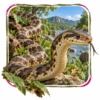
10 Fun Snake Facts for Kids
1. Snakes Are Specialized Lizards
Snakes evolved within the squamate reptile family tree and share ancestry with lizards. Most completely lack limbs, although boas and pythons retain tiny external spurs connected to remnants of the pelvis.
Kid Decode: A python’s little spurs are clues to ancestors that once had legs.
2. Scales Protect and Push
Overlapping keratin scales limit water loss and shield the body. Wide belly scales grip rough spots while muscles pull the skeleton forward, allowing a snake to travel without feet.
Kid Decode: A snake’s belly works like a long row of gripping shoe soles.
3. The Eyes Never Blink
Snakes have no movable eyelids. A clear scale called a spectacle covers each eye, remains closed all the time, and is shed with the outer skin during a successful molt.
Kid Decode: A snake sleeps with clear protective scales still covering open-looking eyes.
4. The Jaw Hears Ground Vibrations
Snakes lack external ear openings and eardrums, but they have inner ears. Vibrations traveling through soil or another surface reach the lower jaw and then an ear bone, helping reveal nearby movement.
Kid Decode: A snake can feel approaching footsteps through its jaw.
5. A Forked Tongue Smells in Stereo
The tongue collects chemical particles from air and ground and delivers them to the vomeronasal or Jacobson’s organ. Comparing the two fork tips helps the snake tell which direction a scent trail leads.
Kid Decode: Each tongue tip samples one side of a chemical map.
6. Flexible Jaws Do Not Unhinge
A snake never disconnects its jaws. Instead, movable skull bones, elastic ligaments, and lower-jaw halves joined by stretchy tissue spread around prey, while alternating movements pull the meal inward.
Kid Decode: The famous wide mouth is flexible engineering, not a dislocated jaw.
7. Several Movements Replace Walking
Lateral undulation creates familiar S-curves, concertina movement anchors and extends the body, rectilinear motion creeps forward in a straight line, and sidewinding reduces contact with hot or loose ground.
Kid Decode: One legless body can slither, creep, climb, swim, and sidewind.
8. Venom Is Not the Usual Snake Plan
Most species are nonvenomous. Venomous snakes inject modified saliva mainly to immobilize and digest prey, while constrictors squeeze, egg eaters swallow eggs, and many small snakes simply seize prey whole.
Kid Decode: Most snakes hunt without dangerous venom and would rather escape a person.
9. Heat Pits Belong to Certain Groups
Pit vipers and many boas and pythons have specialized facial pits that detect infrared radiation from warm animals. Other snakes lack these organs and rely on vision, chemical cues, touch, and vibration.
Kid Decode: Some snakes can map warm prey in darkness, but most snakes have no heat pits.
10. Eggs and Live Birth Both Work
Many species lay leathery eggs, while vipers, boas, sea snakes, and other groups include live bearers. Most young receive no parental care, but some snakes guard eggs, and female pythons coil around clutches.
Kid Decode: A baby snake may hatch from an egg or be born wriggling and ready to hunt.
The Weirdest Snake Fact
A snake’s narrow body rearranges its insides. Paired organs such as the kidneys lie one behind the other instead of side by side, and most species rely mainly on one long right lung while the left lung is tiny or absent.
Try This Snake Activity
Test Four Ways to Move Without Legs
Use four pieces of string to model lateral undulation, concertina movement, straight rectilinear creeping, and sidewinding tracks. Draw a snake beside each path and label which scales and muscles grip the ground. Add separate panels for the spectacle, forked-tongue scent map, vibration-sensing jaw, flexible skull, one long lung, egg clutch, and live-born young.
Quick Snake Quiz
- Which reptile group contains snakes? Answer: Serpentes within Squamata.
- What clear scale covers each eye? Answer: The spectacle.
- How does the tongue help find direction? Answer: Its two tips compare chemical clues.
- Do snake jaws unhinge? Answer: No.
- Are most snake species venomous? Answer: No.
Mini Glossary
- Squamate: A reptile in the order containing snakes, lizards, and amphisbaenians.
- Spectacle: The transparent scale permanently covering a snake’s eye.
- Vomeronasal organ: A mouth-roof organ that analyzes chemicals collected by the tongue.
- Constriction: Subduing prey by tightening body coils around it.
- Ectotherm: An animal whose temperature depends mainly on environmental heat.
 Giant Squid Facts for Kids
 Meerkat Facts for Kids
 Swordfish Facts for Kids
 Albertosaurus Facts for Kids
More Animal Facts for Kids
Visit the full animal facts library or explore a focused animal group.
More Extinct Animal Facts for Kids
Discover dinosaurs, Ice Age giants, prehistoric sea creatures, recently extinct species, and other animals from the past.
Fact check note: Fact checked against The Reptile Database Serpentes listings; Smithsonian’s National Zoo snake sensory and locomotion resources; University of California Museum of Paleontology squamate materials; US Forest Service snake safety and ecology guidance; IUCN Snake Specialist Group assessments; and peer-reviewed work on snake evolution, scales, spectacles, vibration hearing, tongue-flicking, vomeronasal sensing, cranial kinesis, locomotion, venom, infrared pits, lungs, organ arrangement, reproduction, and parental care. The more-than-4,000-species count and group-level exceptions were cross-checked.

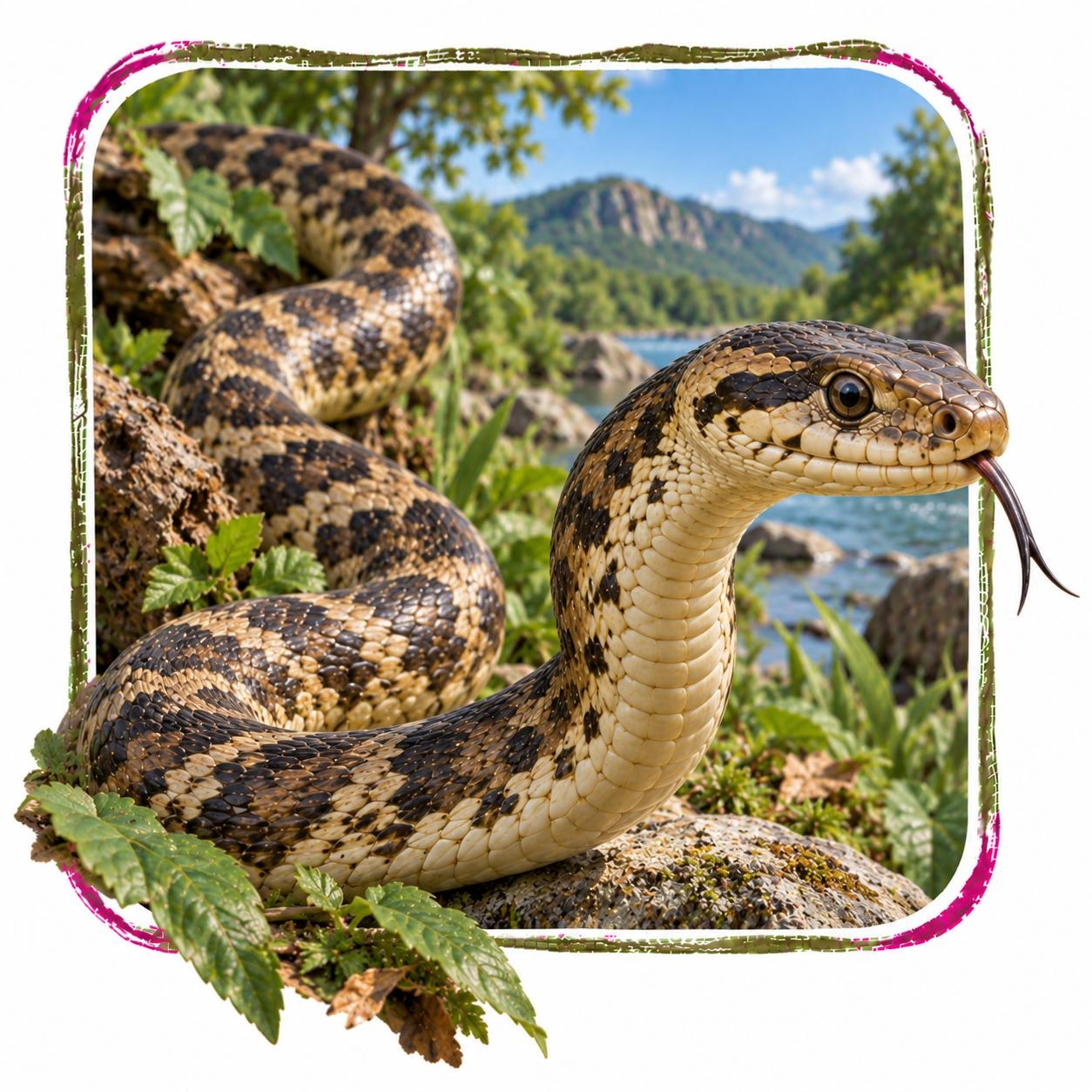
Snake in its natural Forests, deserts, grasslands, wetlands, farms, mountains, caves, rivers, lakes, coasts, and tropical oceans worldwide except Antarctica habitat