
Komodo Dragon Facts for Kids
Komodo dragons are giant monitor lizards from Indonesia. They are the largest living lizards, with strong bodies, sharp claws, forked tongues, tough skin, and powerful hunting skills.
Quick Komodo Dragon Facts
- Animal Type: Reptile
- Group: Monitor lizard
- Known For: Largest living lizard
- Habitat: Dry forests, savannas, grasslands, and islands in Indonesia
- Diet: Deer, pigs, birds, eggs, carrion, and other animals
What You’ll Learn
Discover 10 incredible komodo dragon facts for kids about giant size, sharp teeth, powerful senses, hunting, and island life, with a quiz, glossary, and Komodo dragon activity
Easy explanations make them great for children, families, teachers, and curious animal fans.
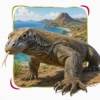
10 Fun Komodo Dragon Facts for Kids
1. Komodo Dragons Are the Largest Living Lizards
Komodo dragons are the biggest lizards alive today. Adult Komodo dragons can grow very long and heavy compared with other lizards.
Kid Decode: A Komodo dragon is the heavyweight champion of lizards.
2. Komodo Dragons Live in Indonesia
Wild Komodo dragons live only on a few Indonesian islands, including Komodo and nearby islands.
Kid Decode: Komodo dragons are island originals.
3. Komodo Dragons Are Monitor Lizards
Komodo dragons belong to the monitor lizard family. Monitor lizards are known for strong bodies, long tongues, and sharp senses.
Kid Decode: Komodo dragons are the giant cousins in the monitor lizard family.
4. Komodo Dragons Use Forked Tongues
A Komodo dragon flicks its forked tongue to collect scent particles from the air and ground. This helps it find food.
Kid Decode: The tongue is a Komodo dragon’s smell scanner.
5. Komodo Dragons Have Sharp Teeth
Komodo dragons have sharp, serrated teeth that help them bite and tear food.
Kid Decode: Their teeth are built like tiny steak knives.
6. Komodo Dragons Have Venom
Komodo dragons have venom glands that can help weaken prey after a bite. Their bite is powerful and dangerous.
Kid Decode: A Komodo bite brings more than just teeth.
7. Baby Komodo Dragons Are Hatchlings
Baby Komodo dragons hatch from eggs. Young Komodo dragons may climb trees to avoid danger from larger animals.
Kid Decode: A baby Komodo dragon starts life as a tiny tree-climbing lizard.
8. Komodo Dragons Are Carnivores
Komodo dragons eat meat. They may hunt animals and also eat carrion when they find it.
Kid Decode: Komodo dragons are not salad lizards.
9. Komodo Dragons Have Strong Claws
Their strong claws help them walk, dig, grip, and tear food. Young ones can use claws for climbing.
Kid Decode: Komodo claws are island survival tools.
10. Komodo Dragons Need Protection
Komodo dragons are protected because they live in a small range and face threats from habitat changes and human activity.
Kid Decode: Protecting their islands protects the dragons.
The Weirdest Komodo Dragon Fact
The Komodo dragon is the largest living lizard and uses a forked tongue to smell its way through island habitats.
Try This Komodo Dragon Activity
Komodo Dragon Drawing Activity
Draw a Komodo dragon walking across a dry Indonesian island. Add a long body, strong claws, forked tongue, rocky ground, dry grass, and a sunny sky.
Quick Komodo Dragon Quiz
- What is the largest living lizard? Answer: The Komodo dragon.
- Where do wild Komodo dragons live? Answer: Indonesia.
- What do Komodo dragons use to smell? Answer: Their forked tongues.
- Are Komodo dragons reptiles? Answer: Yes.
- What are baby Komodo dragons called after hatching? Answer: Hatchlings.
Mini Glossary
- Monitor Lizard: A lizard group that includes Komodo dragons.
- Hatchling: A young animal that has just hatched from an egg.
- Venom: A harmful substance some animals use in bites or stings.
- Carrion: Dead animals eaten by scavengers.
- Forked Tongue: A split tongue used by some reptiles to help smell.
 Emperor Scorpion Facts for Kids
 Arctic Tern Facts for Kids
 Elephant Facts for Kids
 Beipiaosaurus Facts for Kids
More Animal Facts for Kids
Visit the full animal facts library or explore a focused animal group.
More Extinct Animal Facts for Kids
Discover dinosaurs, Ice Age giants, prehistoric sea creatures, recently extinct species, and other animals from the past.
Fact check note: Fact checked with Britannica Kids Komodo dragon resources, Britannica Komodo dragon resources, and trusted reptile education references.

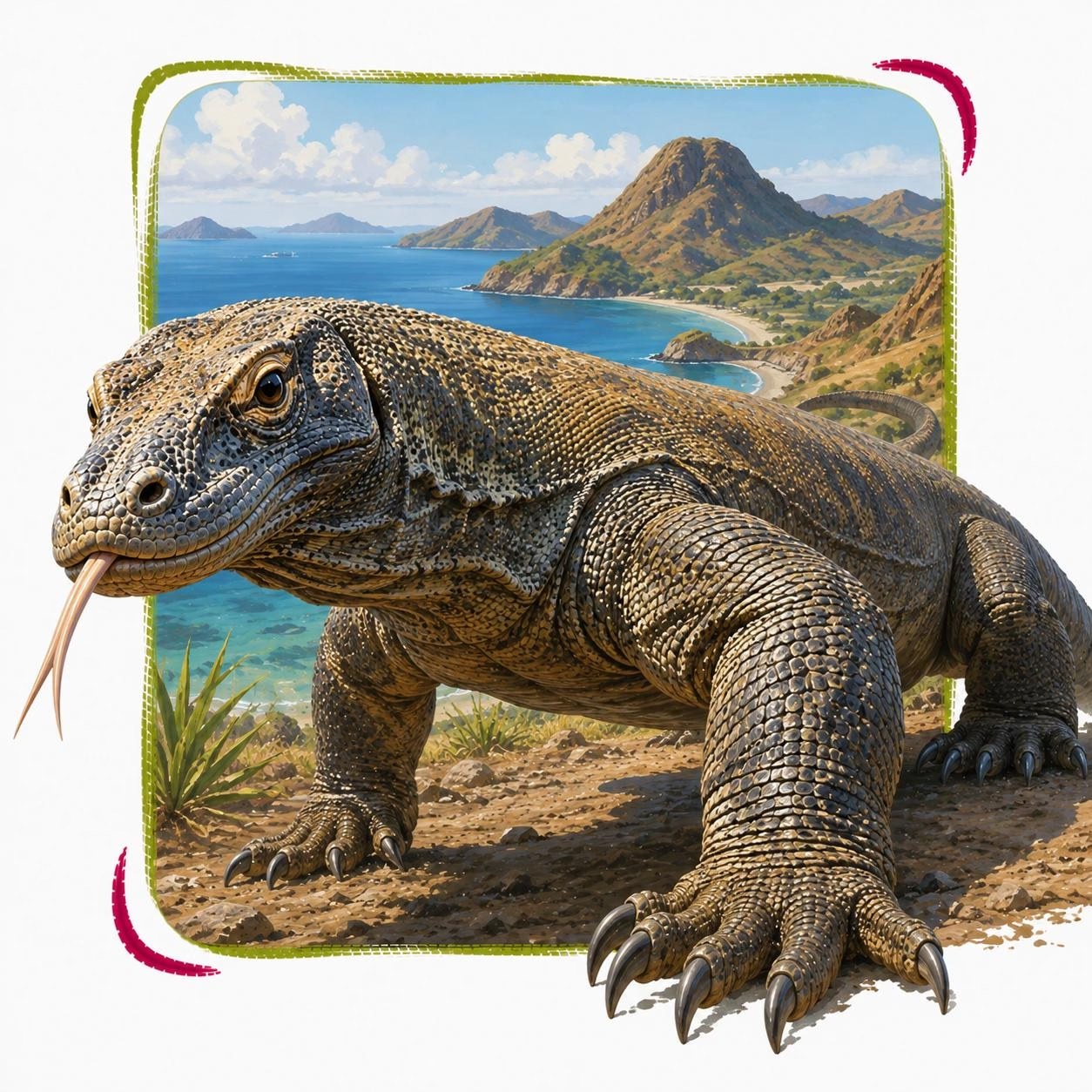
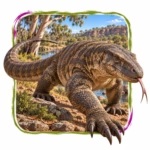
Komodo Dragon in its natural Islands habitat