
Lapwing Facts for Kids
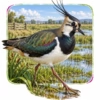
The Lapwing on this page is the Northern Lapwing, Vanellus vanellus, a crested plover of farmland, wet grassland, marshes, meadows, and mudflats across Europe and Asia. The wider word lapwing also covers many other species in the genus Vanellus. Northern Lapwings have glossy green-and-purple upperparts, a white belly, dark breast, long wispy crest, broad rounded wings, and a distinctive peewit call. They perform tumbling courtship flights, lay camouflaged eggs in shallow ground scrapes, and raise downy chicks that can walk and feed soon after hatching.
Quick Lapwing Facts
- Animal Type: Bird
- Group: Crested plover in the genus Vanellus and family Charadriidae
- Known For: Long crest, iridescent green plumage, peewit calls, tumbling display flights, ground nests, four camouflaged eggs, precocial chicks, collective mobbing, and seasonal migration
- Habitat: Wet grassland, farmland, meadows, marshes, moors, river valleys, arable fields, estuaries, and coastal mudflats
- Diet: Earthworms, beetles, flies, insect larvae, spiders, small snails, other invertebrates, and occasional seeds
What You’ll Learn
Learn 10 lively lapwing facts for kids about crests, tumbling flight, calls, ground nests, and wetland habitats, with a quiz, glossary, and activity
Simple explanations make them fun for children, families, teachers, and young bird explorers.
10 Fun Lapwing Facts for Kids
1. Lapwing Usually Means the Northern Lapwing
In Britain and much of Europe, the unqualified name refers to Vanellus vanellus. Elsewhere, lapwing may describe many crested or wattled plovers in the genus Vanellus.
Kid Decode: One everyday word can mean one famous bird or an entire globe-spanning group.
2. Its Black Feathers Shine Green and Purple
Microscopic feather structure reflects changing colors, so the back gleams green, bronze, blue, or purple as viewing angle changes. From far away it may look simply black.
Kid Decode: A dark feather becomes a moving oil slick of color in sunlight.
3. The Crest Is Longer in Breeding Males
Both sexes carry thin swept-back head feathers, but males often show longer crests and darker breeding plumage. Individual and seasonal variation prevents perfect sexing from one feature.
Kid Decode: The bird’s elegant head ribbon grows most dramatic during spring display season.
4. The Call Sounds Like Pee-Wit
Sharp rising and falling calls travel over open fields, especially during display and alarm. The voice produced old nicknames including peewit, pewit, and pyewipe.
Kid Decode: The bird announces itself by repeatedly saying one of its own nicknames.
5. Courtship Flight Becomes an Aerial Tumble
Males climb, roll, dive, twist, and swing on broad wings while calling. The display advertises territory and flying skill to females and rivals.
Kid Decode: The spring sky becomes a roller coaster built for one crested pilot.
6. Four Eggs Form a Camouflaged Star
A shallow ground scrape usually holds four pointed mottled eggs. The adults often arrange the narrow ends inward, fitting the clutch into a compact shape.
Kid Decode: Four speckled pears point toward the centre of a hidden field compass.
7. Chicks Walk Soon After Hatching
Lapwing chicks hatch covered in down with open eyes and strong legs. They leave the scrape, follow their parents, and pick up tiny invertebrates for themselves.
Kid Decode: The nursery empties almost immediately because every chick arrives wearing walking shoes.
8. Parents Become Portable Heaters
Young chicks can feed independently but still lose heat quickly. They crouch beneath an adult’s breast and wing feathers during cold, wind, rain, or rest, especially in the first days.
Kid Decode: The parent bird opens a warm feather tent in the middle of the field.
9. Neighbors May Attack Predators Together
Several breeding pairs can form loose colonies and mob crows, gulls, raptors, foxes, or other threats. Group defense can make a nesting area harder to raid.
Kid Decode: A scattered field of birds suddenly becomes one screaming aerial security team.
10. Modern Farming Can Remove the Nursery
Drainage, dense crops, early mowing, machinery, dry soil, and fewer insects reduce nest and chick survival. Wildlife-friendly wet patches and carefully timed management create feeding and hiding space.
Kid Decode: A field can look green to people while becoming empty desert to a hungry chick.
The Weirdest Lapwing Fact
A newly hatched Lapwing chick leaves the nest and searches for its own tiny prey, yet still runs beneath a parent’s belly feathers when cold weather demands a portable heater.
Try This Lapwing Activity
Lapwing Spring Field Activity
Draw a Northern Lapwing in wet farmland. Add a long crest, glossy green-purple back, black chest, white belly, orange-brown undertail, broad rounded wings, black-and-white wing pattern, and a peewit call. Show a male’s tumbling courtship flight, a shallow scrape with four pointed camouflaged eggs, a female incubating, a male watching and defending, downy chicks walking and feeding, a chick brooded beneath a parent, several adults mobbing a crow, earthworm hunting, winter flocks on mudflats, and wildlife-friendly wet grassland management.
Quick Lapwing Quiz
- Which species does this page call the Lapwing? Answer: The Northern Lapwing, Vanellus vanellus.
- What sound gives it the nickname peewit? Answer: Its repeated pee-wit call.
- How many eggs are typical? Answer: Four.
- What does precocial mean? Answer: Chicks hatch well developed and can move and feed soon afterward.
- What is its current global IUCN category? Answer: Near Threatened.
Mini Glossary
- Wader: A bird adapted to feeding on open ground, shores, wetlands, or shallow water.
- Iridescent: Showing changing colors as light strikes from different angles.
- Scrape Nest: A shallow hollow on the ground used as a nest.
- Precocial: Hatching with down, open eyes, and the ability to walk soon afterward.
- Mobbing: Several birds attacking or harassing a predator together.
 Olive Baboon Facts for Kids
 Green Sea Turtle Facts for Kids
 Arctic Tern Facts for Kids
 Tapejara Facts for Kids
More Animal Facts for Kids
Visit the full animal facts library or explore a focused animal group.
More Extinct Animal Facts for Kids
Discover dinosaurs, Ice Age giants, prehistoric sea creatures, recently extinct species, and other animals from the past.
Fact check note: Fact checked with the British Trust for Ornithology’s current Lapwing BirdFacts profile, including four-egg clutches, 25–34-day incubation, precocial chicks, 35–40-day fledging, and major British declines; BirdLife International’s current Northern Lapwing assessment, which lists the species as Near Threatened and estimates a 20–29 percent global decline over three generations; and research on display flight, incubation roles, chick brooding, collective mobbing, migration, feeding, agricultural threats, and wet-grassland management.

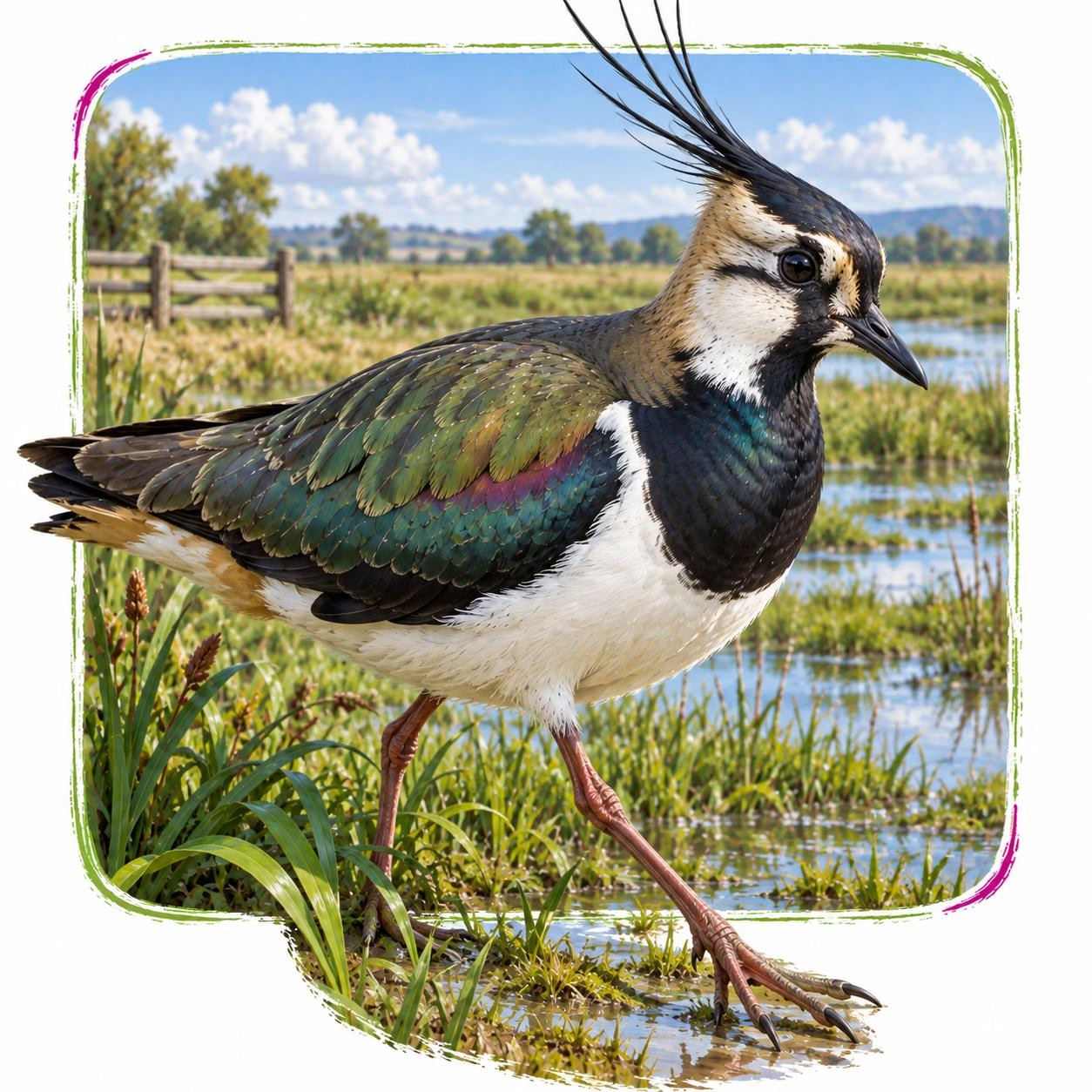
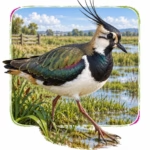
Lapwing in its natural Wet grasslands, farmland, meadows, marshes, moors, river valleys, arable fields, estuaries, and coastal mudflats across Europe and Asia habitat