
Plover Facts for Kids
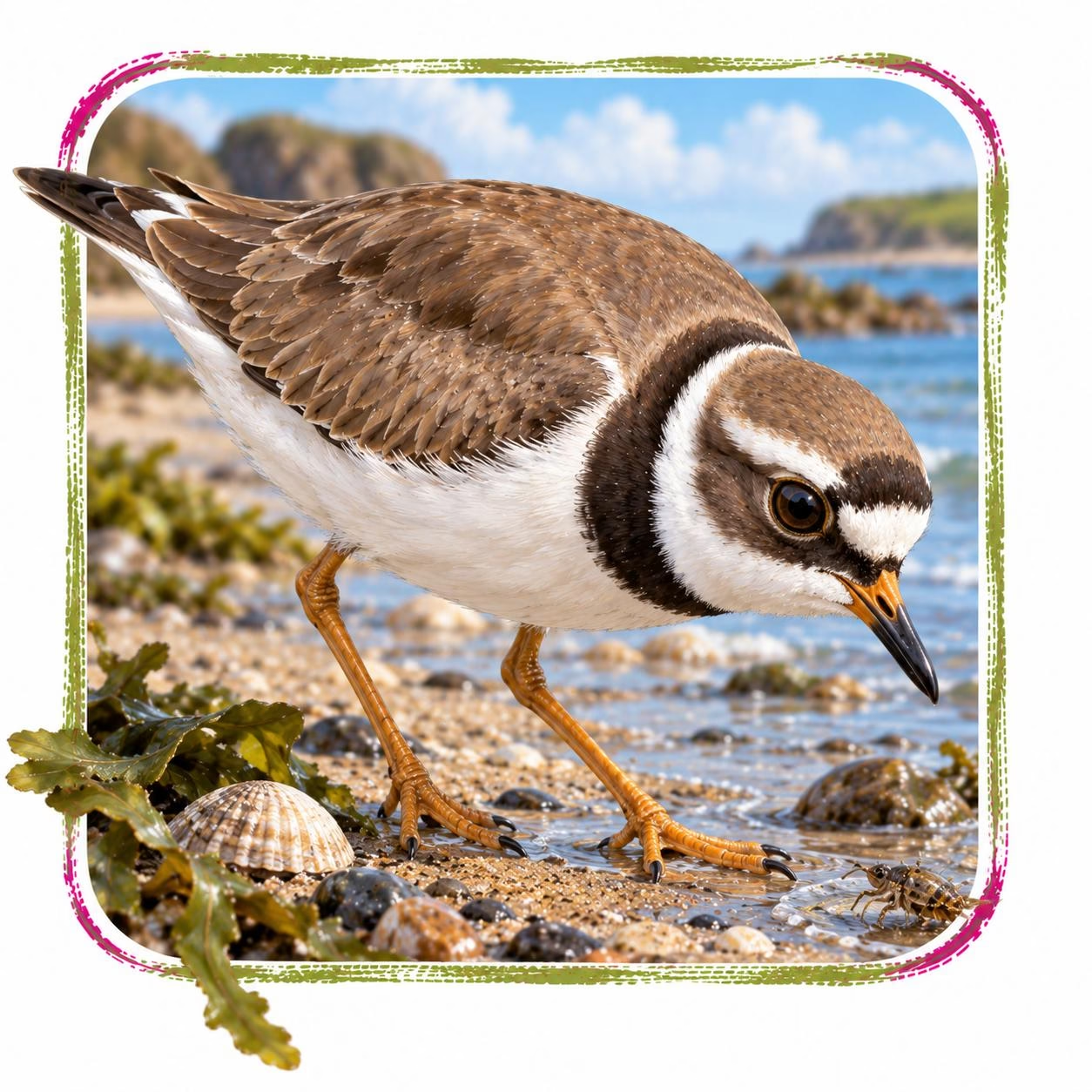
Plovers are compact shorebirds and open-ground birds with round heads, large eyes, short necks, and short sturdy bills. Instead of probing deeply like many sandpipers, they often run a few steps, stop suddenly, look for movement, and peck prey from the surface. Different plovers live on beaches, mudflats, grasslands, tundra, deserts, riverbanks, and lakeshores around the world.
Quick Plover Facts
- Scientific Group: Plover and lapwing family Charadriidae
- Animal Type: Bird and shorebird
- Known For: Round head, large eyes, short bill, quick runs, and sudden stops
- Habitat: Beaches, mudflats, estuaries, lakeshores, riverbanks, tundra, grasslands, and deserts
- Range: Species occur across most of the world
- Diet: Insects, worms, spiders, crustaceans, mollusks, and other small invertebrates
- Young: Precocial chicks that walk and feed soon after hatching
- Conservation: Varies by species; disturbance and habitat loss threaten some plovers
What You’ll Learn
Explore 10 lively plover facts for kids about shore running, short bills, feeding, camouflage, migration, and nesting, with a quiz, glossary, and activity
Simple explanations make them fun for children, families, teachers, and young bird fans.
10 Fun Plover Facts for Kids
1. Plover Is a Group Name
Plovers are members of the bird family Charadriidae, which also includes lapwings and dotterels. Species vary in size, markings, habitat, migration, and conservation status.
Kid Decode: “Plover” opens a whole family album of quick-footed birds.
2. Short Bills Pick Food From the Surface
A plover’s bill is usually shorter and stouter than the long probing bill of many sandpipers. Plovers rely heavily on sight and seize prey on or close to the ground.
Kid Decode: The big eyes spot lunch, and the short bill grabs it.
3. They Use a Run-Stop-Peck Method
Many plovers dash forward, freeze to scan or listen, peck at a worm or insect, and then race again. The repeated pattern makes a feeding bird look wound up like a tiny toy.
Kid Decode: Run, stop, look, peck—then repeat across the sand.
4. Some Make Prey Move
Certain plovers tap or tremble one foot against wet soil or sand. The vibration may cause hidden worms and other invertebrates to move, making them easier to detect.
Kid Decode: A little foot dance can make underground dinner reveal itself.
5. Not Every Plover Lives by the Sea
Many species use ocean beaches and tidal flats, but others breed or feed on prairies, farm fields, tundra, deserts, river gravel, and inland lake shores.
Kid Decode: A shorebird family can include birds that live far from an ocean.
6. Some Plovers Migrate Vast Distances
Golden-plovers and other migratory species travel between northern breeding grounds and distant wintering regions. They store energy before departure and navigate across continents and oceans.
Kid Decode: Those small wings can carry a plover between different seasons of the world.
7. Their Nest May Be a Simple Scrape
Many plovers nest on the ground in a shallow depression lined lightly with pebbles, shells, grass, or leaves. Speckled eggs blend with the surrounding beach, gravel, or soil.
Kid Decode: The nest can look like a patch of ground because hiding is its main defense.
8. Chicks Walk Soon After Hatching
Plover chicks are precocial: they hatch covered in down, leave the nest quickly, and peck up much of their own food. Parents still brood, warn, guide, and defend them.
Kid Decode: A fluff-ball on very long legs begins exploring almost immediately.
9. Parents Can Perform Distraction Displays
Some species pretend to have an injured wing and move away from the nest when a predator approaches. Once the danger follows far enough, the adult flies off and circles back.
Kid Decode: The dramatic “broken wing” can be a clever rescue performance.
10. Beach Nests Need Space
Eggs and chicks are difficult to see and can be harmed by people, vehicles, loose dogs, flooding, predators, and coastal development. Fenced nesting zones and generous viewing distances help threatened species recover.
Kid Decode: Giving an empty-looking patch of beach space may save a hidden family.
The Weirdest Plover Fact
Some plovers make worms betray their hiding places by rapidly trembling one foot on the ground. Scientists think the vibrations imitate rain or disturb buried prey, turning a tiny bird’s foot into a food-finding tool.
Try This Plover Activity
Try the Plover Feeding Pattern
Scatter paper circles representing insects across a clean floor or outdoor mat. Move like a feeding plover: take three quick steps, stop completely, scan, and collect only the closest circle with a clothespin “bill.” Compare this visual method with a paper sandpiper’s imaginary long bill probing hidden cups. Finish by drawing a wide safety boundary around a camouflaged scrape nest.
Quick Plover Quiz
- What feeding pattern do many plovers use? Answer: Run, stop, look, and peck.
- Do all plovers live beside the ocean? Answer: No.
- What is a scrape nest? Answer: A shallow ground depression used as a nest.
- What does precocial mean? Answer: Chicks hatch well developed and can walk and feed soon afterward.
- How can visitors protect nesting plovers? Answer: Respect fences, keep far away, control dogs, and stay out of marked nesting areas.
Mini Glossary
- Shorebird: A bird adapted to feeding along shores, wetlands, or open ground.
- Invertebrate: An animal without a backbone, such as an insect, worm, or crab.
- Scrape Nest: A shallow ground hollow used to hold eggs.
- Precocial: Able to move and function soon after hatching.
- Migration: Regular seasonal travel between different regions.
 Yellow-Eyed Penguin Facts for Kids
 Bristletail Facts for Kids
 Condor Facts for Kids
 Metriorhynchus Facts for Kids
More Animal Facts for Kids
Visit the full animal facts library or explore a focused animal group.
More Extinct Animal Facts for Kids
Discover dinosaurs, Ice Age giants, prehistoric sea creatures, recently extinct species, and other animals from the past.
Fact check note: Fact checked against Cornell Lab of Ornithology’s Charadriidae taxonomy and species accounts; BirdLife International plover assessments; U.S. Fish and Wildlife Service piping plover resources; Audubon field guides; and authoritative shorebird biology references. Family identity, short-bill feeding, run-stop-peck behavior, foot trembling, habitat diversity, migration, scrape nests, precocial chicks, distraction displays, and nesting threats were cross-checked. Conservation status is kept species-specific rather than assigned to all plovers.

Plover in its natural Beaches, mudflats, estuaries, riverbanks, lakeshores, tundra, grasslands, farm fields, deserts, and gravel flats habitat