
Leopard Seal Facts for Kids
The Leopard Seal, Hydrurga leptonyx, is a large solitary true seal of the Antarctic pack ice and Southern Ocean. It has a long muscular body, powerful front flippers, a broad reptile-like head, enormous jaws, and dark spots across a pale underside. Females are generally larger than males. Leopard Seals are unusual predators because the same mouth can seize penguins, fish, squid, and young seals while interlocking back teeth strain tiny krill from seawater. The species is currently assessed as Least Concern, but its abundance is difficult to measure across moving pack ice.
Quick Leopard Seal Facts
- Animal Type: Mammal
- Group: True or earless seal in the family Phocidae and sole species of Hydrurga
- Known For: Spotted coat, long body, huge jaws, large foreflippers, krill-filtering postcanine teeth, penguin hunting, solitary life, underwater songs, and pack-ice breeding
- Habitat: Antarctic pack ice, coastal waters, ice edges, open Southern Ocean, and occasional sub-Antarctic or southern temperate coasts
- Diet: Antarctic krill, fish, squid, penguins, seabirds, and pups of other seals, with large individual and seasonal differences
What You’ll Learn
Learn 10 powerful leopard seal facts for kids about spotted coats, strong jaws, swimming, Antarctic hunting, and icy habitats, plus a quiz, glossary, and activity
These simple facts are written for kids, parents, teachers, and curious young minds.
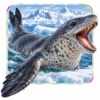
10 Fun Leopard Seal Facts for Kids
1. It Is a True Seal
Leopard Seals belong to Phocidae and lack the visible ear flaps of sea lions and fur seals. On ice they move with body flexing because the rear flippers cannot rotate forward beneath them.
Kid Decode: The sleek swimmer trades walking feet and ear flaps for a more streamlined body.
2. Females Are Usually Larger Than Males
Average females are longer and heavier, reversing the pattern seen in many seals where males dominate by size. Large females can exceed 3.5 metres and weigh more than 500 kilograms.
Kid Decode: In this Antarctic predator, the bigger silhouette is usually female.
3. The Head Looks Almost Reptilian
A long broad skull, powerful neck, wide jaws, and small dark eyes create a snake-like profile. The mouth can open extremely widely around large prey.
Kid Decode: The seal’s face appears borrowed from a marine dragon.
4. Foreflippers Power Fast Maneuvers
Long broad front flippers help accelerate, steer, roll, and turn rapidly while pursuing prey. This swimming style differs from many true seals that rely more strongly on rear-body movement.
Kid Decode: Two muscular underwater wings turn a long body into a torpedo.
5. One Tooth Set Handles Tiny and Large Prey
Canines and incisors seize large animals, while multi-cusped postcanines interlock into a sieve. The seal can expel seawater and retain krill between the teeth.
Kid Decode: The mouth switches from hunting trap to living pasta strainer.
6. Krill Can Be a Major Food
Despite its fierce reputation, Antarctic krill forms a substantial part of the species’ overall diet. Fish and squid are also widespread foods, and some individuals specialize in birds or young seals.
Kid Decode: An apex predator can spend dinner filtering animals smaller than a paper clip.
7. Individuals Develop Different Hunting Styles
Some Leopard Seals repeatedly patrol penguin entry points, others target seal pups, and many focus on krill, fish, or squid. Age, experience, season, and location shape the menu.
Kid Decode: Each solitary hunter writes a different Antarctic cookbook.
8. Males Sing Beneath the Ice
During the breeding season, males produce repeated underwater trills, hoots, and descending calls for hours. Recent research found structured call sequences with measurable predictability.
Kid Decode: A hidden seal performs a long solo concert under the frozen stage.
9. One Pup Is Born on Pack Ice
A mature female gives birth to a single pup on floating sea ice during spring, commonly in November. Births are difficult to observe because the animals are scattered across moving ice.
Kid Decode: One pale pup begins life on a nursery floor that drifts through the Southern Ocean.
10. Population Counts Remain Uncertain
Leopard Seals are widespread and classified as Least Concern, but pack ice moves, animals are dispersed, and surveys are expensive. Old estimates should not be mistaken for a modern head count.
Kid Decode: The species can be common enough to persist yet scattered enough to remain statistically ghostlike.
The Weirdest Leopard Seal Fact
Leopard Seal teeth work as both weapons and filters: huge front canines seize large prey, while interlocking multi-cusped back teeth strain tiny krill from seawater.
Try This Leopard Seal Activity
Leopard Seal Dual-Feeding Activity
Draw a Leopard Seal at the Antarctic ice edge. Add a long spotted body, pale belly, broad head, huge jaws, long canines, interlocking multi-cusped back teeth, large front flippers, no external ears, krill filter feeding, fish and squid hunting, a careful penguin-hunting sequence, an individual diet chart, a male producing underwater trills, a female with one pup on pack ice, a wandering juvenile near a sub-Antarctic island, killer whales, and conservation panels for sea-ice change, krill fishing, entanglement, and wildlife-viewing distance.
Quick Leopard Seal Quiz
- What is the Leopard Seal’s scientific name? Answer: Hydrurga leptonyx.
- Which sex is usually larger? Answer: Females.
- How can it eat krill? Answer: Its interlocking back teeth filter krill while water escapes.
- Where is a pup usually born? Answer: On Antarctic pack ice.
- What is its current IUCN category? Answer: Least Concern.
Mini Glossary
- Phocid: A true seal without external ear flaps.
- Pack Ice: Floating sea ice made from many moving floes.
- Postcanine: A tooth positioned behind the canine teeth.
- Filter Feeding: Separating tiny food from water with specialized structures.
- Apex Predator: A predator near the top of its food web.
 Asian Hornet Facts for Kids
 American Goldfinch Facts for Kids
 Mudskipper Facts for Kids
 Deinotherium Facts for Kids
More Animal Facts for Kids
Visit the full animal facts library or explore a focused animal group.
More Extinct Animal Facts for Kids
Discover dinosaurs, Ice Age giants, prehistoric sea creatures, recently extinct species, and other animals from the past.
Fact check note: Fact checked with the Australian Antarctic Program’s Leopard Seal species profile, the current IUCN pre-publication assessment retaining Least Concern status, New Zealand Department of Conservation resources, and peer-reviewed studies of phocid feeding anatomy, krill filtration, individual dietary specialization, penguin and seal-pup predation, pack-ice birth, sexual size differences, wandering movements, underwater breeding calls, and the patterned predictability of Leopard Seal songs.

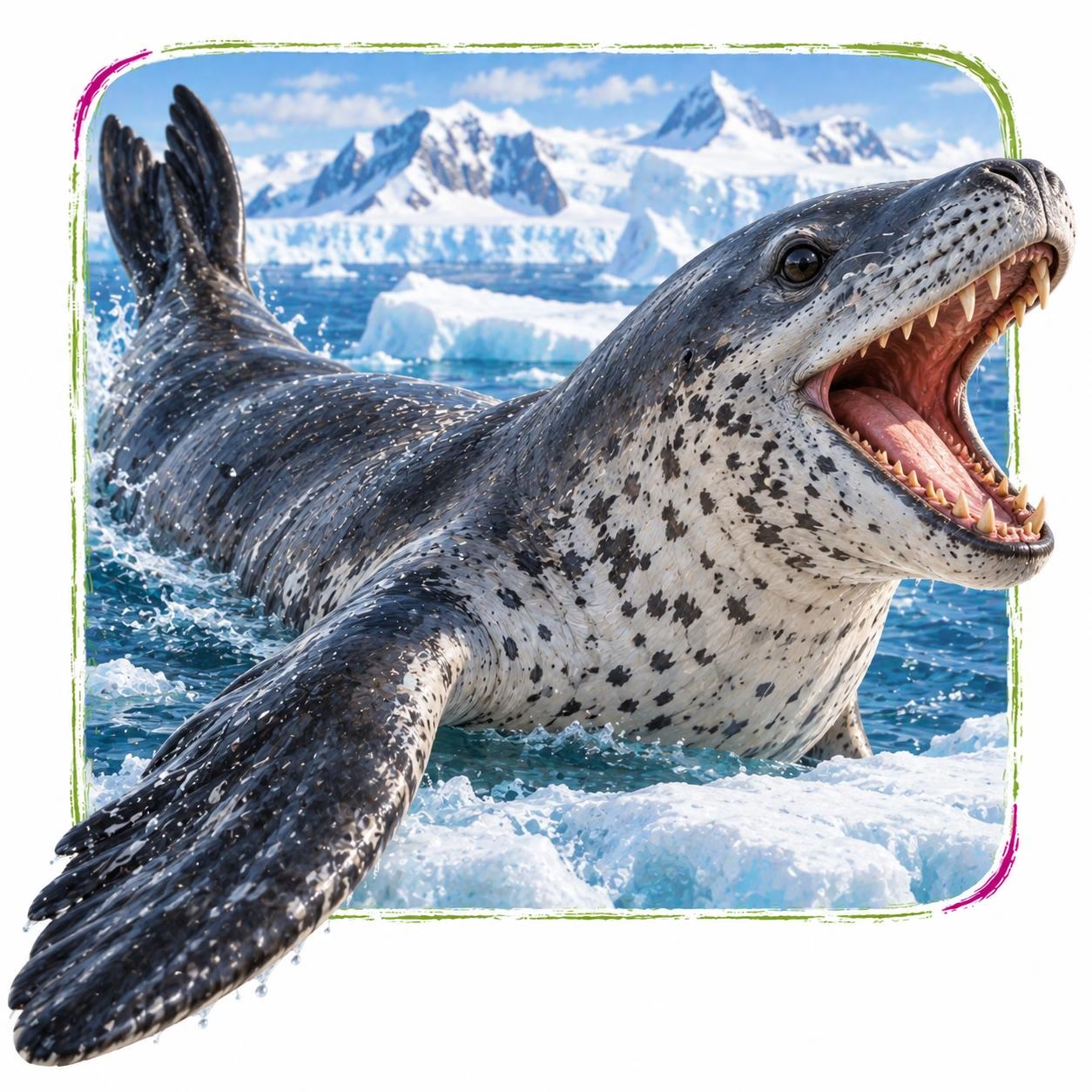
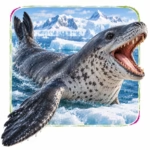
Leopard Seal in its natural Antarctic pack ice, coastal waters, ice edges, and the open Southern Ocean, with occasional movements to sub-Antarctic islands and southern temperate coasts habitat