
Limpet Facts for Kids
Limpets are cap-shaped sea snails that cling tightly to rocks and other hard surfaces. This page focuses on true limpets in Patellogastropoda, an accepted major group of marine gastropods. The word limpet is also used for unrelated snails that independently evolved similar cone-shaped shells, including keyhole limpets and air-breathing false limpets. True limpets usually have one low conical shell, a broad muscular foot, a scraping ribbon called a radula, and adaptations for surviving waves, drying air, changing temperatures, and hungry predators.
Quick Limpet Facts
- Animal Type: Invertebrate
- Group: True limpets in Patellogastropoda, within the gastropod mollusks
- Known For: Cone-shaped shells, powerful muscular feet, tight clamping, home scars, algae grazing, mineral-reinforced radula teeth, tidal survival, and strong effects on rocky-shore ecosystems
- Habitat: Rocky shores, tide pools, wave-swept cliffs, reefs, kelp-covered rocks, deep seafloors, and hydrothermal-vent habitats
- Diet: Mainly microscopic algae, seaweed films, bacteria, and organic material scraped from surfaces, with species-specific exceptions
What You’ll Learn
Discover 10 sticky limpet facts for kids about cone-shaped shells, powerful feet, grazing, waves, and rocky shore life, with a quiz, glossary, and activity
Clear explanations make them fun for children, families, teachers, and little fact-hunters.
10 Fun Limpet Facts for Kids
1. Limpet Is a Shape as Well as a Name
True limpets belong to Patellogastropoda, but other sea snails independently evolved similar cap-shaped shells. The streamlined cone handles waves well, so evolution produced it more than once.
Kid Decode: Several snail families discovered the same rocky-shore helmet without sharing the same recent ancestor.
2. The Shell Is an Uncoiled Protective Cap
Unlike a familiar garden snail, a true limpet has a low cone rather than an obvious spiral tower. Ribs, thickness, height, and color vary with species, habitat, growth, and wave exposure.
Kid Decode: The snail carries one sturdy roof with no visible staircase curl.
3. A Muscular Foot Creates a Powerful Grip
The broad foot presses against rock while mucus and close shell contact improve adhesion. Limpets can move when conditions are safe, then clamp tightly during waves, drying air, or predator attacks.
Kid Decode: The soft underside turns into a living suction-free climbing shoe.
4. Some Return to a Custom-Fitted Home Scar
Repeated resting and shell growth can create a shallow spot matching one individual’s shell edge. Returning to the same scar improves the seal and helps reduce water loss at low tide.
Kid Decode: One rock becomes a tailor-made bed shaped around a single shell.
5. The Radula Works Like a Moving File
A radula is a flexible ribbon carrying many rows of microscopic teeth. Muscles pull it across rock to remove algae, bacteria, and organic films before worn teeth are replaced.
Kid Decode: The mouth contains a self-renewing conveyor belt of tiny rock scrapers.
6. The Teeth Contain an Iron-Rich Mineral
Goethite fibers reinforce the chitin-based teeth of studied limpets. Tests on tiny tooth material found extreme tensile strength, helping the radula scrape hard surfaces without failing immediately.
Kid Decode: A sea snail grows microscopic mineral tools tougher than many famous natural fibers.
7. Tides Divide Rest Time and Feeding Time
Many shore limpets graze while covered by water or kept damp, then stop and clamp during exposure. Timing differs with waves, temperature, predators, species, and position on the shore.
Kid Decode: The ocean’s rise and fall acts as the limpet’s daily opening-hours sign.
8. Grazing Reshapes the Rocky Shore
By removing algae and films, limpets alter which plants and animals can settle or grow. Heavy grazing can keep rock open, while low grazing may allow thicker seaweed cover.
Kid Decode: A mouth smaller than a fingernail can redraw an entire tide-pool neighborhood.
9. Young Limpets Begin as Tiny Drifters
Many species release eggs and sperm into seawater, producing microscopic larvae that swim or drift before settling. Development differs among groups and environmental conditions.
Kid Decode: The rock-clinging adult begins life as a speck travelling with the plankton.
10. Clamping Does Not Make Them Invincible
Sea stars, crabs, fish, birds, mammals, and people can prey on limpets. Heat, drying, acidifying water, pollution, trampling, and harvesting also threaten particular populations.
Kid Decode: The strongest grip on the beach still cannot solve every ocean problem.
The Weirdest Limpet Fact
Microscopic teeth on a limpet’s radula contain iron-rich mineral fibers and have measured tensile strengths greater than spider silk in laboratory tests.
Try This Limpet Activity
Limpet Rocky-Shore Engineering Activity
Draw a true limpet on a wave-swept rock. Add one low cone shell, growth rings, a broad foot sealing against a home scar, mucus, mantle, gill structures, tentacles, eyes near the tentacle bases where appropriate, a radula ribbon with rows of iron-reinforced teeth, algae-scraping tracks, high-tide feeding, low-tide clamping, eggs and swimming larvae, sea stars and shorebirds as predators, and a comparison with keyhole and false limpets that evolved similar shell shapes separately.
Quick Limpet Quiz
- What kind of animal is a true limpet? Answer: A marine gastropod mollusk, or sea snail.
- What helps a limpet cling to rock? Answer: Its broad muscular foot, mucus, and shell edge.
- What does a radula do? Answer: It scrapes algae and other food from surfaces.
- What is a home scar? Answer: A spot on the rock that fits the limpet’s shell closely.
- Are all animals called limpets close relatives? Answer: No, the cap-shaped form evolved in several gastropod groups.
Mini Glossary
- Gastropod: A mollusk in the group containing snails and slugs.
- Radula: A ribbon covered with tiny teeth used to scrape or cut food.
- Home Scar: A fitted resting spot repeatedly used by a limpet.
- Intertidal Zone: Shoreline covered at high tide and exposed at low tide.
- Desiccation: Dangerous drying and loss of body water.
 Leopard Facts for Kids
 American Kestrel Facts for Kids
 Sea Butterfly Facts for Kids
 Cave Lion Facts for Kids
More Animal Facts for Kids
Visit the full animal facts library or explore a focused animal group.
More Extinct Animal Facts for Kids
Discover dinosaurs, Ice Age giants, prehistoric sea creatures, recently extinct species, and other animals from the past.
Fact check note: Fact checked with MolluscaBase and the World Register of Marine Species for current Patellogastropoda classification, peer-reviewed phylogenetic research on true limpets, Royal Society research measuring extreme tensile strength in mineral-reinforced limpet teeth, and marine-biology studies of pedal adhesion, mucus, home scars, radula grazing, spawning, larvae, rocky-shore ecosystem effects, deep-sea forms, and climate-related threats.

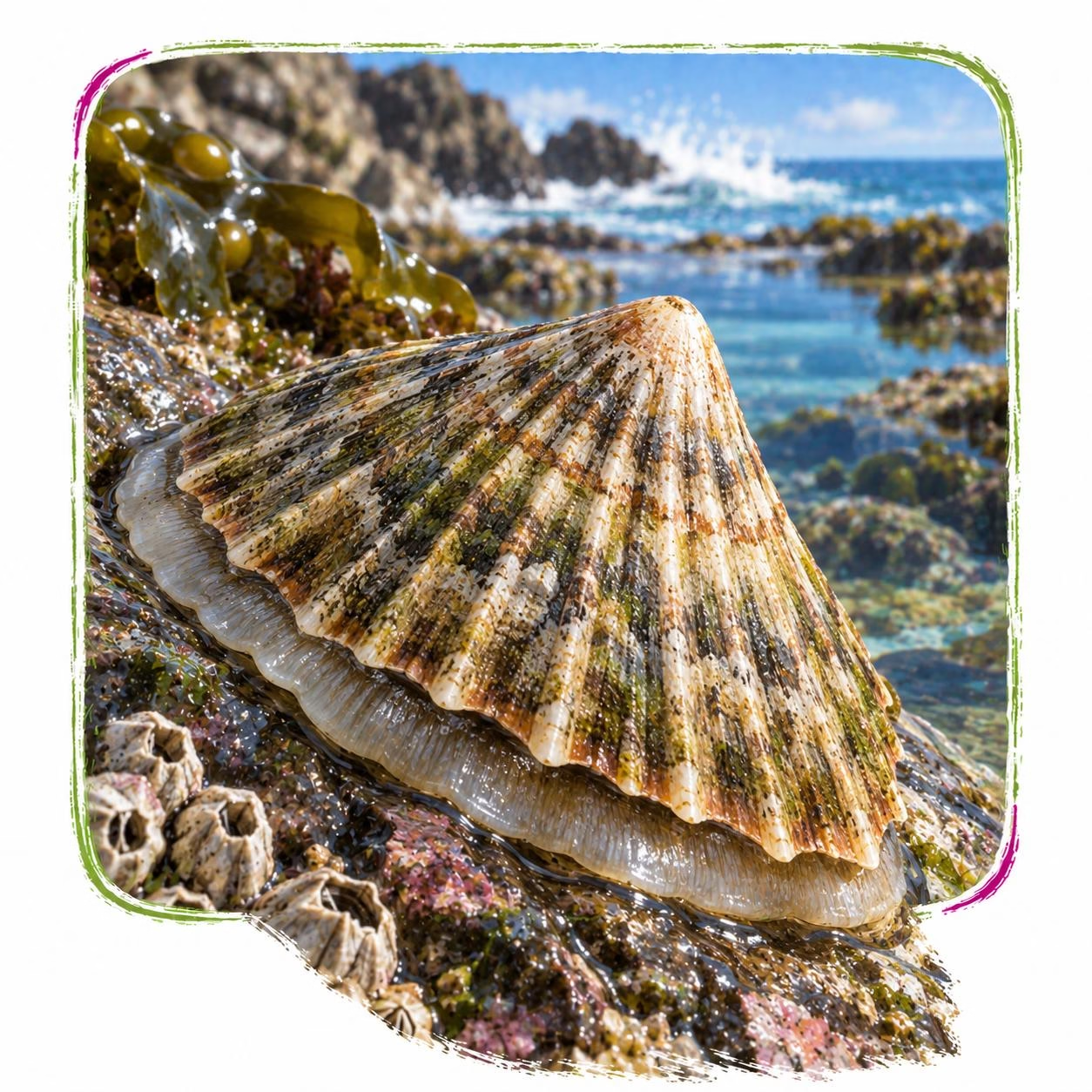
Limpet in its natural Rocky shores, tide pools, wave-swept cliffs, reefs, kelp-covered rocks, deep seafloors, and hydrothermal-vent habitats worldwide habitat