
Lungfish Facts for Kids
Lungfish are ancient freshwater lobe-finned fishes in the group Dipnoi. Only six living species remain: four African lungfishes in Protopterus, one South American Lungfish, Lepidosiren paradoxa, and one Australian Lungfish, Neoceratodus forsteri. All possess true lungs as well as gills, but they use them differently. African and South American species are eel-like obligate air breathers with paired lungs, while the robust Australian species has one lung, stronger gills, paddle-like fins, and cannot survive a completely dry season by aestivating.
Quick Lungfish Facts
- Animal Type: Fish
- Group: Six living lobe-finned fishes in Dipnoi
- Known For: True lungs, air gulping, lobe-supported fins, tooth plates, ancient ancestry, drought aestivation in some species, external gills in young African forms, male nest care in some groups, and enormous genomes
- Habitat: Freshwater rivers, floodplains, swamps, lakes, marshes, seasonal pools, and slow-flowing waterways in Africa, South America, and Australia
- Diet: Snails, clams, crustaceans, insect larvae, worms, fish, frogs, plants, fruit, algae, and other foods depending on species and age
What You’ll Learn
Learn 10 remarkable lungfish facts for kids about breathing air, fleshy fins, freshwater habitats, survival in dry seasons, and living species, with a quiz, glossary, and activity
Simple explanations make them great for children, families, teachers, and young fish fans.
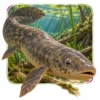
10 Fun Lungfish Facts for Kids
1. Only Six Living Species Remain
Four species live in Africa, one in South America, and one in Australia. Their extinct relatives were once much more diverse and widespread across ancient continents.
Kid Decode: A huge prehistoric fish dynasty has narrowed to six living branches.
2. They Are the Closest Living Relatives of Tetrapods
Genomic studies place lungfish closer to amphibians, reptiles, birds, and mammals than coelacanths are. Lungfish and tetrapods share an ancestor but no living lungfish is becoming a land animal.
Kid Decode: Our branch and the lungfish branch meet deep in the vertebrate family tree.
3. Fleshy Fins Contain Internal Bones
Lobe fins include muscles and a strong internal skeleton unlike the thin rays supporting most fish fins. The Australian species has broad paddles, while African and South American species have slender threadlike fins.
Kid Decode: The fin blueprint ranges from sturdy paddles to living spaghetti strands.
4. All Have Lungs but Use Them Differently
African and South American lungfishes must breathe air and have paired lungs. The Australian Lungfish has one lung and usually relies more heavily on gills, surfacing when water oxygen becomes low or activity rises.
Kid Decode: One fish group built both emergency lungs and must-use lungs.
5. Air Breathing Requires a Surface Trip
A lungfish rises, exhales old air, gulps fresh air, and returns underwater. Preventing obligate air-breathing species from reaching the surface can cause drowning even though they are fish.
Kid Decode: A fish can drown underwater when its most important breath waits above the surface.
6. African Species Sleep Through Drought
When seasonal water disappears, several African lungfishes burrow into mud and form protective mucus cocoons. Metabolism slows dramatically while a small passage keeps the mouth connected to air.
Kid Decode: The fish turns a dried pond floor into a sealed bedroom with one breathing straw.
7. The Australian Species Cannot Aestivate
Neoceratodus tolerates warm, stagnant, low-oxygen water by breathing air, but it does not make a drought cocoon and cannot survive complete drying. Its rivers must retain water.
Kid Decode: The oldest-looking lungfish keeps an air backup but still needs a living river.
8. Tooth Plates Crush Hard Food
Instead of ordinary rows of separate teeth, lungfish jaws carry broad ridged plates. These crush snails, clams, crustaceans, plants, and other food with powerful jaw muscles.
Kid Decode: The mouth replaces a picket fence of teeth with four built-in grinding stones.
9. Parents and Eggs Differ Among Continents
Australian Lungfish scatter sticky eggs among water plants and provide no known parental care. Males of African and South American species guard nests, and African larvae carry feathery external gills.
Kid Decode: One family leaves eggs in an underwater garden while another posts Dad at the nursery door.
10. Their Genomes Are Enormous
Lungfish DNA contains vast amounts of repeated sequence. The South American species has about 91 billion base pairs, roughly 30 times the human total and the largest known animal genome.
Kid Decode: Inside one fish cell sits enough DNA to stretch across a room many times.
The Weirdest Lungfish Fact
The South American Lungfish has the largest known animal genome, containing about 91 billion DNA base pairs, roughly 30 times the size of the human genome.
Try This Lungfish Activity
Meet the Six Lungfish Activity
Draw the Australian Lungfish, South American Lungfish, and four African Protopterus species on a three-continent map. Add the Australian species’ stout scaled body, paddle fins, one lung, strong gills, plant-covered spawning habitat, and no drought cocoon. Add eel-like African and South American bodies, threadlike fins, paired lungs, obligatory surface breaths, an African mucus cocoon and aestivation chamber, tooth plates crushing snails, male-guarded nests in species where documented, larvae with external gills, and a genome comparison showing 91 billion DNA base pairs in the South American species.
Quick Lungfish Quiz
- How many living lungfish species are recognized? Answer: Six.
- On which continents do they live? Answer: Africa, South America, and Australia.
- Are lungfish the ancestors of modern land vertebrates? Answer: No, they are the closest living relatives of tetrapods and share an ancient common ancestor.
- Which living lungfish has one lung? Answer: The Australian Lungfish.
- What is aestivation? Answer: A dormant state that helps an animal survive hot or dry conditions.
Mini Glossary
- Dipnoi: The scientific group containing living and extinct lungfishes.
- Lobe-Finned: Having fleshy fins supported by internal bones and muscles.
- Obligate Air Breather: An animal that must reach air to survive.
- Aestivation: Dormancy during hot or dry conditions.
- Tooth Plate: A broad crushing dental structure formed from fused teeth or tooth material.
 Giant Clam Facts for Kids
 Olive Baboon Facts for Kids
 Roan Antelope Facts for Kids
 Short-Faced Bear Facts for Kids
More Animal Facts for Kids
Visit the full animal facts library or explore a focused animal group.
More Extinct Animal Facts for Kids
Discover dinosaurs, Ice Age giants, prehistoric sea creatures, recently extinct species, and other animals from the past.
Fact check note: Fact checked with FishBase species listings confirming six living lungfish species, Australian Museum and Australian government resources for Neoceratodus anatomy, air breathing, habitat, reproduction, and Endangered or Vulnerable legal status, and peer-reviewed phylogenomic research showing lungfish as the closest living relatives of tetrapods. Additional research covered paired versus single lungs, obligate versus facultative air breathing, African aestivation, tooth plates, nest care, larval external gills, and the approximately 91-billion-base-pair South American Lungfish genome reported in 2024.

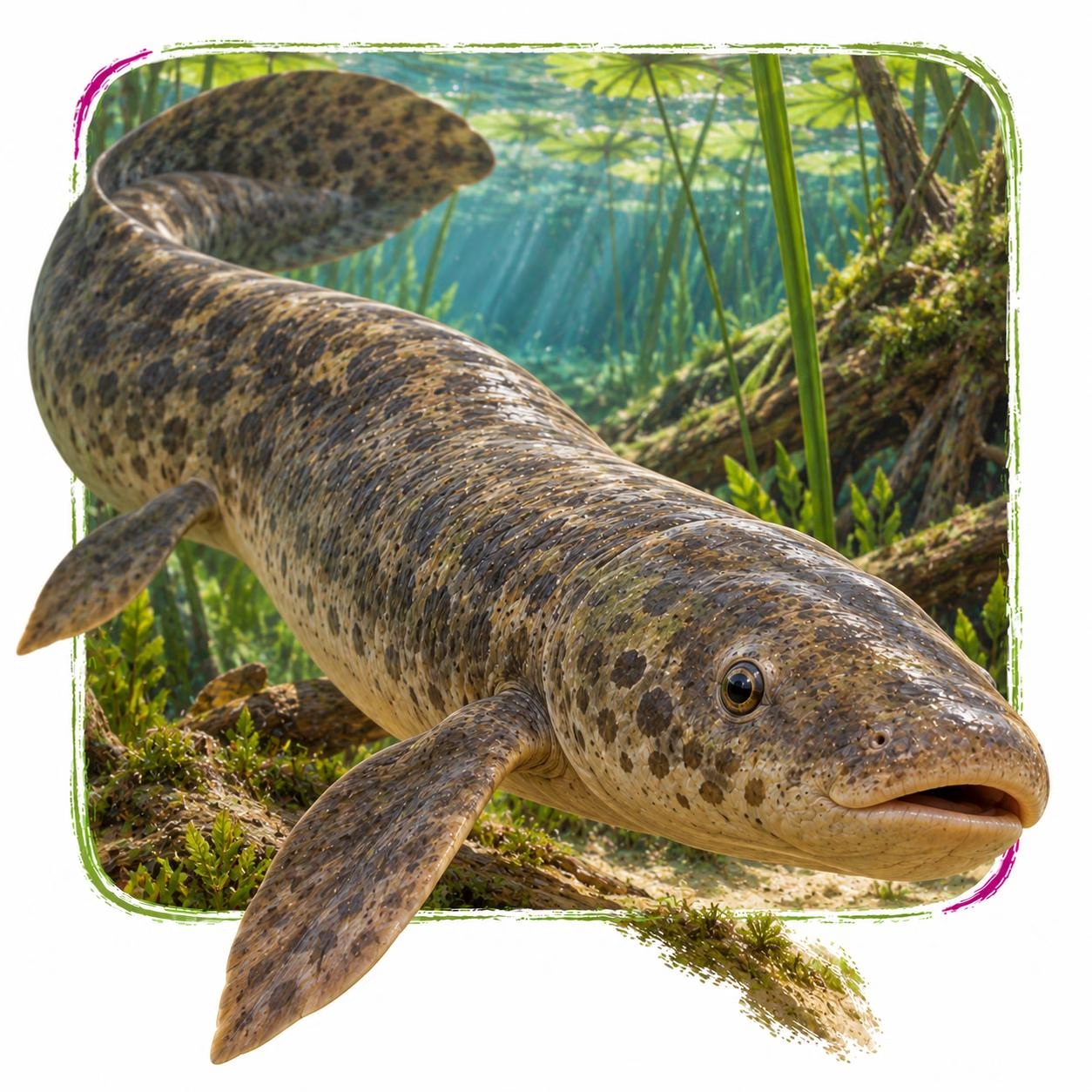
Lungfish in its natural Freshwater rivers, floodplains, swamps, lakes, marshes, seasonal pools, and slow-flowing waterways in Africa, South America, and southeastern Australia habitat