
Mako Shark Facts for Kids
Mako sharks are sleek open-ocean predators in the mackerel shark family. There are two living species: the shortfin mako, Isurus oxyrinchus, and the less familiar longfin mako, Isurus paucus. The shortfin mako is famous as the fastest known shark, while the longfin mako has much longer pectoral fins and is adapted for a somewhat slower cruising lifestyle. Both species face serious pressure from fishing and accidental capture.
Quick Mako Shark Facts
- Animal Type: Fish
- Group: Two mako species in the genus Isurus and mackerel shark family Lamnidae
- Known For: Shortfin speed, pointed snouts, powerful tails, open-ocean travel, and live birth
- Habitat: Tropical and temperate open oceans around the world
- Diet: Fish, squid, and other marine animals
What You’ll Learn
Discover 10 speedy mako shark facts for kids about streamlined bodies, sharp teeth, fast swimming, hunting, and open-ocean life, plus a quiz, glossary, and activity
These facts are explained simply for kids, parents, teachers, and curious little fact-finders.
10 Fun Mako Shark Facts for Kids
1. There Are Two Living Mako Species
The shortfin mako and longfin mako are separate species. Shortfins have relatively shorter pectoral fins and a paler underside around the snout, while longfins have much longer fins, larger eyes, and darker coloring beneath the snout.
Kid Decode: The mako family has a speedy short-fin model and a long-winged deep-water cousin.
2. Shortfin Makos Are the Fastest Known Sharks
Shortfin makos have been measured swimming rapidly and can produce remarkable bursts of speed. Exact maximum-speed claims vary, so figures such as 60 or 90 miles per hour should not be treated as ordinary, proven cruising speeds.
Kid Decode: This shark is a sea-going sprinter, but even sprinters collect exaggerated trophies.
3. Their Bodies Are Built Like Torpedoes
A pointed snout, streamlined body, narrow tail base, and crescent-shaped tail reduce drag and help a mako accelerate through open water. Large muscles power the tail from side to side.
Kid Decode: Pointy nose plus crescent tail equals an ocean torpedo powered by muscle.
4. Parts of Their Bodies Stay Warmer Than the Water
Special blood-vessel networks called countercurrent heat exchangers help makos retain heat made by their swimming muscles. Warmer muscles, eyes, and brain can support fast movement and effective hunting in cooler water.
Kid Decode: A mako carries a clever internal heat recycler beneath its blue skin.
5. Makos Travel Across Huge Ocean Areas
Shortfin makos are highly migratory and may cross thousands of kilometres while following suitable temperatures, prey, and seasonal ocean conditions. Tagged individuals have shown that national borders mean little to an ocean shark.
Kid Decode: A mako’s neighborhood can stretch across a large piece of an ocean map.
6. They Hunt Fast-Moving Prey
Makos eat fish such as tuna, mackerel, herring, and billfish as well as squid and other prey. Their exact menu changes with size, location, and which animals are available.
Kid Decode: To catch a speedy dinner, it helps to be a speedy shark.
7. Their Teeth Can Show When the Mouth Is Closed
Long, narrow, pointed teeth angle outward near the front of a shortfin mako’s jaws. These teeth help grip slippery fish and may remain visible even when the shark closes its mouth.
Kid Decode: A mako wears some of its fish-grabbing teeth outside the closed-mouth curtain.
8. Mako Pups Are Born Alive
Mako embryos develop inside their mother without a placenta. During development they receive nourishment by eating unfertilized eggs produced inside the uterus, and the surviving pups are born as well-developed young sharks.
Kid Decode: Before birth, a mako pup’s first meals are eggs inside its mother’s body.
9. They Grow and Reproduce Slowly
Shortfin mako females mature late, with some populations reaching maturity at around 20 years. Pregnancy lasts roughly 15 to 18 months, and females do not produce a litter every year, making depleted populations slow to recover.
Kid Decode: A fast shark has a surprisingly slow family calendar.
10. Fishing Is Their Greatest Threat
Both mako species are classified as Endangered by the IUCN. They are caught intentionally for meat and fins and accidentally on fishing gear set for tuna and swordfish, while their slow reproduction limits recovery.
Kid Decode: Even the fastest shark cannot always outrun a long fishing line.
The Weirdest Mako Shark Fact
Developing mako pups eat unfertilized eggs inside their mother’s uterus. This form of nourishment is called oophagy, and it helps the pups grow large before they are born.
Try This Mako Shark Activity
Mako Shark Speed-and-Shape Activity
Draw a shortfin mako and a longfin mako swimming side by side in the open ocean. Give both pointed snouts and crescent tails, but make the longfin’s pectoral fins clearly longer. Add tuna, squid, migration arrows, a warm-muscle symbol, live-born pups, and a conservation sign warning about fishing lines.
Quick Mako Shark Quiz
- How many living mako species are there? Answer: Two: the shortfin mako and longfin mako.
- Which mako is famous as the fastest known shark? Answer: The shortfin mako.
- What shape is a mako’s tail? Answer: Crescent-shaped.
- Are mako pups born from eggs laid on the seabed? Answer: No, they develop inside their mother and are born alive.
- What is a major threat to makos? Answer: Targeted fishing and accidental bycatch.
Mini Glossary
- Pelagic: Living in the open ocean rather than mainly near the seafloor or coast.
- Countercurrent Heat Exchanger: Closely arranged blood vessels that transfer heat and help parts of an animal stay warm.
- Bycatch: An animal caught accidentally while people are fishing for something else.
- Gestation: The time a young animal develops inside its mother before birth.
- Oophagy: Feeding on eggs; mako embryos eat unfertilized eggs inside the uterus.
 Banteng Facts for Kids
 Jaguar Facts for Kids
 North American Beaver Facts for Kids
 Trilobite Facts for Kids
More Animal Facts for Kids
Visit the full animal facts library or explore a focused animal group.
More Extinct Animal Facts for Kids
Discover dinosaurs, Ice Age giants, prehistoric sea creatures, recently extinct species, and other animals from the past.
Fact check note: Fact checked with NOAA Fisheries Pacific and Atlantic Shortfin Mako Shark profiles, Smithsonian Ocean’s Shortfin Mako Shark profile, the IUCN Red List assessments for Isurus oxyrinchus and Isurus paucus, and the IUCN Shark Specialist Group’s mako conservation update.

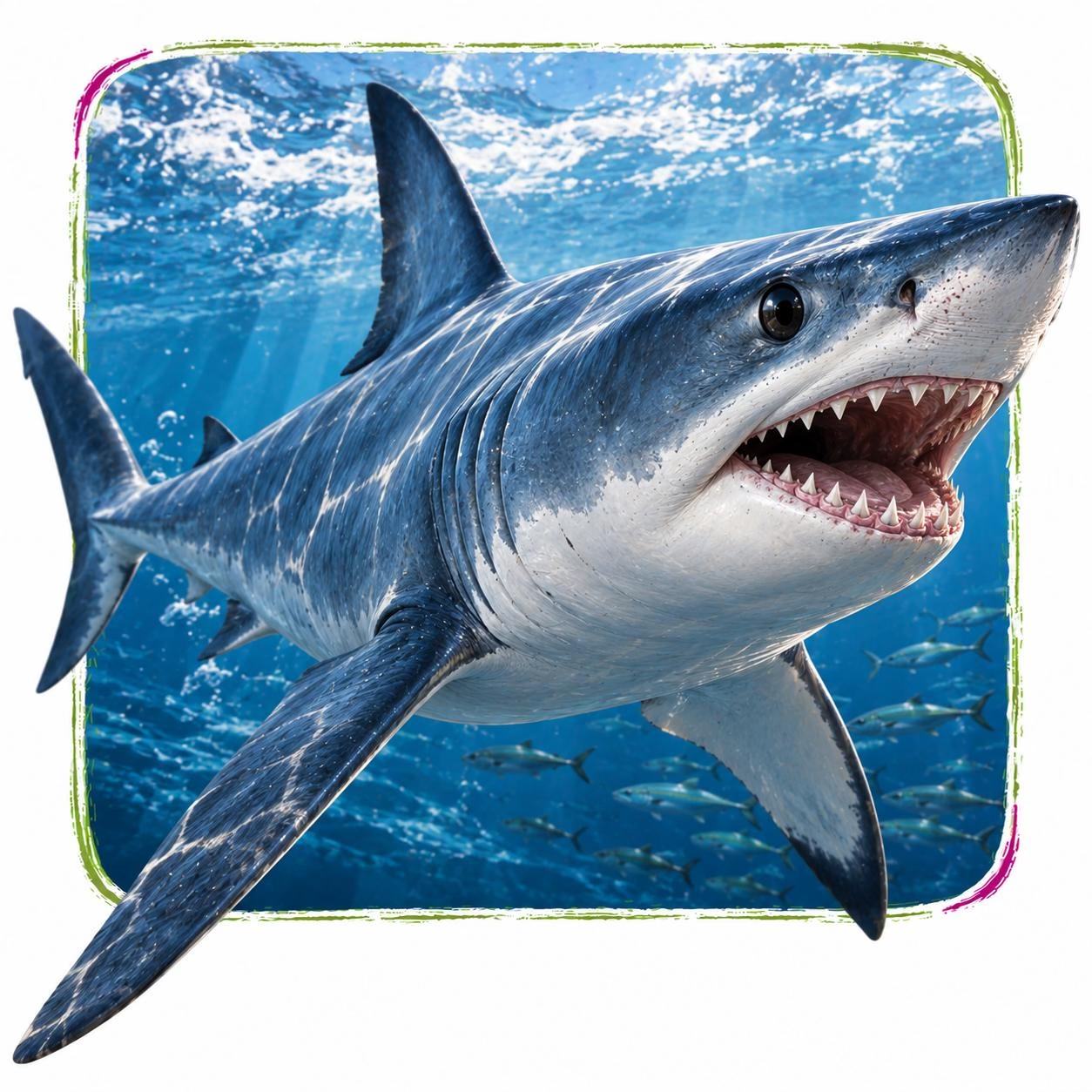
Mako Shark in its natural Tropical and temperate open oceans, offshore waters, continental-shelf edges, and deeper pelagic zones worldwide habitat