
Mockingbird Facts for Kids
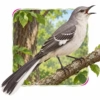
Mockingbirds are clever songbirds famous for copying the sounds of other birds and noises around them. The northern mockingbird is gray with white wing patches, a long tail, and a bold voice that can fill a yard, park, or street.
Quick Mockingbird Facts
- Animal Type: Bird
- Group: Songbird and mimic thrush family
- Known For: Mimicry, long songs, gray feathers, white wing patches, bold behavior, and open habitats
- Habitat: Gardens, parks, farms, towns, suburbs, scrublands, open woodlands, desert edges, orchards, and brushy habitats depending on species
- Diet: Insects, beetles, grasshoppers, caterpillars, spiders, berries, fruit, seeds, and other small foods depending on season
What You’ll Learn
Explore 10 clever mockingbird facts for kids about mimicry, songs, territories, nests, and backyard life, with a quiz, glossary, and activity
These facts are written simply for kids, parents, teachers, and curious young learners.
10 Fun Mockingbird Facts for Kids
1. Mockingbirds Are Birds
Mockingbirds are birds with feathers, wings, beaks, and eggs.
Kid Decode: A mockingbird is a gray little singer with a sound library in its throat.
2. Mockingbirds Are Songbirds
Mockingbirds belong to the songbird group and are known for long, varied songs.
Kid Decode: Their music can feel like a whole bird choir in one body.
3. Baby Mockingbirds Are Chicks
Baby mockingbirds are called chicks and hatch from eggs in nests.
Kid Decode: A mockingbird chick starts life as a tiny chirping request for lunch.
4. Mockingbirds Can Mimic Sounds
Mockingbirds can copy calls of other birds and sometimes human-made sounds.
Kid Decode: They are feathered copycats with excellent memory.
5. They May Sing Many Songs
A northern mockingbird can learn and repeat many song phrases.
Kid Decode: Its playlist can be longer than a playground queue.
6. Mockingbirds Have White Wing Patches
Northern mockingbirds have white patches on the wings that show clearly during flight.
Kid Decode: Those wing flashes are tiny sky signals.
7. Mockingbirds Eat Insects
Mockingbirds hunt insects on lawns, shrubs, trees, and open ground.
Kid Decode: They turn a yard into a bug-finding mission.
8. Mockingbirds Also Eat Berries
In fall and winter, mockingbirds often eat berries and fruit.
Kid Decode: Berries are their cold-weather snack jewels.
9. Mockingbirds Guard Territories
Mockingbirds can be bold when defending nests, food bushes, or territories.
Kid Decode: This small bird has big “stay away from my shrub” energy.
10. Mockingbirds Need Safe Shrubs and Trees
Mockingbirds need nesting places, insects, berries, shrubs, trees, and safe open spaces.
Kid Decode: Healthy gardens keep the mimic singers busy.
The Weirdest Mockingbird Fact
A mockingbird can copy so many sounds that one bird may seem like several birds hiding in the same tree.
Try This Mockingbird Activity
Mockingbird Drawing Activity
Draw a mockingbird singing from a garden fence. Add gray feathers, white wing patches, long tail, chicks in a shrub nest, berries, insects, musical notes, sound-copy icons, and a sunny backyard.
Quick Mockingbird Quiz
- What animal group are mockingbirds in? Answer: Birds.
- What are baby mockingbirds called? Answer: Chicks.
- What are mockingbirds famous for copying? Answer: Other bird calls and sounds.
- What color are many northern mockingbirds? Answer: Gray with white wing patches.
- What do mockingbirds eat? Answer: Insects, berries, fruit, seeds, and other small foods.
Mini Glossary
- Bird: An animal with feathers, wings, and a beak.
- Songbird: A bird known for calls or songs.
- Chick: A baby bird.
- Mimicry: Copying sounds, shapes, or behaviors.
- Territory: An area an animal uses and may defend.
 Aye-Aye Facts for Kids
 Grass Snake Facts for Kids
 Screech Owl Facts for Kids
 Wuerhosaurus Facts for Kids
More Animal Facts for Kids
Visit the full animal facts library or explore a focused animal group.
More Extinct Animal Facts for Kids
Discover dinosaurs, Ice Age giants, prehistoric sea creatures, recently extinct species, and other animals from the past.
Fact check note: Fact checked with Britannica mockingbird resources, Cornell Lab northern mockingbird resources, and trusted bird education references.

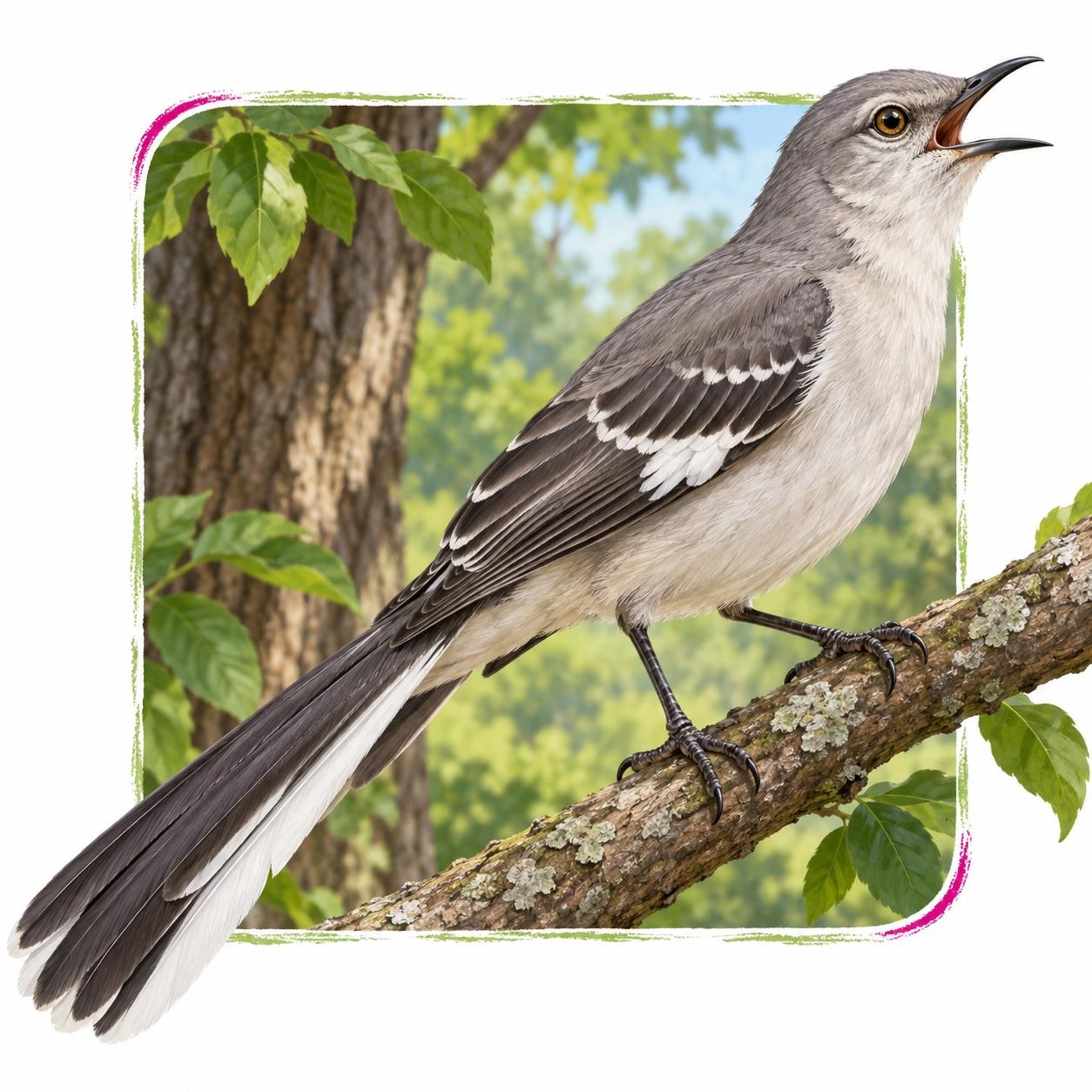
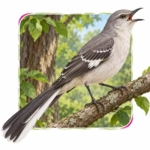
Mockingbird in its natural Forests habitat