
Moth Facts for Kids
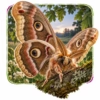
Moths are winged insects in the order Lepidoptera, the same group as butterflies. About 160,000 moth species have been described, and scientists expect many more remain unnamed. Some are tiny leaf miners, others are wider than a hand, and together they fill habitats on every continent except Antarctica.
Quick Moth Facts
- Animal group: Insect
- Order: Lepidoptera
- Known diversity: About 160,000 described species
- Range: Every continent except Antarctica
- Habitat: Forests, grasslands, deserts, wetlands, farms, gardens, and towns
- Diet: Most caterpillars eat plants; feeding adults often drink nectar or other sugary liquids
- Life cycle: Egg, caterpillar, pupa, adult
- Special feature: Wings and bodies covered with microscopic scales
- Activity: Many are nocturnal, but many others fly by day or at twilight
What You’ll Learn
Learn 10 amazing moth facts for kids about feathery antennae, scaled wings, caterpillars, pollination, camouflage, and even bat-jamming sounds, plus a quiz, glossary, and activity
These simple facts are written for kids, parents, teachers, and curious young minds.
10 Fun Moth Facts for Kids
1. Far More Than Brown Night Fliers
Moths make up the great majority of Lepidoptera species and come in nearly every color and pattern. Many fly at night, but others are active by day or around dawn and dusk. Bright sunset moths, clearwing moths, and hummingbird hawk-moths break the dull-brown stereotype.
Kid Decode: A colorful insect visiting flowers in sunshine can still be a moth.
2. Wings Made of Tiny Scales
The name Lepidoptera comes from Greek words meaning scale and wing. Thousands of overlapping scales cover most moth wings and create colors through pigments, microscopic structures, or both. Scales can rub off, but that powder is not what makes a moth able to fly.
Kid Decode: A moth wing is tiled with scales somewhat like a roof is tiled with shingles.
3. Four Completely Different Stages
A moth begins as an egg and hatches into a larva called a caterpillar. After growing through several molts, the caterpillar becomes a pupa, where its body changes dramatically. The winged adult emerges to find a mate and start the cycle again.
Kid Decode: Complete metamorphosis turns a crawling caterpillar into a flying adult through a pupal stage.
4. Not Every Pupa Has a Cocoon
Many moth caterpillars spin silk around themselves before pupating, creating a cocoon. Others pupate in soil, inside leaves or stems, or in a lightly secured shelter without a thick silk case. The pupa is the animal; a cocoon is only an outer covering.
Kid Decode: Every moth has a pupal stage, but not every moth wraps that pupa in a showy cocoon.
5. Antennae That Smell
Moths detect airborne chemicals with sensory receptors, especially on their antennae. In many species, males have broad, feathery antennae that can notice tiny amounts of a female’s pheromone from far away. Antenna shape varies, so it is a clue rather than a perfect moth-or-butterfly test.
Kid Decode: A feathery antenna has lots of surface area for catching chemical messages in the air.
6. Some Adults Never Eat
Many adult moths uncoil a tube-like proboscis to sip nectar, sap, or fruit juices. Other species, including adult atlas and luna moths, have reduced mouthparts and do not feed at all. They live on energy stored during their caterpillar days.
Kid Decode: For a non-feeding adult moth, a well-fed caterpillar is its only packed lunch.
7. Night-Shift Pollinators
As moths probe flowers for nectar, pollen can stick to their bodies and move to the next bloom. Night-flying moths visit many pale or strongly scented flowers that open after dark. Day-flying species pollinate too, making moths important partners for wild plants and some crops.
Kid Decode: Moths keep the pollination shift going after many bees have settled down for the night.
8. Clever Camouflage and Mimicry
Some moths resemble bark, dead leaves, lichen, wasps, or bird droppings. Eye spots may startle a predator, while bright warning colors can advertise a bad taste. These patterns help moths survive long enough to reproduce.
Kid Decode: One moth can look like a curled dry leaf even though its wings are actually flat.
9. Why Moths Circle Lights Is Complicated
Scientists have proposed several explanations for moths gathering around lamps, and no single old idea explains every species. Recent experiments suggest artificial lights can confuse the flight-control response that normally keeps the sky above a moth’s back. Outdoor lighting can therefore trap, exhaust, or expose insects.
Kid Decode: Turning off unnecessary outdoor lights helps moths and other night insects navigate naturally.
10. Vital Links in Food Webs
Moth eggs, caterpillars, pupae, and adults feed birds, bats, spiders, frogs, reptiles, and other insects. Most caterpillars eat leaves or other plant parts, moving plant energy into the rest of the food web. Only a tiny fraction of moth species trouble clothes or stored food.
Kid Decode: The moth chewing a sweater is a larva of one of a few clothes-moth species—not the adult and not most moths.
Some Moths Jam Bat Sonar
Certain tiger moths make rapid ultrasonic clicks when bats approach. The sounds may warn that the moth tastes bad, startle the hunter, or—in some species—interfere with the bat’s echolocation. It is an airborne contest between a predator’s sonar and a moth’s tiny sound generator.
Try This Moth Activity
Run a Moth Camouflage Test
You will need: scrap paper in several colors, crayons, scissors, a timer, and a patterned surface such as tree-bark paper or a colorful rug. Ask an adult to help with scissors.
- Cut 12 small moth triangles of the same size.
- Color half to match the background and half in contrasting colors.
- Ask a partner to place the moths on the surface while you look away.
- Give yourself 20 seconds to find as many as possible.
- Count which group was found first, then explain how camouflage changes visibility.
Nature note: Observe real moths without touching their delicate wings, and switch off outdoor lights when you finish.
Quick Moth Quiz
- What covers most moth wings?
A. Fur
B. Tiny scales
C. Wet slime
Answer: B - Which is the correct life-cycle order?
A. Egg, caterpillar, pupa, adult
B. Pupa, egg, adult, seed
C. Adult, tadpole, egg, chick
Answer: A - Are all moths nocturnal?
A. Yes
B. No
Answer: B - What can feathery antennae detect?
A. Chemical messages such as pheromones
B. Earthquakes on Mars
C. Written words
Answer: A - Why are moths important to plants?
A. Many spread pollen
B. They build roots
C. They make rain
Answer: A
Mini Glossary
- Cocoon
- A protective silk covering spun around the pupa by the caterpillars of some moth species.
- Lepidoptera
- The insect order containing moths and butterflies; the name means scale-winged.
- Metamorphosis
- A major change in body form during an animal’s life cycle.
- Pheromone
- A chemical signal sent between members of the same species.
- Proboscis
- A coiling, tube-like mouthpart used by many adult moths to drink liquids.




 Natterjack Toad Facts for Kids
 Vampire Bat Facts for Kids
 King Penguin Facts for Kids
 Nigersaurus Facts for Kids
More Animal Facts for Kids
Visit the full animal facts library or explore a focused animal group.
More Extinct Animal Facts for Kids
Discover dinosaurs, Ice Age giants, prehistoric sea creatures, recently extinct species, and other animals from the past.
Fact check note: Fact-checked against Smithsonian Institution’s Moths overview (species count, scales, proboscis, diversity, and day-flying moths), Natural History Museum moth features (diet, adult non-feeding, color, camouflage, and pollination), Xerces Society moth ecology resources, and peer-reviewed research on moth flight around artificial light and anti-bat ultrasound. Broad statements use qualifiers because moth biology varies across roughly 160,000 described species. Accessed July 2026.

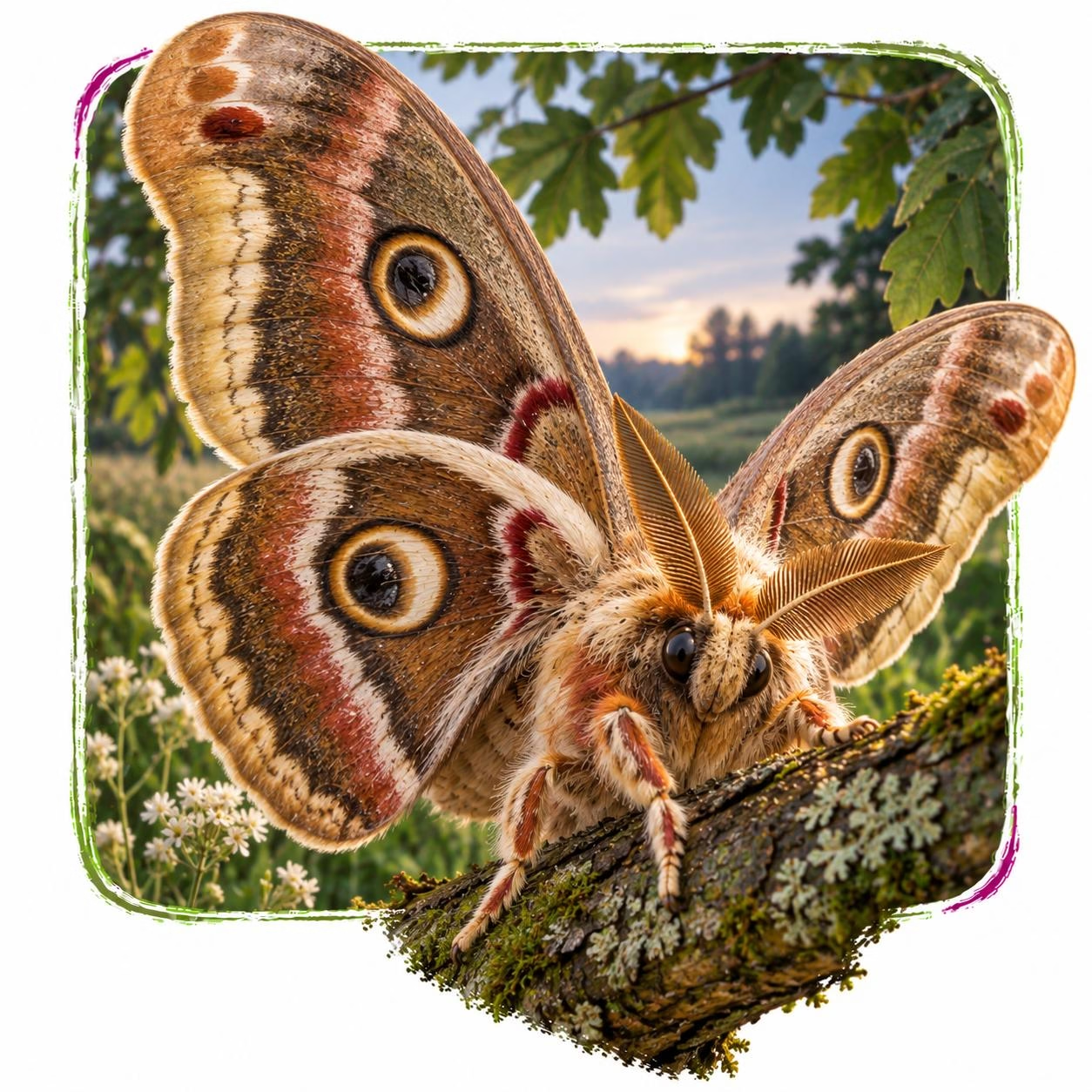
Moth in its natural Forests, grasslands, deserts, wetlands, farms, gardens, and towns habitat