
Mule Facts for Kids
A mule is the hybrid offspring of a male donkey, called a jack, and a female horse, called a mare. Mules can inherit a horse-like body along with long ears, strong hooves, and other donkey traits. People have carefully raised them for thousands of years as riding, pack, farm, and transport animals.
Quick Mule Facts
- Animal group: Mammal; equine hybrid
- Parents: Male donkey × female horse
- Not the same as: A hinny, whose parents are a male horse and female donkey
- Range: Domestic and found worldwide
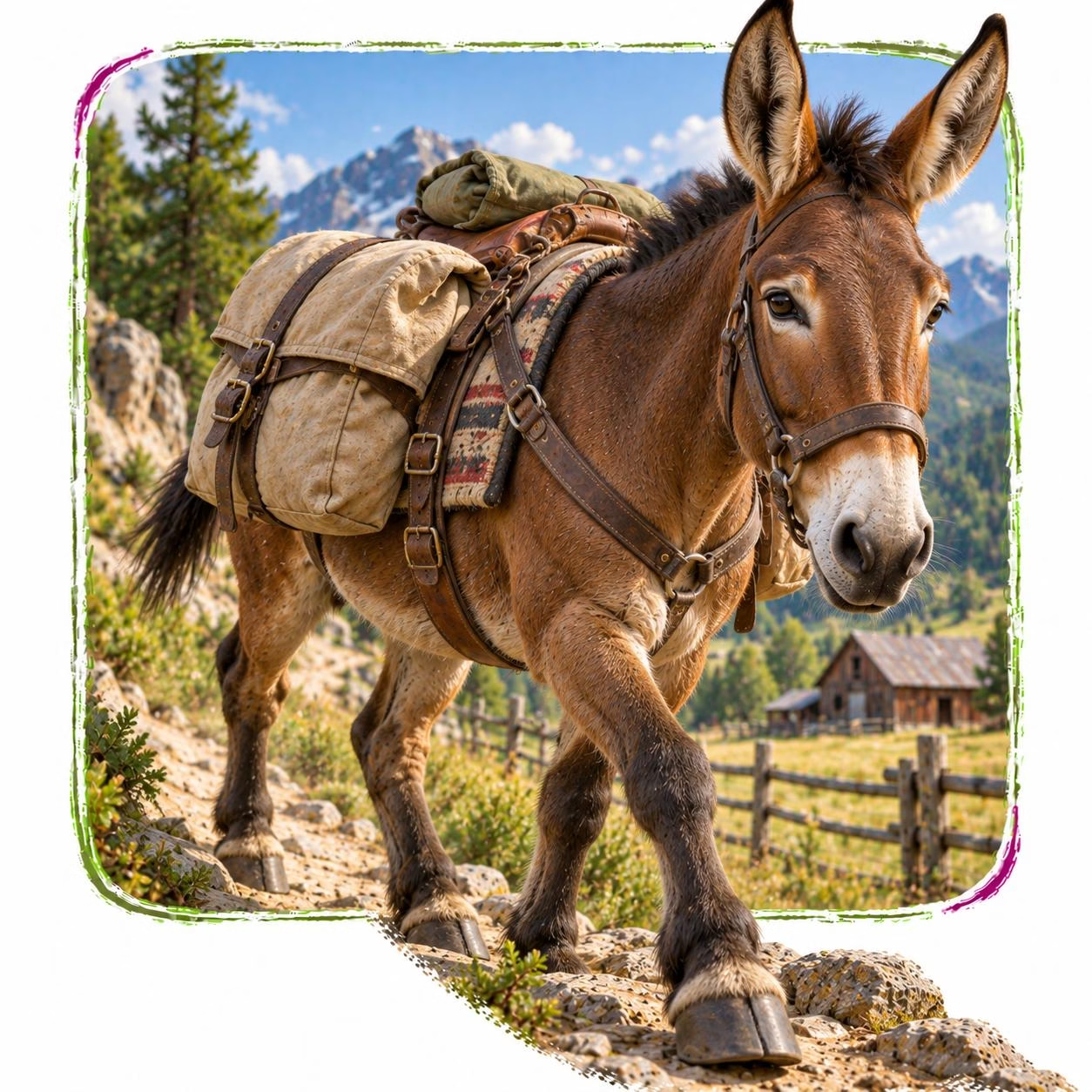
- Habitat: Farms, ranches, mountain trails, grasslands, and other human-managed settings
- Diet: Grasses, hay, and other carefully managed plant feed
- Young: Foal
- Chromosomes: Usually 63
- Conservation status: Not evaluated because a mule is a domestic hybrid, not a wild species
What You’ll Learn
Explore 10 fascinating mule facts for kids about their horse and donkey parents, strong bodies, sure-footed movement, ears, and work with people, plus a quiz, glossary, and activity
Simple explanations make these facts great for kids, families, teachers, and young animal fans.

10 Fun Mule Facts for Kids
1. A Horse-and-Donkey Hybrid
A mule’s father is a male donkey, or jack, and its mother is a female horse, or mare. Because its parents belong to different species, a mule is called a hybrid. It is still an equine, a member of the horse family.
Kid Decode: The mule recipe is jack donkey plus mare horse.
2. Mule and Hinny Are Different Crosses
A hinny has the parents in the opposite direction: a horse stallion is the father and a female donkey, or jenny, is the mother. Hinnies and mules can resemble one another, so parentage is the surest definition. Mules are much more common.
Kid Decode: Swap which species is the mother and father, and a mule becomes a hinny.
3. The 63-Chromosome Puzzle
Domestic horses have 64 chromosomes and donkeys have 62. A mule normally receives 32 from its horse mother and 31 from its donkey father, making 63. That odd set cannot usually pair evenly when reproductive cells form.
Kid Decode: A mule’s chromosome number sits exactly between horse 64 and donkey 62.
4. Usually Unable to Have Foals
Nearly all mules are sterile because their chromosomes do not divide into balanced sets easily. Male mules are considered infertile. Extremely rare female mules have produced offspring, so scientists avoid claiming that reproduction is absolutely impossible.
Kid Decode: For mules, having a baby is extraordinarily rare—but biology has recorded a few exceptions.
5. No Standard Mule Size
A mule’s size depends greatly on its parents. A miniature donkey and small pony can produce a tiny mule, while a large jack and draft mare can produce a powerful draft mule. Coat colors also range across many patterns inherited from horses and donkeys.
Kid Decode: Mules come in many sizes because their parents do too.
6. A Mix of Visible Traits
Many mules have a horse-like body, narrower donkey-style hooves, a short upright mane, long ears, and a tail with long hair. Individuals inherit different combinations, so no single checklist fits every mule. Long ears help release heat and detect quiet sounds.
Kid Decode: A mule may look horse-like from far away until its long ears turn toward you.
7. Careful Rather Than Stubborn
The saying stubborn as a mule can be misleading. Mules often pause when something seems unsafe, using self-protective caution rather than blindly obeying. Patient, reward-based handling builds trust far better than force or punishment.
Kid Decode: A mule’s stop can mean ‘I need to check this,’ not ‘I refuse to think.’
8. Sure-Footed on Rough Ground
Mules are valued for balance, endurance, and relatively hard hooves on difficult trails. They can carry packs through terrain that machines or wheeled vehicles struggle to cross. Loads, shoes, tack, rest, water, and trail conditions must still be managed humanely.
Kid Decode: Being strong does not make a mule an unlimited carrying machine.
9. A Voice of Its Own
A mule can produce calls that combine features of a horse’s neigh and a donkey’s bray. It also communicates with ear position, tail movement, posture, touch, and scent. Forward or swiveling ears often show attention, while pinned ears can warn of discomfort or irritation.
Kid Decode: A mule’s call may begin like a neigh and finish with a donkey-like rhythm.
10. Working Partners for Millennia
Mules have helped people farm, pull vehicles, carry supplies, and cross mountain routes for thousands of years. They remain important in places where rough ground limits motor vehicles. Responsible ownership requires suitable food, veterinary and hoof care, companionship, shelter, and properly fitted equipment.
Kid Decode: The best working mule is a cared-for partner, never just a tool.
A Number That Explains Almost Everything
The number 63 helps explain why a mule combines horse and donkey traits yet almost never has offspring. It receives a complete set from each parent, but the mismatched chromosomes have trouble finding partners when eggs or sperm are made.
Try This Mule Activity
Solve the Mule Inheritance Puzzle
You will need: paper, scissors, crayons, and two envelopes. Ask an adult to help with scissors.
- Make six blue cards labeled horse traits and six brown cards labeled donkey traits.
- Place each color in a separate parent envelope.
- Draw three cards from each envelope to create an imaginary mule.
- Sketch your mule using the inherited traits, such as ear length, coat color, mane, body size, and hoof shape.
- Explain why real siblings can inherit different mixtures from the same kinds of parents.
Reminder: Real animal genetics is more complex than one card per trait.
Quick Mule Quiz
- Which parents produce a mule?
A. Male donkey and female horse
B. Male horse and female donkey
C. Two zebras
Answer: A - What is the opposite parent cross called?
A. Hinny
B. Pony
C. Elk
Answer: A - How many chromosomes does a mule usually have?
A. 12
B. 63
C. 100
Answer: B - Are mules all the same size?
A. Yes
B. No
Answer: B - Why might a mule stop on a trail?
A. It may sense danger
B. It forgot how to walk
C. It became a fish
Answer: A
Mini Glossary
- Chromosome
- A package of DNA inside a cell containing genetic instructions.
- Equine
- An animal belonging to the horse family, including horses, donkeys, and zebras.
- Hybrid
- An offspring whose parents belong to different species or distinct biological groups.
- Sterile
- Usually unable to produce offspring.
- Sure-footed
- Able to move confidently and securely over difficult ground.


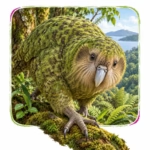 Kākāpō Facts for Kids
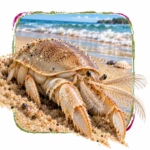 Mole Crab Facts for Kids
 Rooster Facts for Kids
 Palaeomastodon Facts for Kids
More Animal Facts for Kids
Visit the full animal facts library or explore a focused animal group.
More Extinct Animal Facts for Kids
Discover dinosaurs, Ice Age giants, prehistoric sea creatures, recently extinct species, and other animals from the past.
Fact check note: Fact-checked against Extension Horses’ chromosome and fertility explanations (horse 64, donkey 62, mule 63), SPANA’s veterinary and working-animal mule overview, and established equine references for mule versus hinny parentage, anatomy, behavior, care, and historical roles. Accessed July 2026.

Mule in its natural Farms, ranches, mountain trails, grasslands, and other human-managed environments habitat