
Mulga Snake Facts for Kids
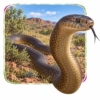
The mulga snake is a large, powerfully built venomous snake found across most of Australia. Its scientific name is Pseudechis australis. It is often called the king brown snake, but that name is misleading: it belongs to Australia’s black-snake genus, not the true brown-snake genus.
Quick Mulga Snake Facts
- Scientific name: Pseudechis australis
- Other name: King brown snake
- Animal group: Reptile; elapid snake
- Native range: Most of mainland Australia; also recorded in southern New Guinea
- Habitat: Deserts, grasslands, shrublands, woodlands, tropical forests, rocky areas, and farmland
- Diet: Frogs, reptiles, eggs, birds, and mammals
- Length: Commonly around 2 m (6.6 ft), with rare individuals exceeding 3 m
- Young: Hatch from eggs
- Conservation status: Least Concern globally
What You’ll Learn
Discover 10 fascinating mulga snake facts for kids about its heavy body, venom, Australian habitats, hunting, and confusing king brown name, plus a quiz, glossary, activity, and simple safety guidance
Clear explanations make these facts ideal for children, families, teachers, and little fact-hunters.
10 Fun Mulga Snake Facts for Kids
1. A King Brown That Is Not a Brown Snake
The alternative name king brown snake sounds official, yet the mulga belongs to Pseudechis, the black-snake genus. True Australian brown snakes belong to Pseudonaja. Correct identification matters to medical professionals because the venom and antivenom category follow the real relationship, not the nickname.
Kid Decode: The king brown is scientifically a black snake wearing a brown-sounding name.
2. Australia’s Widest-Ranging Snake
The mulga snake has the broadest distribution of any Australian snake species. It occurs across most of the mainland except the coolest far-southern and southeastern areas. Records also extend into southern New Guinea.
Kid Decode: A mulga range map covers an enormous sweep of Australia.
3. At Home in Many Landscapes
Mulga snakes occupy habitats from tropical monsoon forest and woodland to spinifex grassland, shrubland, farmland, rocky country, and nearly bare desert. They shelter in abandoned animal burrows, deep soil cracks, fallen timber, and rock crevices. This flexibility helps explain their wide range.
Kid Decode: The same species can shelter beneath tropical timber or inside a desert soil crack.
4. A Heavyweight Elapid
Adults are robust snakes with broad, deep heads and muscular bodies. Many average about two metres long, while the largest reliably measured individual reached about 3.3 metres. Males tend to grow longer than females.
Kid Decode: A big mulga is built more like a heavyweight than a slender racing snake.
5. Two-Toned Scales Create a Pattern
Each body scale often has a pale yellowish or greenish base and a darker brown, copper, reddish, or black tip. Together the scales form a netlike or reticulated appearance. Northern desert snakes may be quite pale, while southern individuals can look almost black.
Kid Decode: The mulga’s pattern is made scale by scale, like thousands of tiny two-color tiles.
6. Its Schedule Follows Temperature
Mulga snakes may be active by day, around twilight, or at night depending on season and weather. During very hot months they often emerge in the late evening and early night. In cooler conditions, dark southern snakes may bask to absorb warmth.
Kid Decode: A mulga does not own one alarm clock—the temperature sets its schedule.
7. A Broad Predator Menu
Mulga snakes eat frogs, lizards, other snakes, reptile eggs, bird eggs, birds, and mammals, with occasional invertebrates or carrion. They can tolerate the venom of some snake prey and even bites from their own species. That protection does not extend to every toxin.
Kid Decode: Another venomous snake can become a mulga’s dinner.
8. Cane Toads Are Dangerous Prey
In northern Australia, invasive cane toads present a deadly trap. A mulga may attack a toad as if it were ordinary prey, but the toad’s skin toxins can kill the snake. Researchers link cane-toad spread with declines in some northern populations.
Kid Decode: Being venomous does not make a snake immune to a poisonous toad.
9. Eggs and Wrestling Males
Females lay clutches of roughly 4–19 eggs, averaging around nine in museum records. Incubation can take about 70–100 days depending on temperature. During breeding periods, rival males may raise their heads, entwine their bodies, and try to push each other down.
Kid Decode: Mulga males wrestle by pushing, not by using tiny boxing gloves.
10. A Bite Is a Medical Emergency
When severely threatened, a mulga may flatten its neck, hiss, swing its head, and bite defensively. It can deliver a large amount of venom affecting muscles, blood cells, tissues, and sometimes nerves. People should never approach or handle one; any suspected bite needs immediate emergency care and pressure-immobilization first aid from trained guidance.
Kid Decode: Admire every Australian snake from far away and let trained experts handle identification.
Two Snakes From One Egg
The Australian Museum records an unusual case in which two mulga snake hatchlings emerged from a single normal-sized egg. Each twin was only about half the size of the other hatchlings—a rare snake version of sharing one nursery.
Try This Mulga Snake Activity
Create a Two-Toned Scale Pattern
You will need: paper, pencil, ruler, and brown, copper, cream, and olive crayons.
- Draw a long snake silhouette with a broad head and sturdy body.
- Fill the body with overlapping diamond-shaped scales.
- Color each scale with a pale base and darker tip.
- Make one body section pale like a northern arid snake and another dark like some southern snakes.
- Label camouflage, reticulated pattern, head, scales, and tail.
Safety: Create from reference pictures—never search for or approach a wild snake.
Quick Mulga Snake Quiz
- Which genus contains the mulga snake?
A. The black-snake genus Pseudechis
B. The true brown-snake genus only
C. The python genus
Answer: A - Where is it found?
A. Across most of Australia
B. Antarctica only
C. South America only
Answer: A - Why can its color vary?
A. Scale pigmentation differs among populations
B. It wears paint
C. It grows feathers
Answer: A - How are its young born?
A. They hatch from eggs
B. They grow in pouches
C. They sprout from soil
Answer: A - What should follow a suspected bite?
A. Immediate emergency help
B. A nap
C. Chasing the snake
Answer: A
Mini Glossary
- Antivenom
- A medical treatment containing antibodies that neutralize particular venoms.
- Elapid
- A member of a venomous snake family that includes cobras, taipans, and Australian black snakes.
- Invasive species
- A non-native organism that spreads and causes environmental harm.
- Reticulated
- Marked with a pattern resembling a network.
- Venomous
- Able to inject a toxin through a bite or sting.

 Spider Facts for Kids
 Cicada Facts for Kids
 Musk Ox Facts for Kids
 Genyornis Facts for Kids
More Animal Facts for Kids
Visit the full animal facts library or explore a focused animal group.
More Extinct Animal Facts for Kids
Discover dinosaurs, Ice Age giants, prehistoric sea creatures, recently extinct species, and other animals from the past.
Fact check note: Fact-checked against the Australian Museum’s 2026 Mulga Snake species account (taxonomy, size, range, habitat, coloration, diet, activity, reproduction, twin hatchlings, conservation, venom, and first-aid context) and The Reptile Database entry for Pseudechis australis. Accessed July 2026.

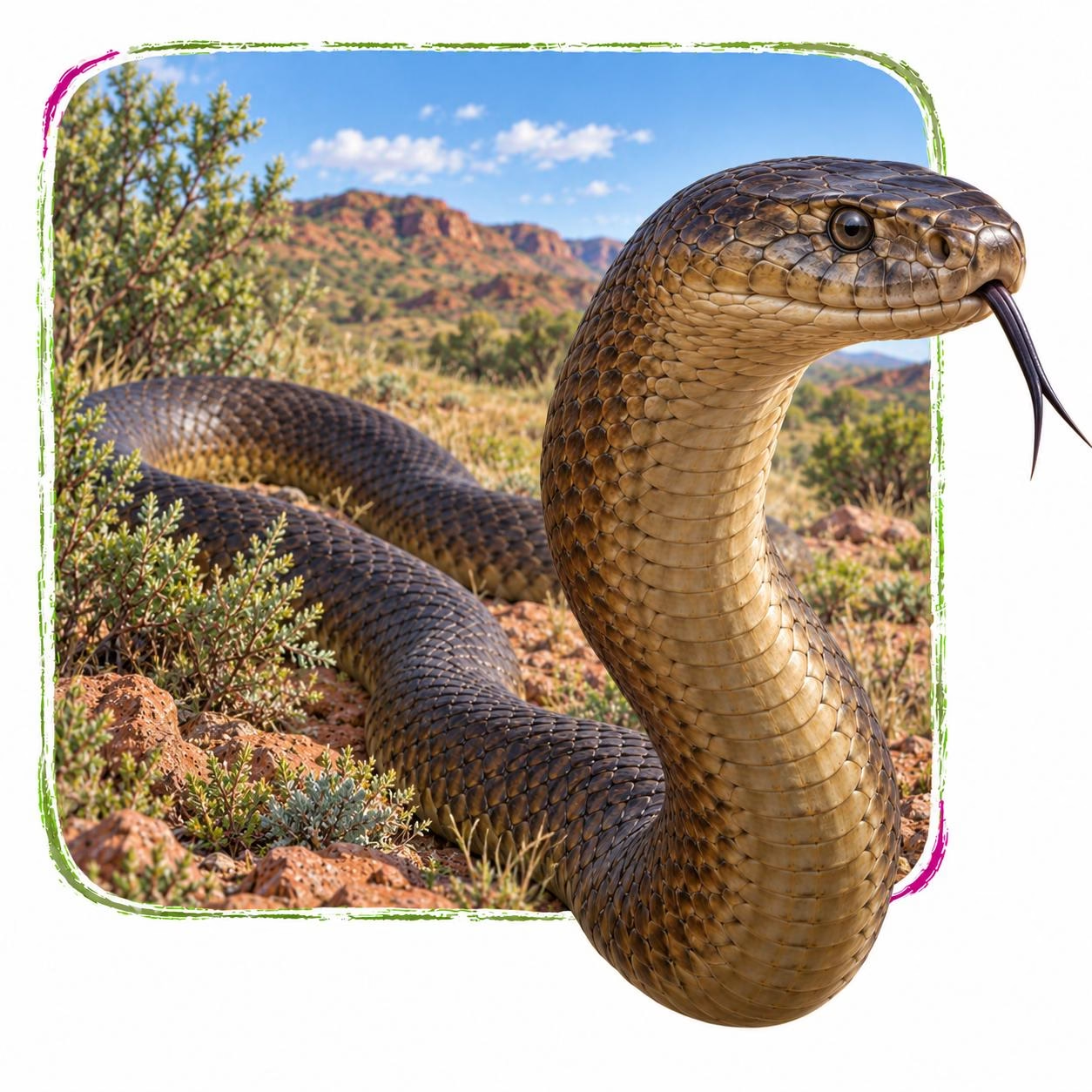
Mulga Snake in its natural Deserts, grasslands, shrublands, woodlands, tropical forests, rocky areas, and farmland habitat