
Muskrat Facts for Kids
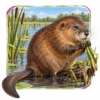
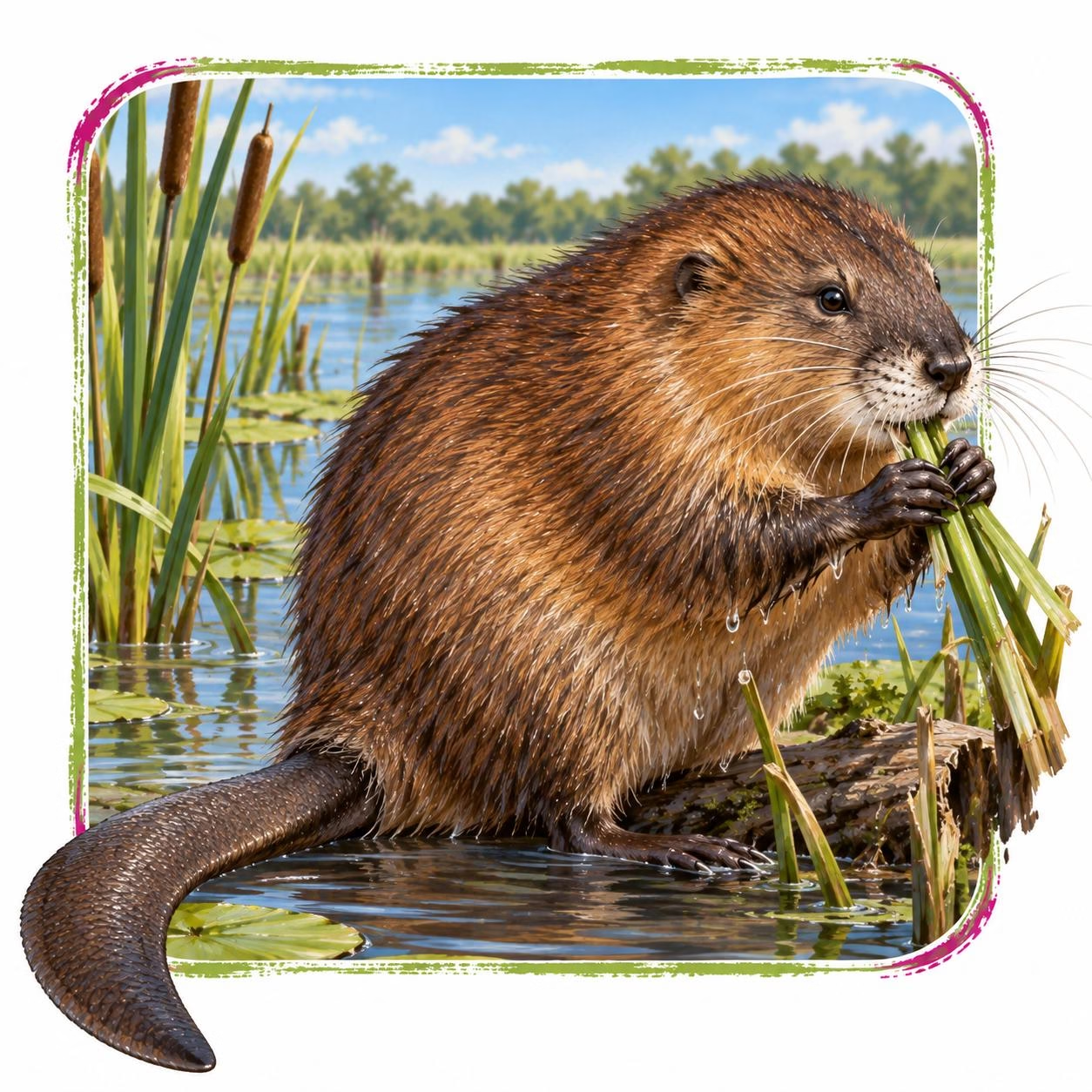
The muskrat is a sturdy semiaquatic rodent native to North American wetlands. Its scientific name is Ondatra zibethicus. Although its name mentions a rat and people sometimes mistake it for a small beaver, the muskrat is a large member of the hamster-and-vole family with its own distinctive tail and lifestyle.
Quick Muskrat Facts
- Scientific name: Ondatra zibethicus
- Animal group: Mammal; rodent
- Native range: North America
- Introduced range: Parts of Europe, Asia, and southern South America
- Habitat: Marshes, swamps, ponds, lakes, slow rivers, and canals
- Diet: Mostly cattails, bulrushes, and other aquatic plants; occasionally small animals
- Total length: Roughly 41–62 cm (16–24 in), including the tail
- Young: Kits or pups
- Conservation status: Least Concern globally; invasive in some introduced regions
What You’ll Learn
Learn 10 clever muskrat facts for kids about swimming, marsh lodges, long flattened tails, feeding, and wetland life, plus a quiz, glossary, and activity
Easy explanations make them fun for children, families, teachers, and budding animal experts.
10 Fun Muskrat Facts for Kids
1. Not Really a Rat
Muskrats are rodents, but they do not belong to the true-rat genus Rattus. They are in Cricetidae, the broad family containing hamsters, voles, lemmings, and many New World mice. Their nearest familiar look-alikes are wetland rodents rather than city rats.
Kid Decode: A muskrat is closer to a giant aquatic vole than to a sewer rat.
2. Named for a Musky Message
Muskrats produce a strong-smelling secretion used to mark territory and communicate, especially during the breeding season. Combined with the animal’s rat-like tail, this scent inspired the English name. Chemical messages help neighbors recognize occupied wetland space.
Kid Decode: A muskrat posts invisible scented signs instead of wooden signboards.
3. A Tail Flattened Sideways
The long, nearly hairless tail is compressed from side to side, or vertically flattened. It helps steer and propel the animal in water. A beaver’s tail is much broader and flattened from top to bottom like a paddle.
Kid Decode: Muskrat tail: narrow vertical rudder; beaver tail: broad horizontal paddle.
4. Swimming Feet and Waterproof Fur
Large hind feet have partly webbed toes and stiff swimming hairs along their edges. Dense underfur traps insulating air, while oily guard hairs help shed water. Small ears can close or stay protected within the fur as the muskrat dives.
Kid Decode: A muskrat swims with fringed back feet while its air-trapping coat acts like a warm wetsuit.
5. Minutes Beneath the Surface
Muskrats can remain underwater for roughly 12–17 minutes under favorable conditions, though ordinary dives are shorter. Their bodies manage oxygen efficiently, and blood flow can keep the feet and tail cooler than the body core. This lets them travel beneath ice to reach food and shelter.
Kid Decode: One breath can power a surprisingly long journey through an underwater marsh tunnel.
6. Lodges With Underwater Doors
In marshes, muskrats pile cattails, reeds, mud, and other vegetation into dome-shaped lodges. An entrance usually opens below the waterline and leads upward to a dry resting chamber. Where banks are available, they may dig tunnels instead.
Kid Decode: A muskrat house can have a wet front door and a dry bedroom upstairs.
7. Smaller Feeding Shelters
Besides large homes, muskrats build low platforms or mini-lodges often called feeding houses or push-ups. These provide protected places to rest or eat, especially beneath winter ice. Mud channels may connect shelters with underwater food patches.
Kid Decode: A muskrat push-up is a wetland snack station, not an exercise.
8. Mostly a Marsh-Plant Menu
Cattails and bulrushes are favorite foods, along with water lilies, sedges, roots, shoots, and other aquatic vegetation. Muskrats occasionally eat snails, mussels, crayfish, small fish, or other animals. Unlike beavers, they generally do not keep a large winter food cache.
Kid Decode: A fresh cattail stem is closer to muskrat pizza than a stored pile of tree branches.
9. Fast-Growing Wetland Kits
A mother gives birth to several tiny kits in a grass-lined nest, with litter size and breeding season varying by climate. The young begin swimming and tasting vegetation within weeks. Muskrat populations can rise quickly when water, food, and shelter are abundant.
Kid Decode: Muskrat kits progress from nest-bound babies to little swimmers in a remarkably short time.
10. Builders, Grazers, and Prey
Muskrat feeding and construction open channels and alter wetland vegetation, creating a patchwork used by other species. They are also important prey for mink, otters, coyotes, owls, large fish, and reptiles. In places where people introduced them, their burrowing can damage banks and native ecosystems.
Kid Decode: A muskrat can be a helpful wetland engineer at home but an invasive problem where it does not belong.
Their Feet and Tail Can Run Cooler
A muskrat can reduce warm blood flow to exposed feet and its nearly naked tail, letting those parts become cooler than the body core. This process, called regional heterothermia, reduces heat loss while the animal swims beneath cold water or ice.
Try This Muskrat Activity
Design a Muskrat Lodge
You will need: a clear bowl, modeling clay, craft sticks, paper strips, and a small toy animal.
- Shape clay into the bottom and bank of a pretend wetland.
- Build a dome from sticks and paper strips above the waterline.
- Create a tunnel entering low on the outside and rising to a dry chamber.
- Add a second small feeding platform nearby.
- Pour in a little water and check whether your doorway stays underwater while the chamber remains dry.
Think: How does the hidden entrance protect the lodge?
Quick Muskrat Quiz
- Which family includes muskrats?
A. The hamster-and-vole family
B. The cat family
C. The deer family
Answer: A - How is a muskrat’s tail flattened?
A. Side to side
B. Top to bottom like a beaver’s
C. It is perfectly round
Answer: A - Where is a lodge entrance usually located?
A. Underwater
B. In a treetop
C. On a mountain peak
Answer: A - What does a muskrat mainly eat?
A. Aquatic plants
B. Only meat
C. Rocks
Answer: A - What is regional heterothermia?
A. Keeping some body parts cooler than the core
B. Growing feathers
C. Changing into a fish
Answer: A
Mini Glossary
- Aquatic vegetation
- Plants that grow in water or waterlogged soil.
- Guard hair
- A protective outer hair covering softer insulating fur.
- Lodge
- A shelter built from wetland plants and mud, often with an underwater entrance.
- Regional heterothermia
- Maintaining different temperatures in different body regions.
- Semiaquatic
- Spending substantial time both in water and on land.
 Pigeon Facts for Kids
 Polar Bear Facts for Kids
 Aldabra Tortoise Facts for Kids
 Pig-Footed Bandicoot Facts for Kids
More Animal Facts for Kids
Visit the full animal facts library or explore a focused animal group.
More Extinct Animal Facts for Kids
Discover dinosaurs, Ice Age giants, prehistoric sea creatures, recently extinct species, and other animals from the past.
Fact check note: Fact-checked against University of Michigan Animal Diversity Web’s Ondatra zibethicus account (taxonomy, range, habitat, size, reproduction, swimming, scent, diet, temperature control, and ecology), U.S. National Park Service muskrat accounts from Missouri National Recreational River and Minute Man, and standard invasive-species references for introduced Eurasian populations. Accessed July 2026.

Muskrat in its natural Marshes, swamps, ponds, lakes, slow rivers, and canals habitat