
North American Beaver Facts for Kids
The North American beaver is the continent’s largest rodent and one of nature’s most influential builders. With orange cutting teeth, webbed hind feet, waterproof fur, and a broad flat tail, it is superbly equipped for life in and around water. By building dams in suitable streams, beavers create wetlands that become homes for many other species.
Quick North American Beaver Facts
- Scientific Name: Castor canadensis
- Animal Type: Mammal and rodent
- Size: Commonly about 16–30 kilograms, with considerable variation
- Known For: Dams, lodges, orange incisors, and a flat tail
- Habitat: Rivers, streams, ponds, lakes, and forested wetlands
- Range: Most of Canada and the United States, plus parts of northern Mexico
- Diet: Bark, cambium, twigs, leaves, grasses, and aquatic plants
- Conservation: Least Concern globally
What You’ll Learn
Learn 10 amazing north american beaver facts for kids about dams, lodges, orange teeth, flat tails, and wetland engineering, with a quiz, glossary, and activity
These easy facts are written for kids, parents, teachers, and curious young animal lovers.
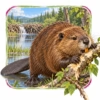
10 Fun North American Beaver Facts for Kids
1. It Is North America’s Largest Rodent
Adult North American beavers often weigh about 16 to 30 kilograms, although size varies. Only the capybara of South America is larger among living rodents.
Kid Decode: This pond builder can weigh about as much as a medium-sized dog.
2. Orange Teeth Work Like Chisels
Iron-rich enamel makes the front surface of a beaver’s incisors orange and especially hard. The softer material behind wears faster, helping the continuously growing teeth keep a sharp cutting edge.
Kid Decode: Those orange teeth sharpen themselves every time the beaver gnaws.
3. Not Every Beaver Builds a Dam
Beavers dam flowing water when doing so helps create a deep, safer pond. Along large rivers or lakes with suitable water levels, they may live in a bank den or lodge without needing a dam.
Kid Decode: Being a beaver does not automatically mean having a dam-building job.
4. A Lodge Has an Underwater Door
A typical lodge is a mound of branches, sticks, mud, and plants with entrances below the water surface. Inside is a raised, dry chamber where the family rests and cares for young.
Kid Decode: The front door is underwater, but the living room stays above it.
5. Their Bodies Are Built for Water
Large webbed hind feet provide propulsion, while the smaller front paws can hold and carry materials. Dense fur traps insulating air, and nostrils and ear openings can close during a dive.
Kid Decode: A beaver arrives with flippers, mittens, a warm coat, and nose plugs built in.
6. The Tail Does Many Jobs
The broad, scaly tail helps with balance on land, steering and stability in water, fat storage, and heat control. A startled beaver may slap it on the surface to warn family members.
Kid Decode: One paddle-shaped tail works as rudder, alarm, balance pole, and energy store.
7. They Can Gnaw Underwater
A beaver’s lips close behind its front incisors. This seal lets the animal cut branches underwater without filling the rest of its mouth with water.
Kid Decode: Its teeth can stay outside while its mouth stays closed.
8. Beavers Eat Plants, Not Just Wood
They eat the nutritious inner bark called cambium, along with twigs and leaves from trees such as willow and aspen. They also eat grasses, roots, pond plants, and other vegetation.
Kid Decode: Wood is not the whole menu; the tender layer under bark is the prize.
9. Kits Grow Up in a Family Colony
A pair usually lives with the current year’s kits and older young. Kits can swim early in life, while parents and older siblings help protect and feed the family.
Kid Decode: Young beavers grow up with parents and helpful big brothers or sisters nearby.
10. Beavers Create Wetland Neighborhoods
Dams slow water and can spread it across a valley, forming ponds and marshes. These wetlands may store water, trap sediment, and provide habitat for fish, amphibians, birds, insects, and plants, although flooding can also create conflicts near roads or property.
Kid Decode: One beaver family can redesign a home for an entire wildlife community.
The Weirdest North American Beaver Fact
A beaver can shut its lips behind its giant front teeth. That means the orange incisors remain outside to cut a submerged branch while the sealed mouth behind them stays free of water.
Try This North American Beaver Activity
Test a Mini Beaver Dam
Use a shallow waterproof tray outdoors or over a sink. Make a gentle streambed from reusable clay, pebbles, leaves, and small fallen twigs. Pour the same measured cup of water through it before and after adding a woven stick-and-clay barrier. Compare how quickly the water travels and where sediment settles. Never remove materials from a real lodge or dam, and ask an adult to supervise water cleanup.
Quick North American Beaver Quiz
- What gives a beaver’s front teeth their orange color and strength? Answer: Iron-rich enamel.
- Does every North American beaver build a dam? Answer: No.
- Where is the entrance to a typical lodge? Answer: Underwater.
- What is a baby beaver called? Answer: A kit.
- How can beaver dams help other wildlife? Answer: They create ponds and wetlands that provide food, water, and shelter.
Mini Glossary
- Rodent: A mammal with front teeth that grow continuously and are adapted for gnawing.
- Incisor: A front cutting tooth.
- Cambium: The living layer just beneath a tree’s outer bark.
- Lodge: A beaver shelter made in water or along a bank, usually with an underwater entrance.
- Keystone Species: A species whose activities have an unusually large effect on its ecosystem.
 Common Snapping Turtle Facts for Kids
 Giant Hummingbird Facts for Kids
 European Beaver Facts for Kids
 Cuban Macaw Facts for Kids
More Animal Facts for Kids
Visit the full animal facts library or explore a focused animal group.
More Extinct Animal Facts for Kids
Discover dinosaurs, Ice Age giants, prehistoric sea creatures, recently extinct species, and other animals from the past.
Fact check note: Fact checked against Smithsonian’s National Zoo North American beaver account; Animal Diversity Web’s Castor canadensis account; Alaska Department of Fish and Game beaver profile; Minnesota Department of Natural Resources beaver profile; Montana Fish, Wildlife & Parks coexistence guidance; and the IUCN Red List account. Species identity, size range, North American distribution, herbivorous diet, orange self-sharpening incisors, underwater adaptations, lodge and dam behavior, family colonies, and wetland effects were cross-checked. North American and Eurasian beavers are treated as separate living species.

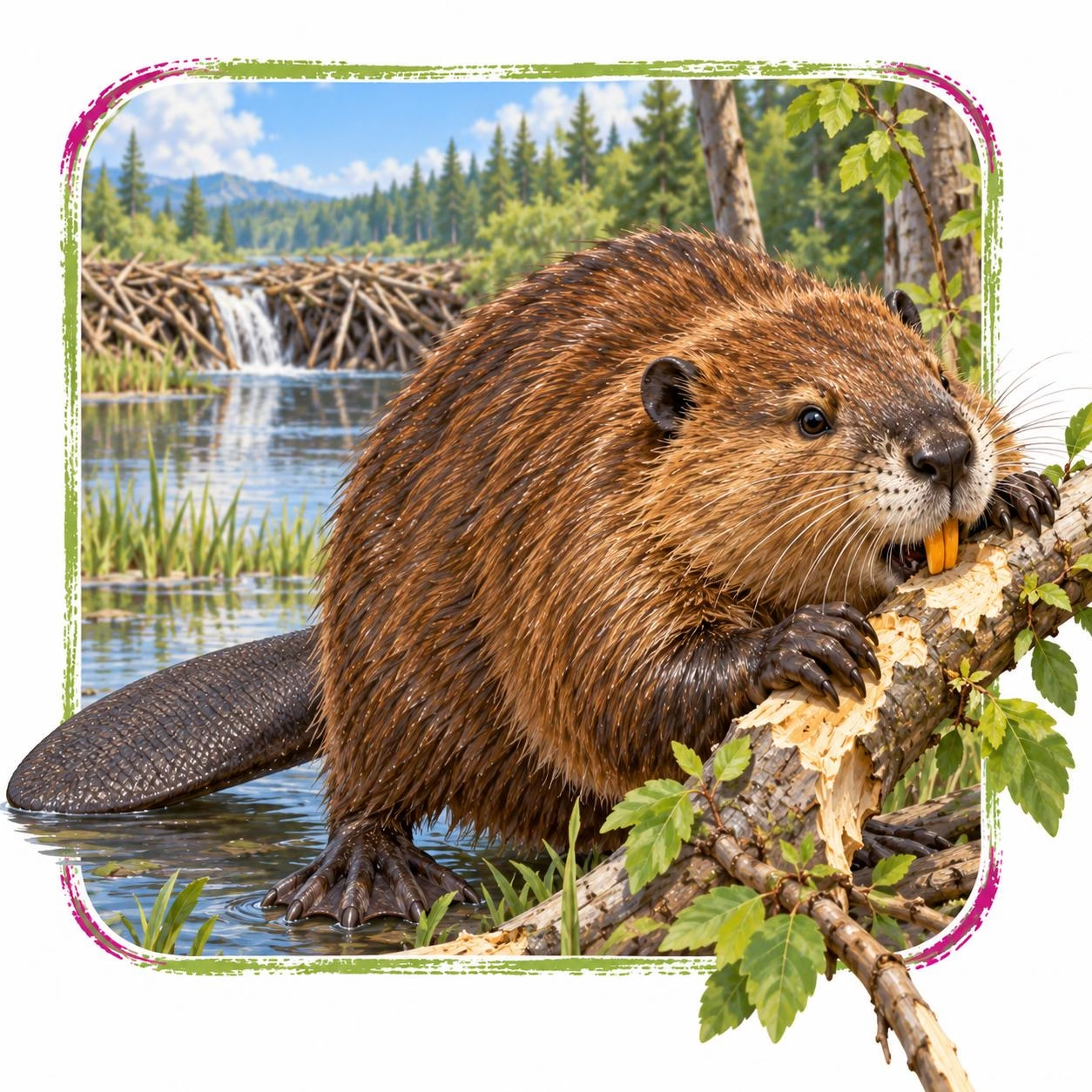
North American Beaver in its natural Rivers, streams, lakes, ponds, riparian forests, and freshwater wetlands with woody plants nearby habitat