
Northern Short-Tailed Shrew Facts for Kids
The Northern Short-Tailed Shrew, Blarina brevicauda, is a stocky small mammal of eastern and central North America. It looks a little like a mouse, but it is not a rodent. It belongs to the shrew family Soricidae and has a pointed flexible snout, tiny eyes, ears mostly hidden by fur, a short tail, and reddish-brown tooth tips caused by iron-rich enamel. This energetic hunter spends much of its life in leaf litter, soil, snow tunnels, and underground runways searching for worms, insects, snails, salamanders, mice, and other food. It is also one of the few venomous mammals: glands beneath the jaw produce toxic saliva that helps subdue prey. Northern Short-Tailed Shrews remain active through winter, cache food, and are currently listed as Least Concern.
Quick Northern Short-Tailed Shrew Facts
- Animal Type: Mammal and shrew
- Scientific Name: Blarina brevicauda
- Known For: Venomous saliva, reddish tooth tips, pointed snout, short tail, underground runways, food caching, very high metabolism, and aggressive hunting
- Habitat: Damp woodland, marsh edges, bogs, meadows, brushy field borders, gardens, leaf litter, tunnels, and snow-covered ground
- Diet: Earthworms, insects, snails, millipedes, other invertebrates, small vertebrates, fungi, seeds, and other available foods
What You’ll Learn
Discover 10 Northern Short-Tailed Shrew facts for kids with accurate venom and shrew science, quick facts, a quiz, glossary, drawing activity, and North American wildlife links.
Clear explanations make them useful for kids, families, teachers, and curious young mammal explorers.
10 Fun Northern Short-Tailed Shrew Facts for Kids
1. It Is a Shrew, Not a Mouse
Although its size and gray-brown fur can make it look mouse-like, Blarina brevicauda belongs to the shrew family Soricidae rather than the rodent order. It has a long pointed snout, tiny eyes, hidden ears, and teeth very different from the continuously growing incisors of mice.
Kid Decode: A mouse-shaped body hides a completely different mammal family tree.
2. Its Saliva Can Subdue Prey
Large salivary glands beneath the jaw produce toxic saliva that helps the shrew overpower prey, including animals larger than itself. The toxin enters through bites from ordinary shrew teeth rather than through hollow snake-style fangs.
Kid Decode: This tiny hunter carries its chemical weapon in saliva instead of a pair of giant fangs.
3. The Teeth Have Reddish Tips
Like many red-toothed shrews, the Northern Short-Tailed Shrew has iron-rich enamel concentrated near the cutting surfaces of its teeth. The pigment can make the tips look reddish and also strengthens areas that experience heavy wear.
Kid Decode: The red-brown tooth tips are reinforced cutting edges, not stains from dinner.
4. Tiny Eyes Make Touch and Smell Important
The eyes are extremely small and vision is limited. Long whiskers, a sensitive snout, smell, touch, and sound help the shrew navigate tunnels and leaf litter, locate food, and notice nearby animals.
Kid Decode: In a dark tunnel, whiskers and nose become a better navigation kit than sharp eyesight.
5. It Builds a Hidden Runway System
Northern Short-Tailed Shrews tunnel through loose soil, plant debris, leaf litter, and snow and may also use tunnels made by mice or moles. Nests of shredded grass or leaves are built beneath logs, rocks, or inside protected tunnel chambers.
Kid Decode: Below the leaves is a miniature road network with bedrooms, hunting lanes, and shortcuts.
6. A Fast Metabolism Demands Frequent Meals
Small shrews lose heat rapidly and have very high energy needs, so they feed often through day and night. Their diet is dominated by animal prey but can also include seeds, fungi, and other plant foods depending on season and opportunity.
Kid Decode: A shrew’s tiny body runs an engine that rarely gets permission to idle.
7. They Store Food for Later
Northern Short-Tailed Shrews cache food such as snails, beetles, seeds, and other items in underground hiding places. Stored food can be especially useful when cold weather or snow makes fresh prey harder to find.
Kid Decode: The tunnel system includes a pantry for meals that have not happened yet.
8. They Stay Active Through Winter
These shrews do not hibernate. They remain active beneath snow and leaf litter, using sheltered tunnels where temperatures are less extreme and continuing to hunt and feed throughout cold months.
Kid Decode: A blanket of snow can hide an entire winter hunting shift underneath.
9. Pups Grow Up Very Quickly
Females can produce several litters during the warmer part of the year. Pregnancy lasts only about three weeks, litters commonly contain several young, and the pups leave the nest within a few weeks because the shrew life cycle moves rapidly.
Kid Decode: The nursery goes from helpless babies to independent youngsters at high speed.
10. It Is Common but Important to Food Webs
The Northern Short-Tailed Shrew is globally listed as Least Concern and occurs across a broad part of eastern and central North America. It is both predator and prey, eating many soil animals while feeding owls, hawks, snakes, weasels, foxes, and other predators.
Kid Decode: The little hunter sits in the middle of a busy food-web intersection.
The Weirdest Northern Short-Tailed Shrew Fact
A mammal weighing only a few tens of grams can use venomous saliva to overpower frogs, salamanders, mice, and other prey that may be surprisingly large compared with the shrew itself.
Try This Northern Short-Tailed Shrew Activity
Northern Short-Tailed Shrew Tunnel Activity
Draw a cutaway of damp North American woodland soil and leaf litter. Add a stocky gray-brown shrew with pointed snout, tiny eyes, hidden ears, short tail, long whiskers, five-toed feet, reddish tooth tips, and no rodent-style giant incisors. Show earthworms, beetles, snails, a salamander, a food cache, shredded-leaf nest, tunnels under snow, and a close-up of the salivary glands explaining that venomous saliva helps subdue prey without snake-like hollow fangs.
Quick Northern Short-Tailed Shrew Quiz
- What is the Northern Short-Tailed Shrew’s scientific name? Answer: Blarina brevicauda.
- Is it a rodent? Answer: No, it belongs to the shrew family Soricidae.
- What unusual substance helps it subdue prey? Answer: Venomous or toxic saliva.
- Does it hibernate through winter? Answer: No, it remains active.
- What is its current IUCN category? Answer: Least Concern.
Mini Glossary
- Shrew: A small insect-eating mammal in the family Soricidae.
- Venom: A toxic substance delivered actively through a bite, sting, or other structure.
- Cache: A hidden store of food saved for later.
- Metabolism: The chemical processes that release and use energy inside a living body.
- Vibrissae: Sensitive whiskers used for touch and detecting nearby objects.
 Praying Mantis Facts for Kids
 Ibis Facts for Kids
 Catfish Facts for Kids
 Cladoselache Facts for Kids
More Animal Facts for Kids
Visit the full animal facts library or explore a focused animal group.
More Extinct Animal Facts for Kids
Discover dinosaurs, Ice Age giants, prehistoric sea creatures, recently extinct species, and other animals from the past.
Fact check note: Fact checked with the American Society of Mammalogists Mammal Diversity Database current account for Blarina brevicauda, which lists the Northern Short-Tailed Shrew as Least Concern and gives its Canadian and U.S. distribution; and Animal Diversity Web for damp woodland habitat, short-tailed body form, year-round activity, tunnels and nests, roughly three-week gestation, multiple litters, food caching, mixed animal-and-plant diet, predators, limited vision, sensitive whiskers, and toxic saliva from submaxillary salivary glands.

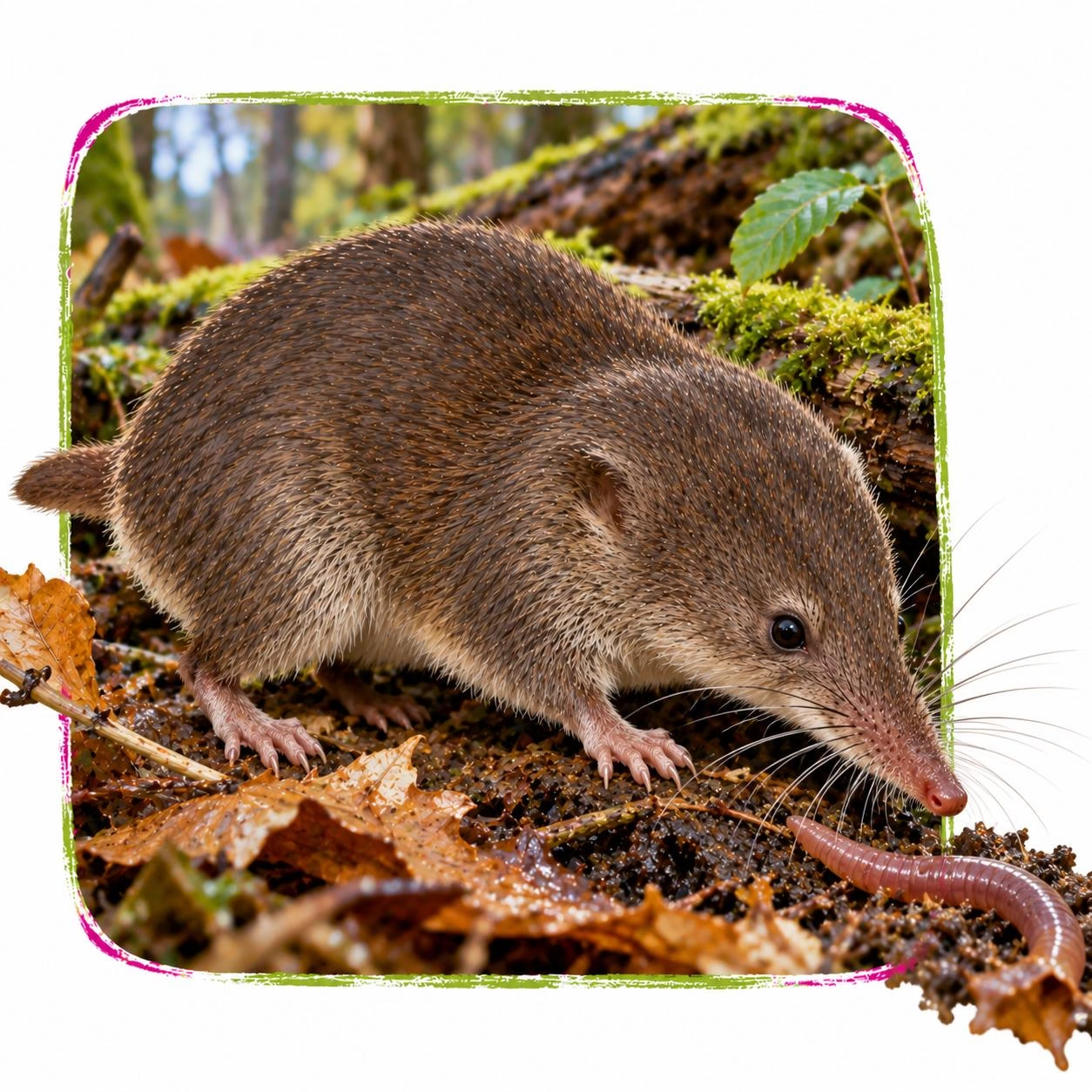
Northern Short-Tailed Shrew in its natural Damp woodland, marsh and bog edges, meadows, brushy field borders, gardens, leaf litter, loose soil, snow tunnels, and other habitats with dense cover and prey habitat