
Pademelon Facts for Kids
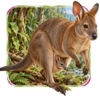
Pademelons are small, stocky relatives of kangaroos and wallabies that live in Australia, New Guinea, and nearby islands. They hide in dense forest and scrub during much of the day, then hop toward grassy edges to feed around dusk or at night. Their compact bodies, powerful hind legs, short thick tails, and pouch-raised joeys make them perfectly shaped for life among tangled plants.
Quick Pademelon Facts
- Scientific Group: Genus Thylogale
- Animal Type: Mammal and marsupial
- Family: Macropodidae, with kangaroos and wallabies
- Known For: Small size, rounded body, short thick tail, and forest hopping
- Habitat: Rainforest, wet forest, dense scrub, vine thickets, and nearby grassy edges
- Range: Australia, Tasmania, New Guinea, and nearby islands
- Diet: Grasses, herbs, shoots, leaves, fallen fruit, flowers, and other plant foods
- Conservation: Varies by species; some are secure while others are threatened
What You’ll Learn
Discover 10 adorable pademelon facts for kids about hopping, pouches, joeys, forest hiding, and Australian and New Guinean habitats, with a quiz, glossary, and activity
These simple facts are made for kids, parents, teachers, and curious little fact-hunters.
10 Fun Pademelon Facts for Kids
1. Pademelons Are Tiny Macropods
Pademelons belong to the same family as kangaroos and wallabies. They are among the smaller macropods and usually have rounder bodies and shorter, thicker tails than many wallabies.
Kid Decode: Imagine a compact forest wallaby built for leafy tunnels.
2. There Are Several Pademelon Species
Pademelon is a group name for species in the genus Thylogale, including red-necked, red-legged, Tasmanian, dusky, Brown’s, mountain, and Calaby’s pademelons. Their colors, sizes, ranges, and conservation needs differ.
Kid Decode: One unusual name belongs to a whole team of little hoppers.
3. They Live Around Australia and New Guinea
Different species occur in eastern Australia, Tasmania, New Guinea, and some nearby islands. No single pademelon species occupies that entire combined range.
Kid Decode: Each pademelon species has its own piece of the island-and-forest map.
4. Dense Plants Provide Daytime Cover
Many pademelons rest in rainforest, wet forest, thick scrub, or vine tangles during daylight. Their compact shape helps them follow narrow paths through vegetation.
Kid Decode: A wall of bushes can become a pademelon’s hidden hallway.
5. They Often Feed Near Dusk
Pademelons are commonly crepuscular or nocturnal. They leave dense cover when light fades and feed along forest edges, clearings, and grassy patches before returning to shelter.
Kid Decode: Sunset is the signal to hop out for dinner.
6. Pademelons Are Plant Eaters
Their diet varies by species and habitat but can include grasses, herbs, green shoots, leaves, ferns, fallen fruit, flowers, bark, and fungi. They usually browse and graze close to protective cover.
Kid Decode: The forest floor serves a changing salad of shoots, leaves, and fruit.
7. Joeys Grow Inside a Pouch
Like other marsupials, a newborn pademelon is extremely tiny and continues developing while attached to a teat inside its mother’s pouch. An older joey later peeks out and makes short trips outside.
Kid Decode: The pouch is a warm nursery that travels wherever the mother hops.
8. Powerful Hind Legs Make Them Hoppers
Long hind feet and strong back legs push a pademelon forward in hops. The forelimbs are smaller and help with feeding, balance, and slow movement.
Kid Decode: Those oversized back feet turn a forest path into a hopping track.
9. They Face Different Predators
Depending on the island or region, pademelons may be hunted by dingoes, quolls, Tasmanian devils, large birds of prey, snakes, people, and introduced foxes, cats, or dogs. Dense cover is an important defense.
Kid Decode: The safest escape route often disappears straight into the bushes.
10. Some Species Need Urgent Protection
Pademelon conservation status varies greatly. Habitat clearing, hunting, roads, and introduced predators have harmed certain populations, while species such as the Tasmanian pademelon remain locally common.
Kid Decode: Protecting “pademelons” means checking what each species needs.
The Weirdest Pademelon Fact
The name pademelon comes from an Aboriginal Australian word, often recorded as badimaliyan in the Dharug language. It may look like the English words “paddy” and “melon,” but the animal was not named after a field or a fruit.
Try This Pademelon Activity
Build a Pademelon Forest Map
Draw dense forest in the center of a page and a grassy feeding edge around it. Add narrow plant tunnels, a resting spot, water, joey shelter, and several plant foods. Use arrows to show a pademelon hiding by day and feeding at dusk. Add one threat, such as a road or roaming dog, and design a safe wildlife crossing or protective solution.
Quick Pademelon Quiz
- What animal family includes pademelons, kangaroos, and wallabies? Answer: The macropod family.
- Where do pademelons usually hide during the day? Answer: In dense forest, scrub, or other thick vegetation.
- What is a baby pademelon called? Answer: A joey.
- Are pademelons carnivores or herbivores? Answer: Herbivores.
- Do all pademelon species have the same conservation status? Answer: No; their status varies by species.
Mini Glossary
- Marsupial: A mammal whose very small newborn usually continues developing in a pouch.
- Macropod: A member of the large-footed kangaroo and wallaby family.
- Joey: A young marsupial such as a pademelon or kangaroo.
- Crepuscular: Most active around dawn or dusk.
- Genus: A scientific group of closely related species.
 Quoll Facts for Kids
 Monarch Butterfly Facts for Kids
 Sea Dragon Facts for Kids
 Barosaurus Facts for Kids
More Animal Facts for Kids
Visit the full animal facts library or explore a focused animal group.
More Extinct Animal Facts for Kids
Discover dinosaurs, Ice Age giants, prehistoric sea creatures, recently extinct species, and other animals from the past.
Fact check note: Fact checked against the Australian Museum’s red-legged pademelon account; Tasmania’s Department of Natural Resources and Environment rufous-bellied pademelon profile; Animal Diversity Web’s Thylogale accounts; Atlas of Living Australia taxonomy; and Australian wildlife research and education sources. Group identity, species differences, Australasian distribution, forest habitat, short-tail body plan, plant diet, dusk and nighttime activity, pouch development, and conservation claims were cross-checked. Size and status are not presented as uniform because pademelon species differ substantially.

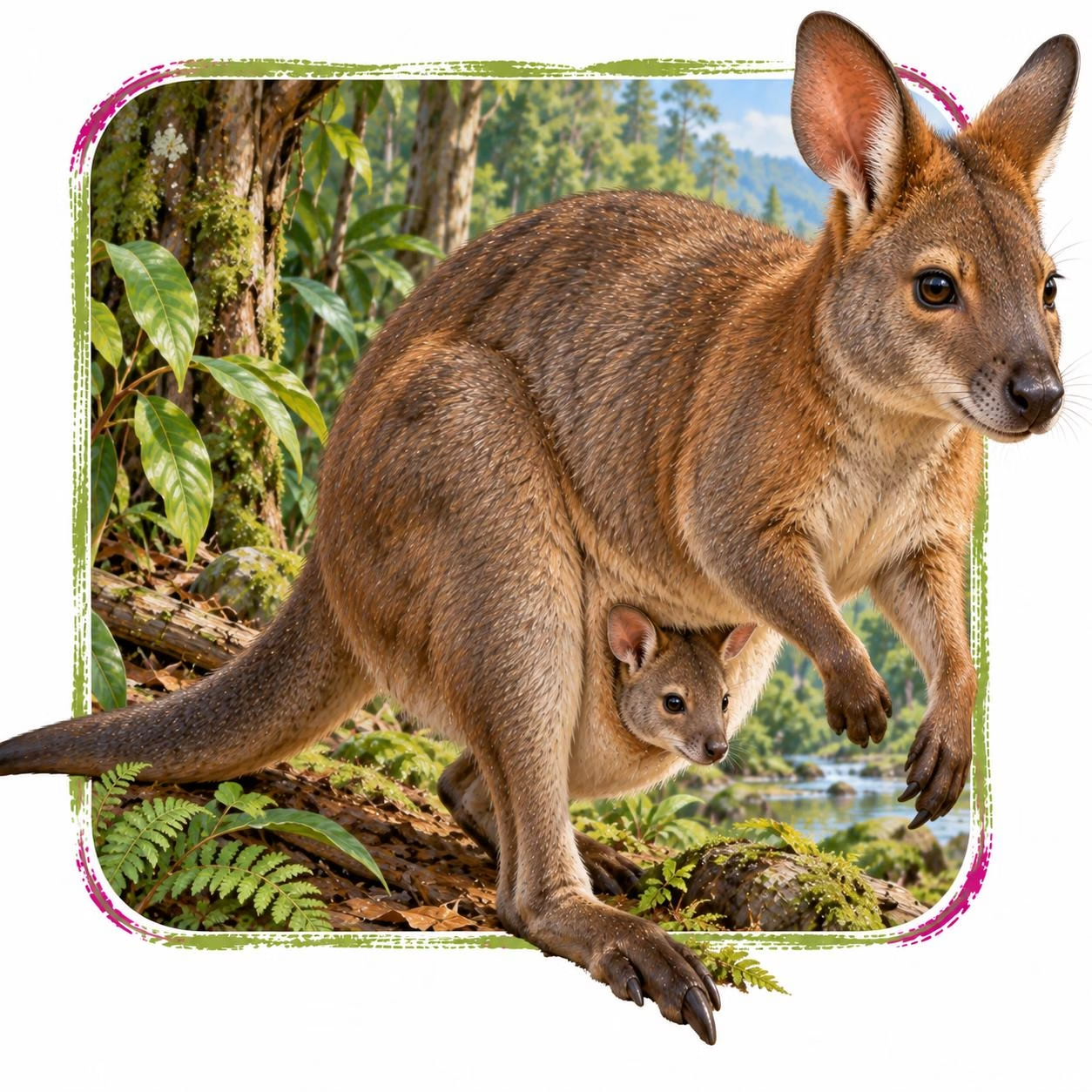
Pademelon in its natural Rainforests, wet forests, vine thickets, dense scrub, swampy vegetation, and nearby grassy forest edges habitat